
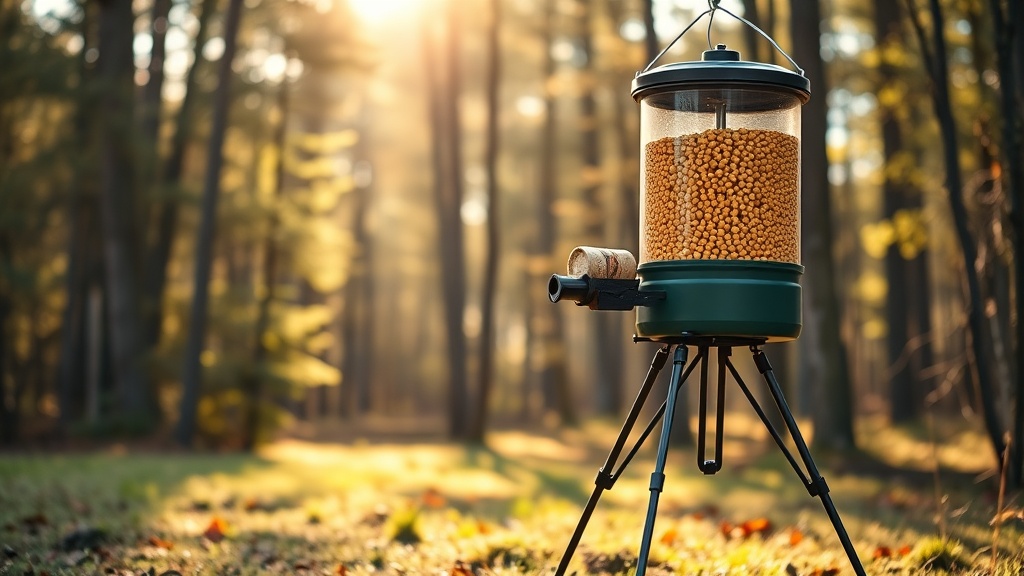
Mounting the Moultrie 30-Gallon Pro Hunter on a Tripod
Getting a 30-gallon feeder like the Moultrie Pro Hunter up on a tripod isn’t complicated, but you have to get the weight distribution right and use hardware that doesn’t rust out after one season. In this guide, Tom Hunter walks through the specific mounting points, recommended tripod types, and a few practical tricks that save you from climbing back up in December to fix a sagging unit.
What Tripod Works Best With the Moultrie 30-Gallon Pro Hunter?
The Moultrie 30-Gallon Pro Hunter uses a standard three-point mounting bracket that bolts to the bottom of the feeder. Most heavy-duty tripods designed for 30–50 gallon units will fit, but Tom recommends looking for one with a minimum leg gauge of 16-gauge steel and a central mounting plate that’s at least 10 inches in diameter. The feeder weighs roughly 28 pounds empty, and when you fill it with about 240 pounds of corn, you need a tripod that can handle 300+ pounds total without wobbling.
Cheap tripods with thin legs or plastic hubs will let the feeder sway in wind, which causes the funnel to shift and block the spinner plate. Stick with brands like Moultrie’s own tripod or a 20-gauge or heavier aftermarket unit. For a full rundown of how the feeder performs across different setups, see the Moultrie 30-Gallon Pro Hunter Gravity Feed Review.
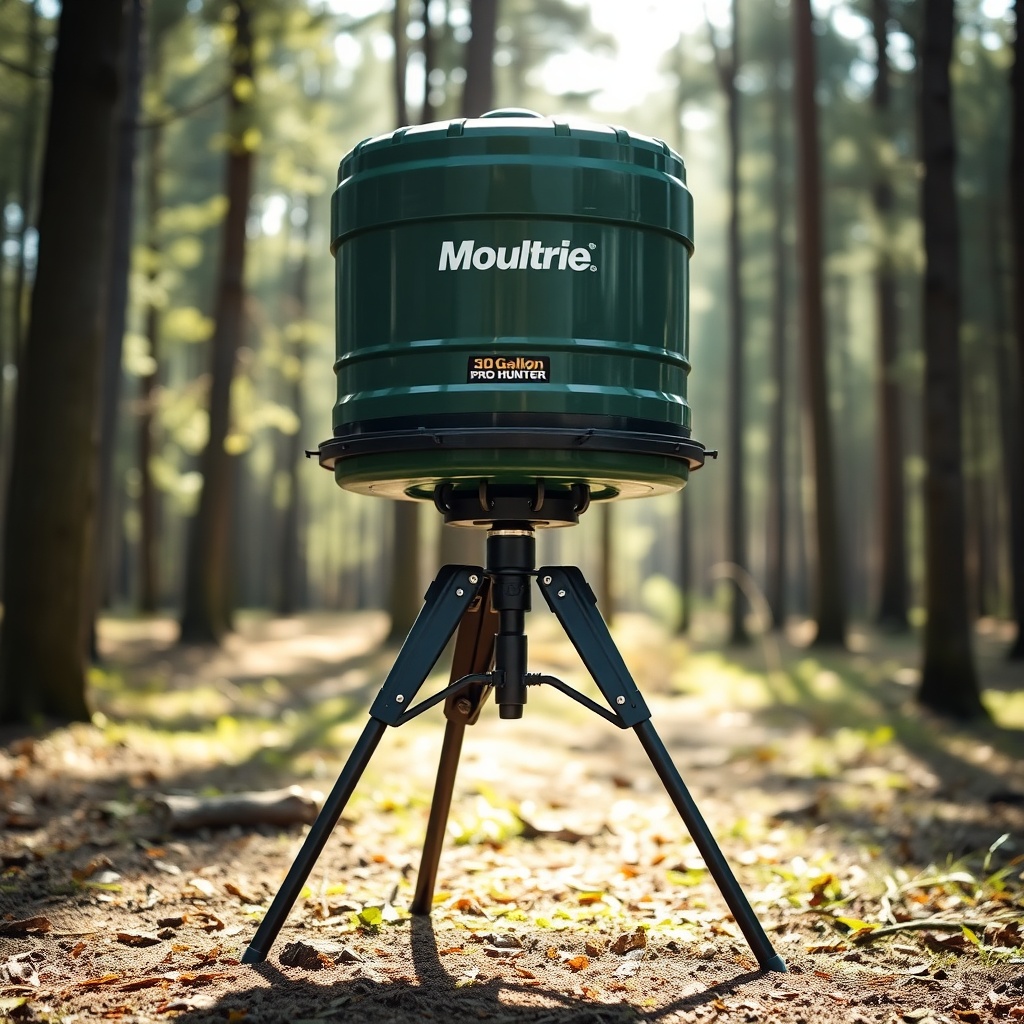
How Do You Attach the Feeder to the Tripod Mounting Plate?
The Moultrie Pro Hunter has four pre-drilled holes in its base plate—two on each side of the center hub. These correspond to a standard bolt pattern that lines up with most tripod mounting plates. You’ll need four ⅜-inch carriage bolts, matching washers, and lock nuts. Do not use regular hex bolts because the square shoulders on carriage bolts grip the hole and keep the bolt from spinning when you tighten the nut.
Here’s the step-by-step:
- Place the tripod on level ground and extend the legs to the full height you need before attaching the feeder.
- Lift the feeder onto the tripod plate—get a helper for this; a full 30-gallon barrel is awkward and heavy.
- Slide a carriage bolt up through the mounting plate hole, then through the feeder base hole.
- Add a flat washer and a lock nut from the top. Tighten snug with a wrench—do not overtighten, or you’ll dent the feeder’s plastic base.
- Repeat for all four holes, then check that the feeder sits level. If not, shim with flat washers on the short side.
Tom recommends using stainless steel hardware throughout. Zinc-plated bolts will rust within a year around the spinner plate area where moisture collects. Stainless costs a few dollars more and saves you a mid-season repair job. For more on keeping the feeder running reliably, check the How to Set the Timer on Moultrie 30-Gallon Pro Hunter guide.
What Tools Do You Actually Need for the Job?
You don’t need a full workshop, but having the right tools makes the difference between a 15-minute setup and an hour of frustration. Here’s what Tom keeps in his truck when he’s hanging a Moultrie 30-Gallon Pro Hunter:
- 17mm socket or wrench (for the carriage bolt nuts)
- Ratchet and extension (optional, but helps if bolts are tight)
- Cordless drill with a ⅜-inch bit (only if you need to drill new holes in a generic tripod plate)
- Torpedo level (short enough to fit on the feeder base)
- Step stool or low ladder (helps with reaching the mounting plate without straining your back)
That’s it. You don’t need a torque wrench or a tape measure unless you’re customizing the tripod height. Most tripods have pre-set leg adjustments you can lock with a pin. If your tripod doesn’t have a leveling feature, carry a few flat washers to shim the feeder base.
How Do You Level the Feeder Once It’s on the Tripod?
An unlevel feeder will sling corn unevenly, and you’ll get a weird scatter pattern that leaves a bald spot right in front of the feeder. The Moultrie 30-Gallon Pro Hunter’s spinner plate is gravity-fed from the funnel above, so any tilt changes the way corn flows to the spinner. Leveling is non-negotiable.
After bolting the feeder to the tripod plate, set a torpedo level directly on the feeder’s base plate—not on the top rim, because the barrel might have a slight manufacturing taper. Check front-to-back and side-to-side simultaneously. If it’s off, loosen the bolts on the low side and insert flat stainless steel washers between the tripod plate and the feeder base until it’s level. Retighten the bolts and recheck.
For tripods that have adjustable leg heights, you can also extend one leg slightly to compensate for ground slope. But remember, extending legs creates a narrower base angle, which can make the feeder less stable on a slope. If you’re on uneven ground, it’s better to dig a shallow platform for the low leg than to over-extend the high one.
Scouting out the best tripod and feeder combination is covered in detail in the Best Deer Feeders Buying Guide for 2024.
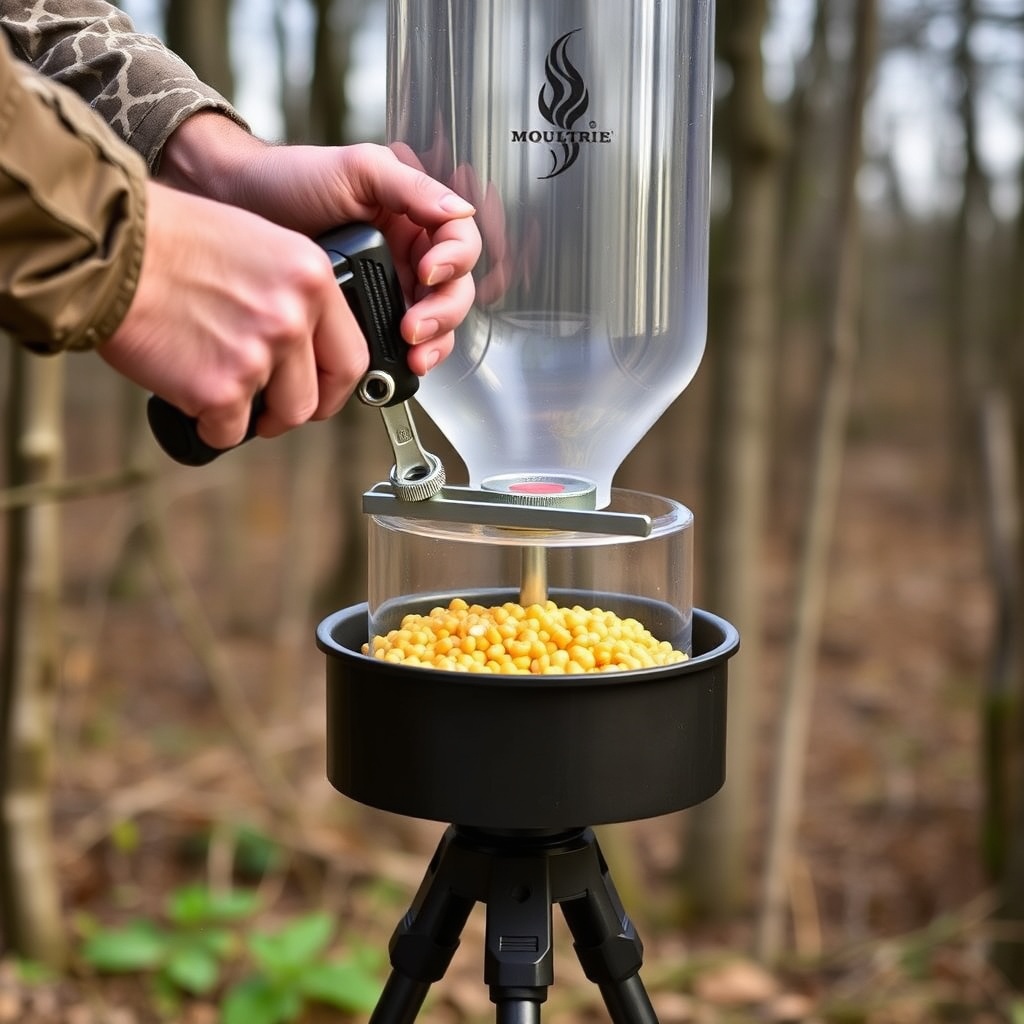
Can You Mount the Moultrie 30-Gallon Pro Hunter on a Tripod Solo?
The honest answer is that you shouldn’t—but many hunters do it anyway. The feeder fully loaded weighs over 268 pounds. Even empty, the barrel’s width makes it awkward to lift overhead and align with the mounting plate. If you’re set on solo mounting, here’s the safest method Tom has seen:
- Assemble the tripod but leave the legs partially collapsed so the mounting plate is waist-high.
- Bolt the feeder to the plate while it’s at this lower height.
- Extend each leg equally to raise the feeder to its final height.
- Anchor each leg with a stake or strap to prevent tipping.
This method keeps you from lifting the feeder above your head. However, it only works if your tripod legs can be extended after the feeder is attached. Some tripods require the legs to be locked at full height before mounting. In that case, get a second person or use a hoist. Never climb a tripod leg to reach the feeder—they’re not designed for climbing, and one slip can bend the leg or cause the whole assembly to fall.
What About Wind and Varmint Protection on the Tripod?
Wind load is a real concern with a big feeder on a tripod. A 30-gallon barrel catches a lot of breeze. Tom has seen tip-overs in gusts above 40 mph when the tripod legs aren’t staked. Use screw-in ground anchors on each leg with a short length of cable. The Moultrie Pro Hunter’s base is already compatible with a varmint cage, and you’ll want that installed before you hang the feeder—it’s much harder to add later.
Speaking of varmints, the Moultrie 30-Gallon Pro Hunter Varmint Guard Effectiveness article covers exactly how well the included shield works and whether you need an add-on cage. For tripod mounting, note that the varmint guard adds about 3 pounds to the weight and a bit of wind resistance, but it’s worth every ounce.
Table: Tripod Mounting Troubleshooting Severity
| Symptom | Severity Level | What to Do |
|---|---|---|
| Feeder wobbles in moderate wind | Needs attention soon | Check that all bolts are tight; add a third strap or stake the legs |
| Corn scatters unevenly (one side has big piles) | Needs attention soon | Re-level the feeder base; check if the spinner plate is vibrating freely |
| Rust on bolts after one season | Usually not urgent | Replace with stainless steel hardware at next fill |
| Leg sinks into soft ground | Needs attention soon | Place a 12-inch square paver under the leg; do not over-extend that leg |
| Feeder makes a grinding noise when spinning | Needs attention soon | Check for debris in the spinner plate or corn that’s too moist; clean and dry |
| Varmint cage rattles against barrel | Usually not urgent | Tighten cage bolts or add foam tape where cage contacts barrel |
What Owners Say About Mounting the Moultrie 30-Gallon Pro Hunter on a Tripod
Real owners on hunting forums and review sites consistently mention two things. First, the bolt pattern on the Moultrie feeder is standard and fits almost every heavy-duty tripod they’ve tried, which saves them from drilling custom holes. Second, they warn about the weight—most say the feeder is fine to mount empty, but filling it on the ground and then lifting it onto the tripod is a mistake. A few owners have mounted the feeder on a very cheap 500-pound tripod from a big-box store and it worked for a season, but developed wobble in year two. They recommend spending the extra money on a 600-pound-rated unit.
One owner noted that he added two additional bolts (for a total of six) by drilling through the base plate, which reduced vibration noise during feeding times. That’s not necessary for most people, but it’s a solid mod if you’re picky about sound.
Frequently Asked Questions
What size tripod do I need for the Moultrie 30-Gallon Pro Hunter?
You need a tripod rated for at least 300 pounds capacity. Most manufacturers list a rating for their tripod, and you should aim for 50% headroom above the fully loaded feeder weight. A 600-pound-rated tripod is ideal.
Can I use a 55-gallon tripod for this feeder?
Yes, those tripods typically have larger mounting plates and heavier legs, so they work fine. Just make sure the bolt holes line up. You may need a bushing or adapter if the center hole on the plate is larger than the feeder’s center hub.
How high should the feeder be above the ground?
Aim for 12 to 15 feet from the bottom of the spinner plate to the ground. This keeps corn out of reach of deer jumping on the tripod (adult deer can jump 6–8 feet) and prevents smaller animals from climbing the legs.
Do I need to grease the tripod leg adjustment pins?
No. Grease attracts dust and grit that can jam the pins. A dry lubricant like silicone spray once per year is fine if the pins get stiff. Tom prefers leaving them dry and just wiping off any rust spots in the off-season.
Will a windsock or decoy work on top of the feeder?
It can, but be careful with added wind load. A small windsock on a short pole adds a few pounds of torque in a breeze, but a large decoy can tip a light tripod. Keep additional items under two pounds and place them close to the center of the lid.
How often should I check the mounting bolts?
At least once per month during the feeding season. Vibration from the timer motor and wind can loosen bolts. Give each bolt a quarter-turn check with a wrench. If you notice movement, tighten immediately and add a drop of thread-locker if needed.