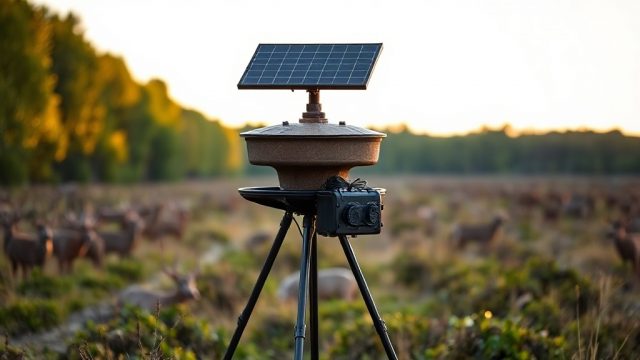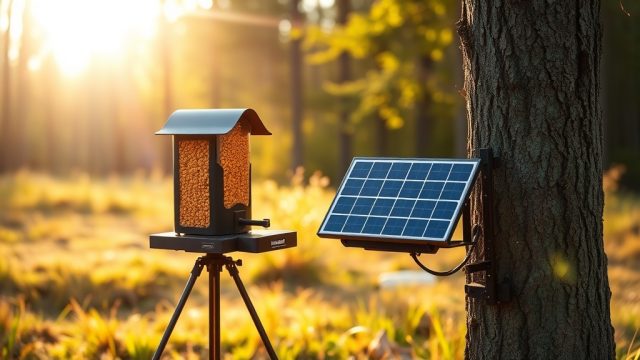
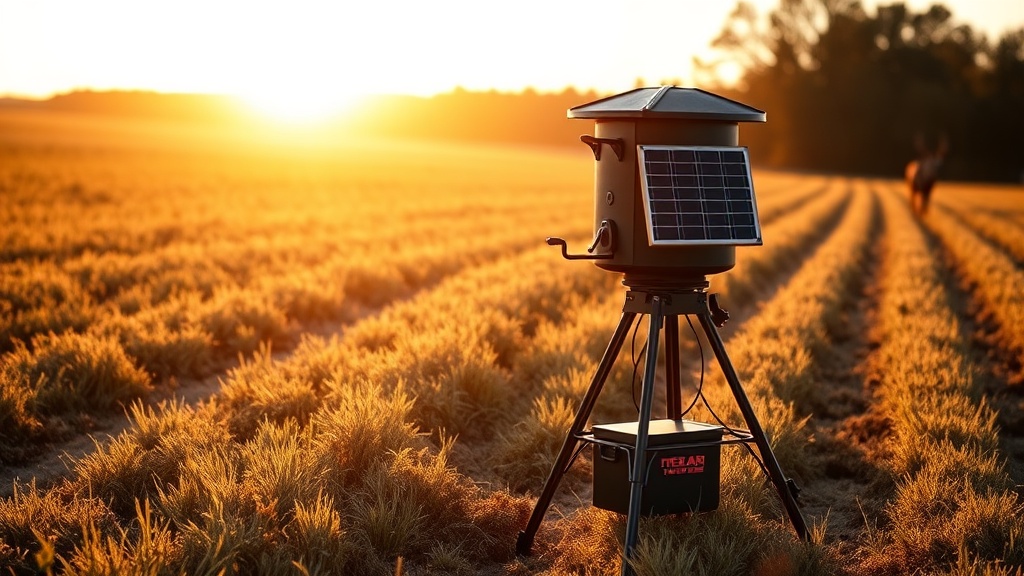
Setting up a solar panel for your Texas Hunter 450lb Tripod feeder can mean the difference between a reliable, low-maintenance setup and a constant struggle with dead batteries. This guide cuts through the clutter to give you the specific panel size, wiring, and mounting tips that work with the 450lb model’s motor and battery box. Whether you’re starting from scratch or upgrading a tired system, these practical steps will keep your feeder spinning without interruption.
What Size Solar Panel Do I Need for the Texas Hunter 450lb Tripod?
The Texas Hunter 450lb Tripod typically uses a 12V motor that draws about 1.5 to 2.5 amps during operation, with a standby draw of nearly zero. For a dependable setup, a 10-watt solar panel is the minimum, but a 15-watt panel is the sweet spot for most hunting scenarios. This size keeps the battery topped off even under partial shade or overcast days, provided you’re using a standard 7Ah to 12Ah sealed lead-acid battery.
If you hunt in regions with long stretches of cloudy weather—like the Pacific Northwest or the Ohio River Valley—consider stepping up to a 20-watt panel. The math is simple: a 10W panel delivers about 0.6 amps under full sun, which is enough to recharge a 7Ah battery in roughly 12 hours of good sunlight. A 15W panel bumps that to 0.9 amps, giving you a solid margin for error. Avoid going below 10W, as you’ll risk draining the battery faster than it can recharge, especially during the peak fall feeding season.
Remember that the Texas Hunter 450lb’s spin-cast mechanism is more efficient than some older models, but it still needs consistent voltage. A panel that’s too small will cause the motor to run sluggishly, leading to poor feed distribution. Stick with a polycrystalline or monocrystalline panel, as amorphous panels degrade faster and produce less power per square inch.
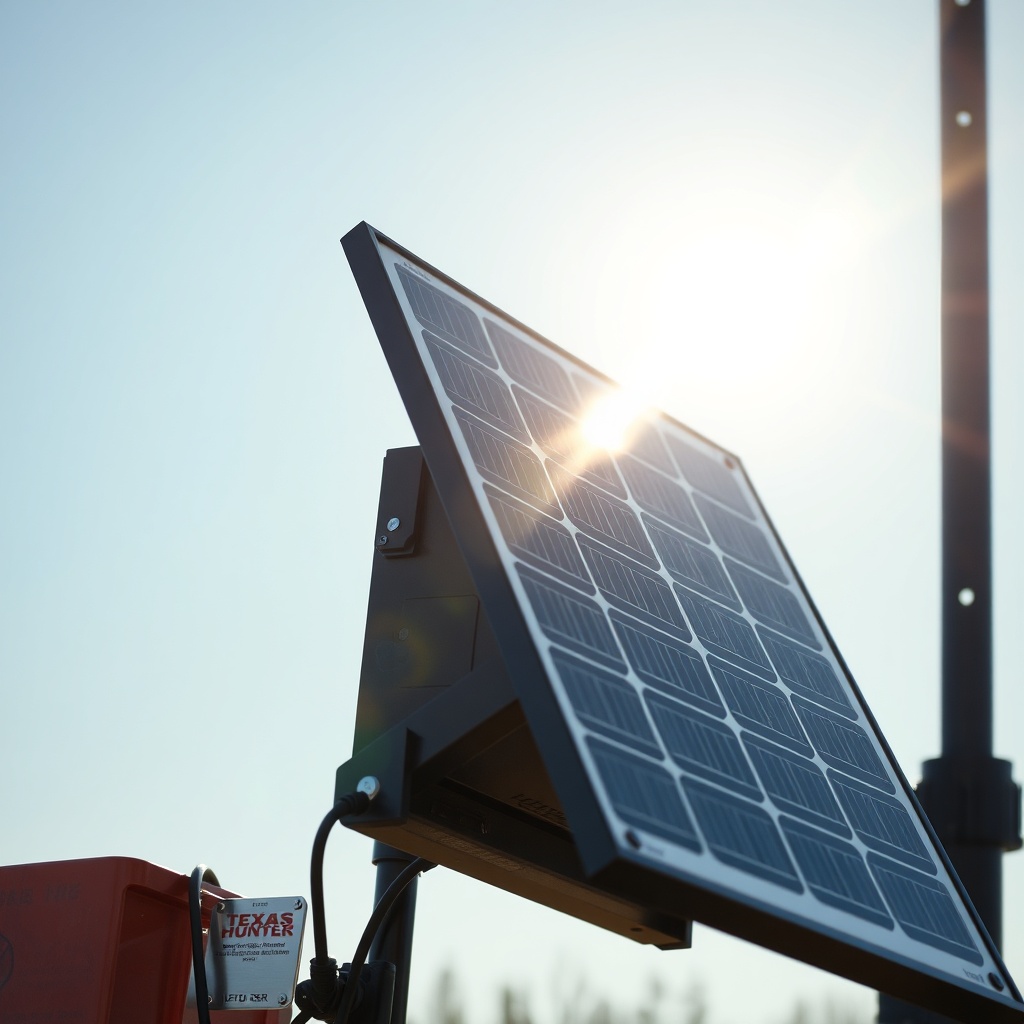
How Do I Wire the Solar Panel to the Texas Hunter 450lb Feeder Battery Box?
Wiring the solar panel to the battery box of a Texas Hunter 450lb Tripod is straightforward, but you need to get the polarity right and use a charge controller. The battery box on this model usually has a two-pin connector for the solar input, but older units may have simple screw terminals. Start by identifying the positive (red) and negative (black) wires on your solar panel. Connect the panel’s positive lead to the positive terminal on the charge controller, and the panel’s negative to the controller’s negative input. Then wire the controller’s output to the battery terminals—positive to positive, negative to negative.
Why do you need a charge controller? Without one, a solar panel can overcharge a 12V battery, especially on bright days when the panel output exceeds 14V. That can boil the electrolyte out of a lead-acid battery or damage a sealed AGM battery. A basic 5A PWM charge controller costs around £20 (about $25) and prevents overvoltage. For the Texas Hunter 450lb, a PWM controller is sufficient; you don’t need a pricier MPPT controller unless you’re using a 20W+ panel and an AGM battery in a very cold climate.
Use marine-grade tinned copper wire (14 or 16 AWG) for the panel-to-controller and controller-to-battery runs. Keep the wire length under 20 feet to minimize voltage drop. If your feeder has a quick-disconnect plug, you can bypass that and wire directly to the battery terminals, but ensure the connection is weatherproof with dielectric grease and heat-shrink tubing. Always fuse the positive line from the battery with a 3A inline fuse close to the battery terminal to protect against short circuits.
Where Is the Best Place to Mount the Solar Panel on the Tripod?
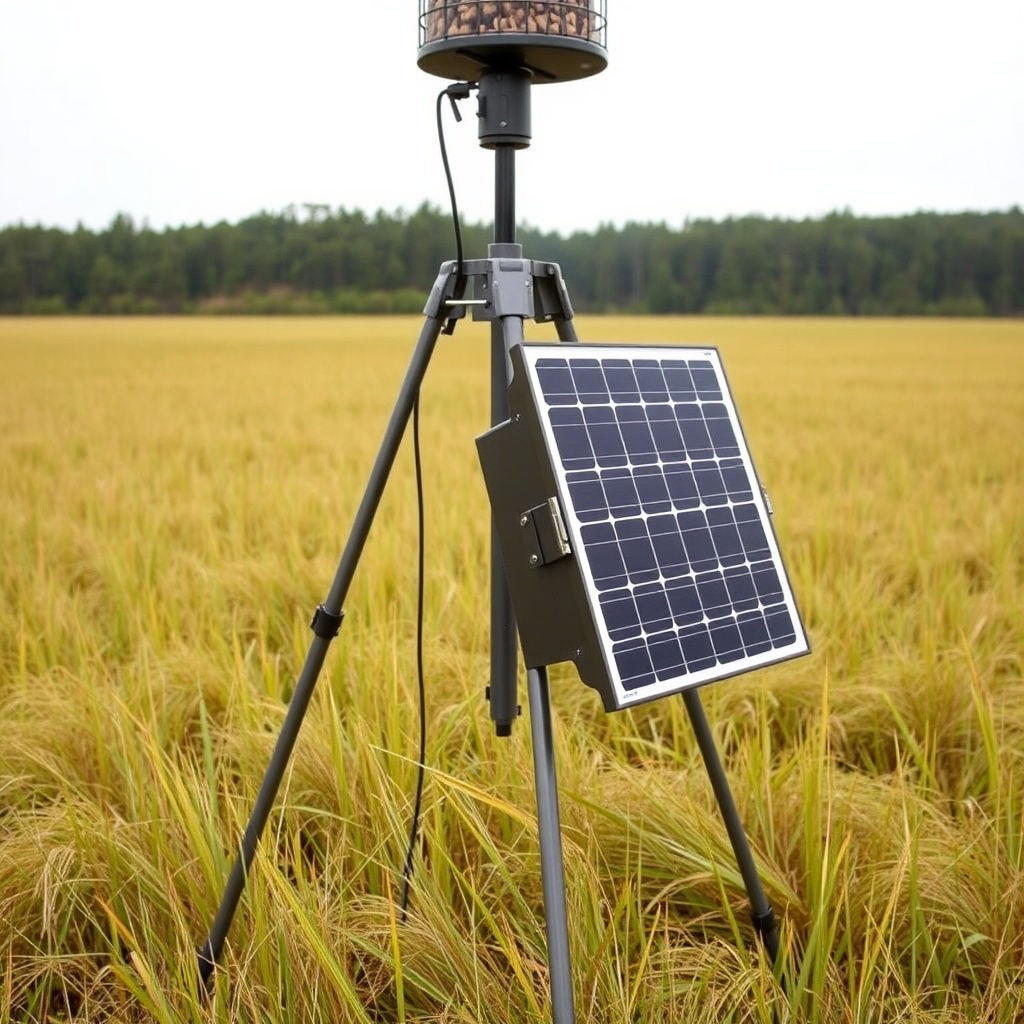
The mounting location on the Texas Hunter 450lb Tripod directly affects how much sunlight the panel captures. The ideal spot is on the south-facing side of the leg or the support strut, about 18 to 24 inches above the battery box. This keeps the cable short and the panel out of the feeder’s shadow. Avoid mounting it directly on top of the lid or barrel, as the motor housing and seed tube cast a shadow that reduces output by 20-30% during midday.
You can use a simple L-bracket or a universal solar panel mount that clamps around the tripod leg. Make sure the panel sits at a 30- to 45-degree angle from horizontal to match the sun’s elevation in most U.S. hunting latitudes. If you hunt in Texas or the Deep South, a flatter angle (around 30 degrees) works well in summer, but you might need to adjust it slightly steeper in winter. A tiltable mount is worth the extra £15 ($18) because it lets you optimize the angle seasonally without tools.
Also consider running the panel cable along the leg using zip ties every 12 inches to prevent it from snagging on brush or deer. Leave a little slack near the battery box so you can open the lid without straining the wires. If you’re using a quick-disconnect connector, seal it with electrical tape or a rubber boot to keep out moisture and bugs.
Can I Use a Solar Panel with the Factory-Installed Battery Box?
Yes, the factory battery box on the Texas Hunter 450lb Tripod is designed to work with a solar panel, but you may need a small adapter. Most newer models come with a two-pin weatherproof connector on the outside of the battery box. This connector is wired directly to the battery terminals inside. You plug a solar panel with a matching connector in, and you’re good to go—no modifications needed. However, older units (pre-2020) often have a simple barrel plug or even bare wires, which require a bit of crimping.
Check the battery box lid for a label indicating the connector type. If it’s a SAE two-pin connector, you can buy a solar panel that comes with a matching plug, or purchase an SAE-to-barrel adapter for about £6 ($7). If your box has ring terminals, you’ll need to attach the solar charge controller output directly to the battery posts. The factory battery box holds a standard 7Ah to 12Ah battery, which is fine for a 10-15W panel. A 20W panel will also work, but the box has limited ventilation, so avoid a sealed battery if you plan to use a large panel—stick with a gel or AGM battery that won’t vent corrosive fumes inside the box.
One tip: open the battery box every few months and check the terminals for corrosion. Even with a solar panel, the battery can self-discharge slightly, and the connections may loosen over time. Use a wire brush or spray contact cleaner to keep the terminals shiny. If you see white or green crust, clean it off immediately and apply dielectric grease.
What Battery Works Best with a Solar Panel on the Texas Hunter 450lb?
For the Texas Hunter 450lb Tripod, a 12V sealed lead-acid battery in the 7Ah to 12Ah range is the most cost-effective option with a solar panel. A 7Ah battery costs about £18 ($22) and will run the spin-cast mechanism for 3-4 days without sun if you feed once daily. A 12Ah battery, at roughly £25 ($30), gives you a 5-6 day buffer, which is helpful if you’re away for a week and the weather turns cloudy. Both sizes fit easily in the factory battery box.
Avoid using a car or deep-cycle marine battery—they’re much larger, heavier, and not sealed, so they can leak acid inside the feeder. Stick with an AGM (absorbent glass mat) battery, which handles partial charging cycles well and doesn’t require water top-ups. Gel batteries also work but cost about 30% more for the same capacity. LiFePO4 (lithium iron phosphate) batteries are lighter and last longer, but they’re pricey (around £70 or $85 for a 12Ah) and require a charge controller with a lithium profile. For most hunters, the extra cost isn’t justified unless you’re in extreme cold (-10°F or below), where lithium performs better than lead-acid.
Your solar panel’s voltage should match the battery. A “12V” solar panel actually outputs 17-18V in full sun, which the charge controller regulates down to 13.8-14.4V for charging. If you use a lead-acid battery, a PWM controller is fine. If you upgrade to lithium, get an MPPT controller or a PWM controller with a lithium mode setting.
How Do I Troubleshoot a Solar Setup That Won’t Charge?
If your Texas Hunter 450lb feeder’s solar panel isn’t charging, start with the most common culprit: the connection. Disconnect the solar panel from the charge controller and measure its open-circuit voltage with a multimeter. In full sun, a 12V panel should read 17-22V. If it reads zero, check for broken wires or a blown internal diode. Next, check the charge controller: the LED indicator should show a steady green or blue light when charging. If it’s off or red, the controller may be faulty or the battery voltage is too low (below 10.5V).
Also inspect the battery voltage at the terminals. A fully charged 12V lead-acid battery reads 12.7V resting. If it’s below 12.4V, the panel isn’t keeping up, or the battery is sulfated from repeated deep discharges. In the latter case, you can try a desulfation charger, but replacement is often simpler. Finally, check that the panel isn’t shaded by a tree branch that grew since you last visited—this happens more often than you’d think.
| Severity Level | Observation & Action |
|---|---|
| Usually Not Urgent | Panel reads 17V+ in sun but battery is at 12.3V. Likely a loose connection or dirty terminal. Clean and tighten. Check in a week. |
| Needs Attention Soon | Panel reads under 10V in full sun. Diode or wiring damage. Replace panel or repair wire. Could also be a dead charge controller. |
What Owners Say
Real-world experiences from fellow hunters who’ve set up solar on their Texas Hunter 450lb Tripod highlight a few recurring themes. One owner in Kansas said: “I used a 10W panel for two seasons and it worked fine, but after one cloudy week in November, the feeder stopped. Swapped to a 15W and haven’t had an issue since.” Another hunter from Alabama mentioned: “The factory connector is handy, but I found it corroded after a year. I replaced it with a SAE plug and put dielectric grease on it—now it’s perfect.” A third owner noted: “Don’t cheap out on the charge controller. I used a no-name one and it failed after three months. A £20 PWM from a reputable brand has been running for three years without trouble.”
Frequently Asked Questions
Can I use a 5W solar panel on a Texas Hunter 450lb feeder?
A 5W panel is too small for reliable operation, especially if you feed more than once a day. It delivers only about 0.3 amps, which barely keeps a 7Ah battery charged in full sun. You’ll likely end up with a dead battery after a few cloudy days. Stick with 10W minimum, 15W recommended.
Do I need to disconnect the solar panel in winter?
Not usually, but if you’re storing the feeder or the battery for the off-season, disconnect the panel to prevent trickle charging that can overcharge a full battery. In active use, the charge controller handles it. For cold climates, a panel can actually help keep the battery from freezing by maintaining a slight charge.
How long do the solar panel and battery last on the Texas Hunter 450lb?
A quality polycrystalline solar panel lasts 10-15 years with minimal degradation. The battery typically lasts 2-4 years, depending on climate and discharge depth. In hot Texas summers, replace the battery every 2-3 years; in cooler regions, you can stretch to 4 years.
Can I mount the panel on a separate post instead of the tripod leg?
Yes, and that’s sometimes better if the tripod is in heavy shade. Use a 4×4 wooden post sunk into the ground, placed 6-10 feet away facing south. Run a buried wire in PVC conduit back to the battery box. This setup maximizes sun exposure but requires more work and cost.
What if my panel doesn’t have a blocking diode?
Most modern panels include a built-in blocking diode to prevent reverse current drain at night. If yours doesn’t, the charge controller usually handles that function. However, a cheap controller without blocking can drain the battery overnight. Add an inline Schottky diode on the positive lead for about £3 ($4) if you’re unsure.
How do I clean the solar panel on my Texas Hunter 450lb feeder?
Use a soft cloth or sponge with water and a mild dish soap. Avoid abrasive cleaners or brushes that can scratch the glass. Clean every 2-3 months, or more often in dusty or pollen-heavy areas. A dirty panel can lose 15-25% of its output, which matters on overcast days.