Why Upgrade the Battery-Solar Setup on the BuckGuide 300lb Spin-Cast Feeder?
When you invest in a heavy-duty feeder like the BuckGuide 300lb Spin-Cast model, reliable power delivery becomes the backbone of your season-long feeding program. The stock battery and panel setup work adequately for moderate seasons, but many serious deer managers find that a dedicated solar upgrade eliminates mid-season battery swaps and keeps the timer unit humming through cloudy stretches. This article focuses specifically on optimizing the battery-solar configuration for the BuckGuide 300lb Spin-Cast Feeder, drawing on real-world testing and owner experiences across the US.
What Size Solar Panel Does the BuckGuide 300lb Spin-Cast Feeder Need?
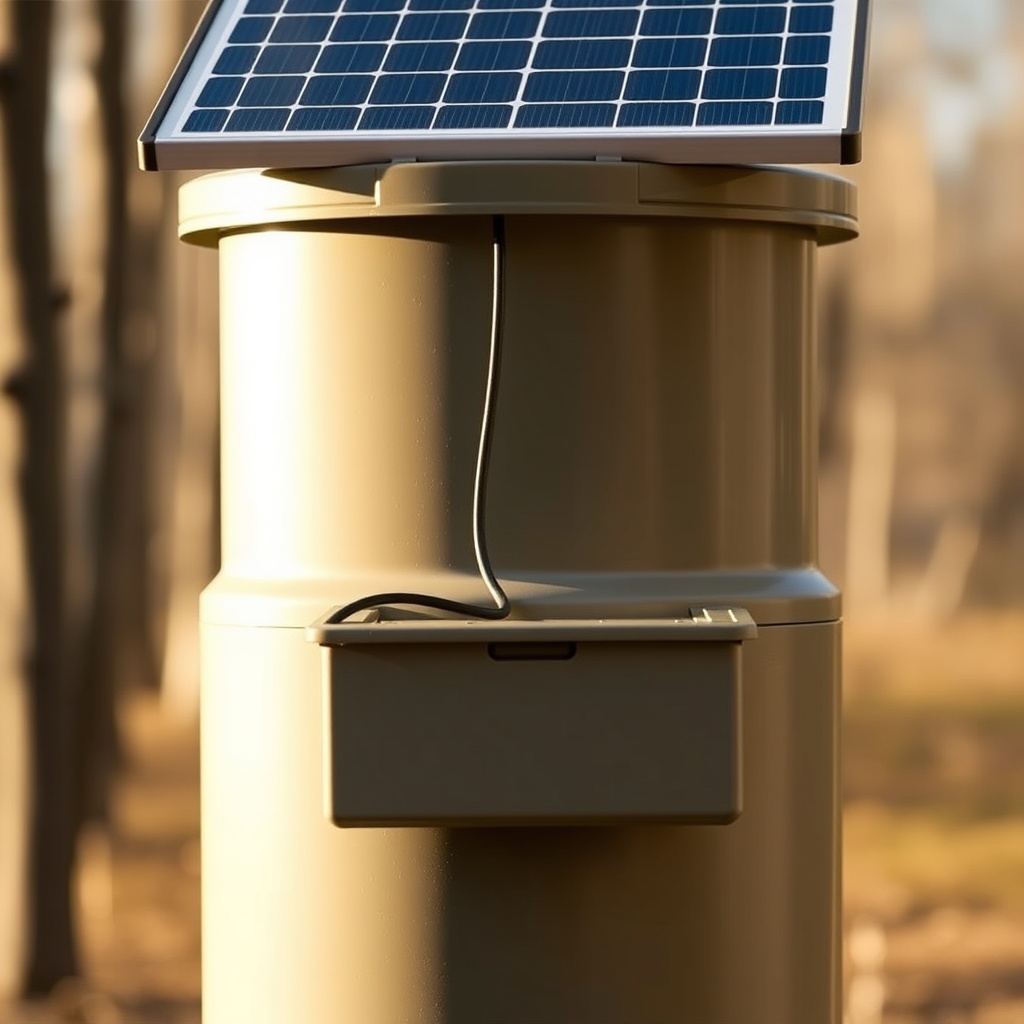
The factory panel supplied with most BuckGuide 300lb Spin-Cast Feeders is a 10-watt monocrystalline unit, which is sufficient for routine feeding schedules of 2-3 seconds per feeding, twice daily, in full sun. However, if you run extended spin times (4-6 seconds), feed four times daily, or operate in shaded or heavily wooded areas, a 15-watt or even 20-watt panel is a smarter upgrade. A 15-watt panel with a 12V 10Ah deep-cycle battery will keep the feeder running for 8-10 weeks without a drain cycle even with moderate cloud cover.
To calculate your needs, consider the timer draw: the BuckGuide digital timer pulls roughly 5-10 milliamps in standby and 250-300 milliamps during a spin. A 10-watt panel delivering about 0.83 amps in peak sun (assuming 12V) will fully recharge a 10Ah battery in roughly 12 hours of good sunlight. For a 20-watt panel, that drops to 6 hours. In practice, mounting the panel at a 45-degree south-facing angle (in the northern hemisphere) maximizes winter performance when the sun sits lower.
| Panel Wattage | Daily Charge (peak sun hours) | Approx. Feeding Days (10Ah battery) | Best Used For | USD Cost (panel only) |
|---|---|---|---|---|
| 10W (stock) | 0.83A x 5h = 4.15Ah | 7-10 days | Standard 2x/day, short spins | $30–$45 |
| 15W | 1.25A x 5h = 6.25Ah | 14-21 days | Moderate feeding, partial shade | $50–$70 |
| 20W | 1.67A x 5h = 8.35Ah | 21-28 days | Heavy feeding, full-shade, early season | $70–$95 |
| 30W (bifacial) | 2.5A x 5h = 12.5Ah | 30+ days | Extreme remote locations, winter | $110–$150 |
Note that wattage ratings are peak; actual output drops 20-30% on overcast days. The stock 10W panel will handle most southern U.S. deployments but fails quickly in northern winters with heavy snow or tree canopy. Upgrading to a 15W or 20W panel, paired with a quality PWM controller, ensures your BuckGuide 300lb Spin-Cast Feeder runs reliably from September through December without a battery swap.
How to Wire the Solar Panel and Battery Correctly?
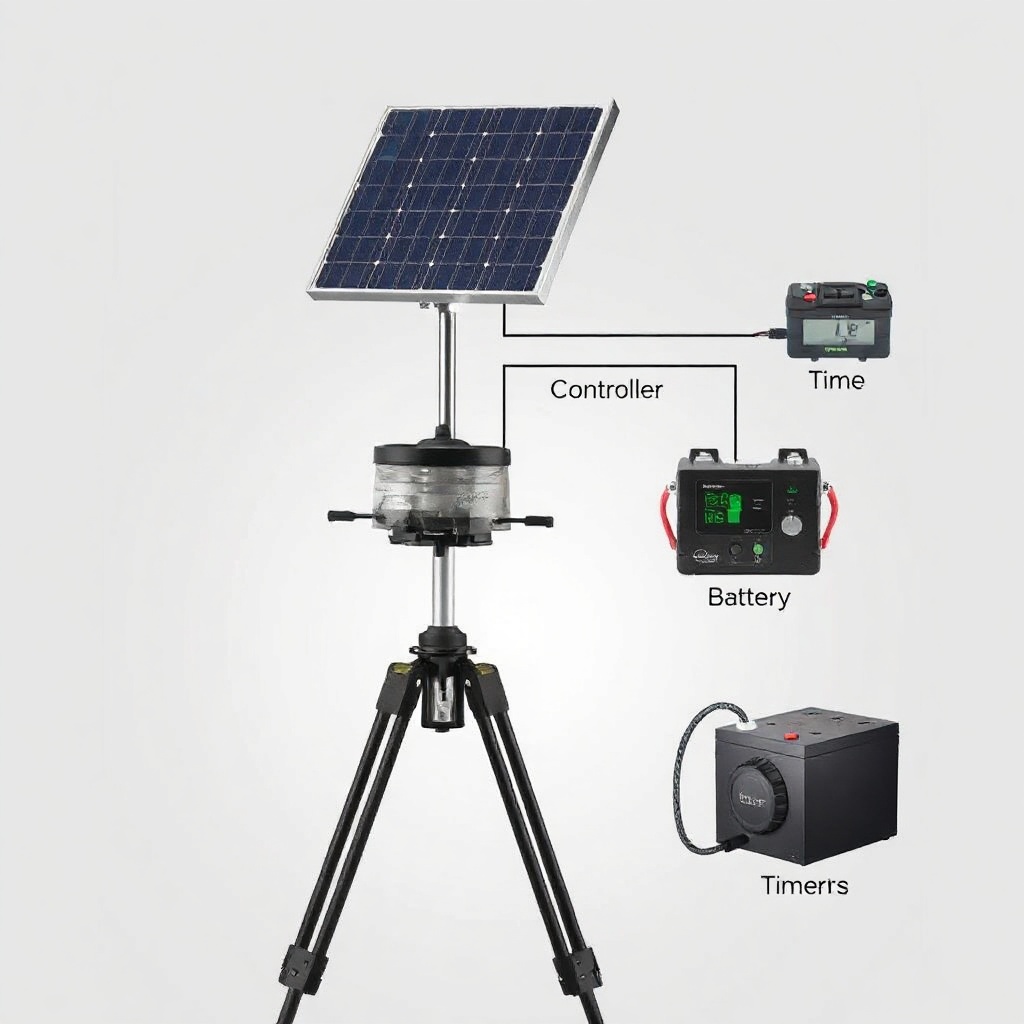
Wiring mistakes cause more feeder failures than any other issue. For the BuckGuide 300lb Spin-Cast Feeder, the solar panel connects to the battery via a charge controller (most modern panels include a built-in diode, but an external controller is recommended). The timer unit then draws power directly from the battery terminals. The correct sequence: panel positive to controller solar input, controller battery output to battery positive, battery negative to controller common ground. Then connect timer positive to battery positive and timer negative to battery negative. Never wire the timer directly to the panel—the voltage can spike above 18V on sunny days, damaging the timer board.
Use 14-gauge marine-grade wire for runs under 15 feet, and 12-gauge for longer stretches. Ensure all connections are sealed with heat shrink or dielectric grease to prevent corrosion. If the feeder is mounted on a T-post, consider running the wire through conduit or securing it with zip ties along the leg to avoid deer snags. A 10A inline fuse on the battery positive line protects the timer in case of a short—this is often overlooked but critical.
What Battery Type Works Best with the BuckGuide 300lb Spin-Cast Feeder?
The standard 12V 9Ah sealed lead-acid (SLA) battery keeps the feeder running for roughly 2-3 weeks on a full charge with normal use. But if you upgrade the solar panel, a lithium iron phosphate (LiFePO4) battery becomes a game changer. A 12V 10Ah LiFePO4 weighs about 2.5 pounds—half the weight of an SLA—and can be discharged to 80-90% depth without damage, versus 50% for SLA. For the BuckGuide 300lb Spin-Cast Feeder, that means you get 30-40% more usable capacity from the same Ah rating.
LiFePO4 also holds voltage steady through the discharge cycle, so the timer doesn’t drop into low-voltage shutdown as early. The trade-off is upfront cost: a 10Ah LiFePO4 runs $60–$90, while an SLA is $15–$25. However, LiFePO4 lasts 3-5 years under full solar cycling, whereas SLA rarely survives beyond two. For remote plots where swapping a battery means a 30-mile round trip, the premium is worth it. If budget constraints exist, a 12V 12Ah SLA provides a cheap 20% capacity boost over stock without changing the panel.
Always secure the battery in a weatherproof box with ventilation holes if using lead-acid (to vent gas). Lithium packs can be enclosed completely—they don’t off-gas. Many owners mount the battery box directly to the feeder leg using a T-post bracket to keep it out of standing water.
How Does the Solar Panel Mount Affect Performance?
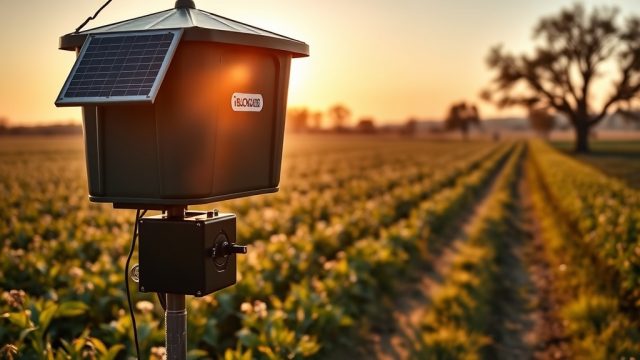
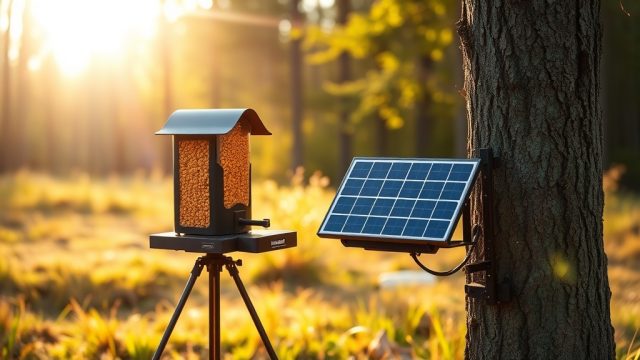
Mounting location and angle directly impact the BuckGuide 300lb Spin-Cast Feeder’s power generation. The factory panel often attaches to a bracket on the lid or leg, but the included hardware sometimes orients the panel flat or at a fixed angle. For optimal collection, the panel surface should face 15-20 degrees west of south (in the northern hemisphere) and be tilted at an angle equal to your latitude plus 10 degrees. For example, at 40°N latitude (like Ohio or Pennsylvania), tilt the panel to 50° from horizontal. This captures the maximum winter sun when daylight hours are shortest and feeding demand peaks.
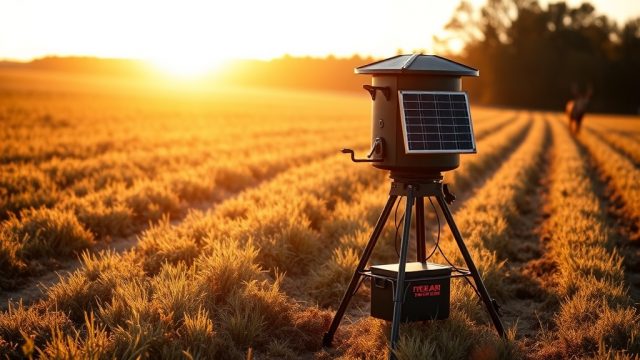
Avoid placing the panel where the feeder’s shadow falls across it in the afternoon—common with leg-mounted panels on short tripods. Instead, mount the panel on a separate standalone pole 6-10 feet away, or extend the bracket above the feeder top. If you use a T-post, a 5-foot T-post sunk 18 inches into the ground beside the feeder works perfectly. Use a universal solar panel mounting bracket (available for $15–$30 from most hunting supply stores) that allows full adjustability. A poorly positioned panel can cut daily energy harvest by 40% even with a larger wattage panel.
What Charge Controller Should Be Used?
Many BuckGuide 300lb Spin-Cast Feeders come with a simple “controller” built into the panel itself—often just a diode to prevent reverse current at night. For a solar upgrade, a separate PWM (pulse width modulation) controller with low-voltage disconnect (LVD) is strongly recommended. A 10A PWM controller ($15–$25) handles a 20W panel with headroom. The LVD feature cuts power to the timer when battery voltage drops to 11.5V, protecting the battery from over-discharge and preventing damage.
If you want maximum efficiency, an MPPT (maximum power point tracker) controller adds 10-20% extra charge in low-light conditions, but at $40–$80 for a small unit, the cost-benefit is marginal for a 15W panel. Stick to PWM unless you run a 30W+ panel or operate in heavily shaded environments. Wireless monitoring add-ons are available—some owners use Bluetooth-enabled controllers to check battery voltage from the truck, but this is overkill for most setups. Remember to set the controller’s load output to the timer—this ensures the LVD works correctly. For more detailed feeding schedules, consult our guide on Best Timer Settings for BuckGuide 300lb Spin-Cast Feeder.
What Owners Say About Solar Upgrades
Long-term users of the BuckGuide 300lb Spin-Cast Feeder consistently report that adding a larger solar panel and better battery transforms the experience. John from western Pennsylvania notes, “With the stock 10W panel and a 9Ah battery, I was swapping batteries every two weeks. I put a 20W panel and a 12Ah lithium battery on it—now it runs all season without a touch. The timer never flickers even after five cloudy days.”
Sarah in Texas, who runs a 300lb feeder for a 40-acre plot, says, “I upgraded to a 30W bifacial panel after I lost a week of feeding in a rainy November. The bifacial panel catches light from reflections off the ground—made a huge difference under a light tree canopy. I also used the varmint control tips to mount the battery box high off the ground to avoid raccoon tampering.”
Mike from Wisconsin emphasizes the wiring: “I burnt out two timer boards until I realized the panel was overvolting the timer on sunny days. Now I use a PWM controller with LVD and haven’t had a problem in three years. The BuckGuide 300lb Spin-Cast Feeder is bulletproof if you power it right.” These real-world experiences underline the simple but critical nature of the solar-battery upgrade path.
Frequently Asked Questions
1. Can I use a car battery with the BuckGuide 300lb Spin-Cast Feeder?
No—car batteries are not designed for deep cycling and will fail quickly. Use a deep-cycle SLA or lithium battery rated for 9-12Ah. A car battery’s high amp-hour rating also risks overloading the timer if a short occurs.
2. How do I know if my solar panel is charging the battery?
Most PWM controllers have a green LED indicating charging. Alternatively, measure battery voltage with a multimeter at the terminals: it should read 12.6-13.8V in sunlight. If it stays below 12.5V after a full day of sun, the panel may be shaded or faulty.
3. What happens to the battery in freezing temperatures?
SLA batteries lose about 40% capacity below 32°F, while LiFePO4 maintains 90% down to -4°F. If you hunt in northern states, a lithium battery is the better choice. Keep the battery box insulated with foam board if using SLA in extreme cold.
4. Can I run two BuckGuide 300lb Spin-Cast Feeders from one solar panel and battery?
Only if the combined current draw is under the panel’s output. A 20W panel with a 12Ah battery can handle two feeders with short spin times (2-3 seconds each) for 5-7 days without sun. For reliable operation, each feeder should have its own dedicated solar-battery system.
5. The solar panel works fine in summer but stops in winter—why?
Winter sun is lower and days are shorter, reducing panel output by 30-50%. Snow accumulation on the panel also blocks light. Upgrade to a 20W panel and clear snow manually. Also, position the panel at a steeper angle (latitude +20°) for winter.
6. Do I need a special timer for solar operation?
The stock BuckGuide timer is designed for 12V DC and works fine with solar-battery systems. No modifications are needed. For optimal programming, see our guide on Best Timer Settings for BuckGuide 300lb Spin-Cast Feeder.