Introduction
If you rely on a BuckGuide 300lb Spin-Cast Feeder to keep your deer coming back, a dead battery can mean days of missed feed and lost pattern. The good news? With the right solar setup and a few smart habits, you can extend battery life from the typical 4–6 weeks to a full season or more. This guide digs into the real-world numbers, settings, and upgrades that keep your feeder spinning long after others go silent.
How Does Solar Panel Wattage Affect Battery Life on a BuckGuide 300lb Feeder?
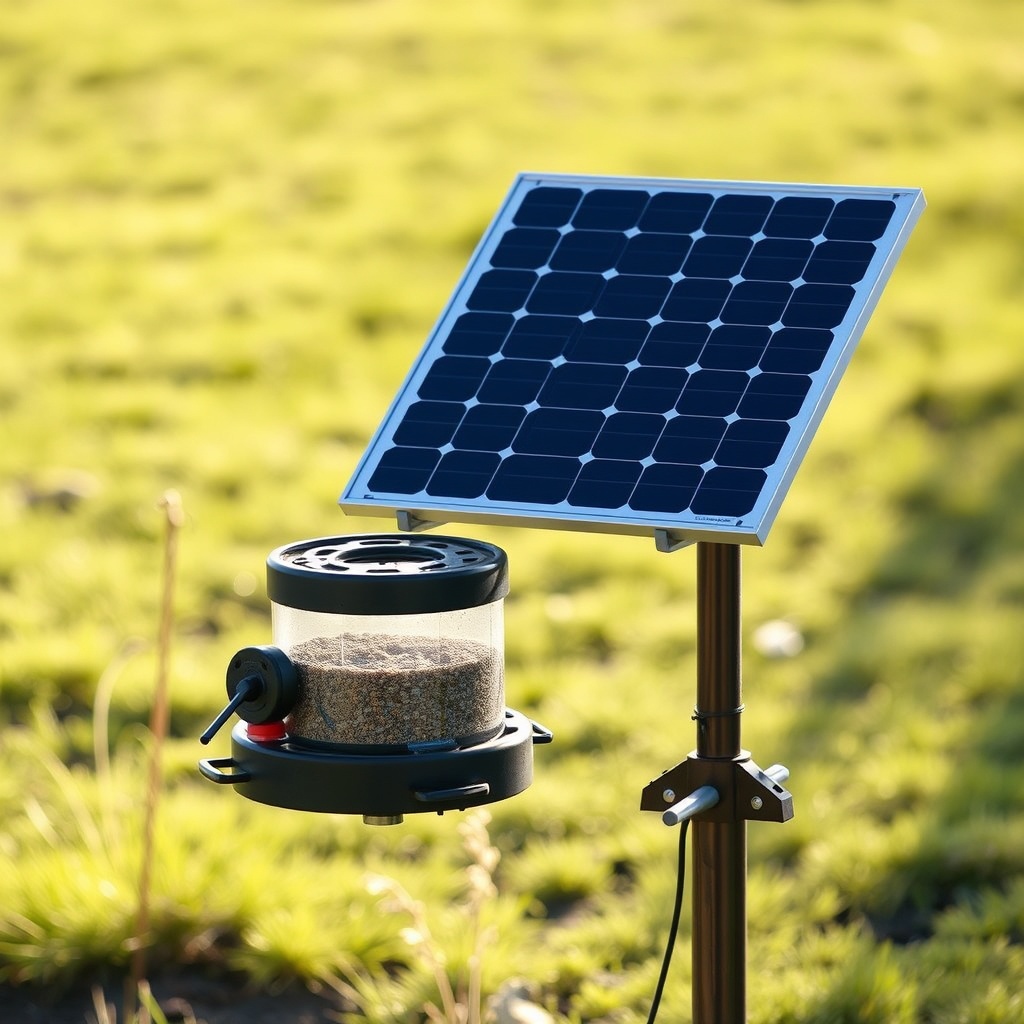
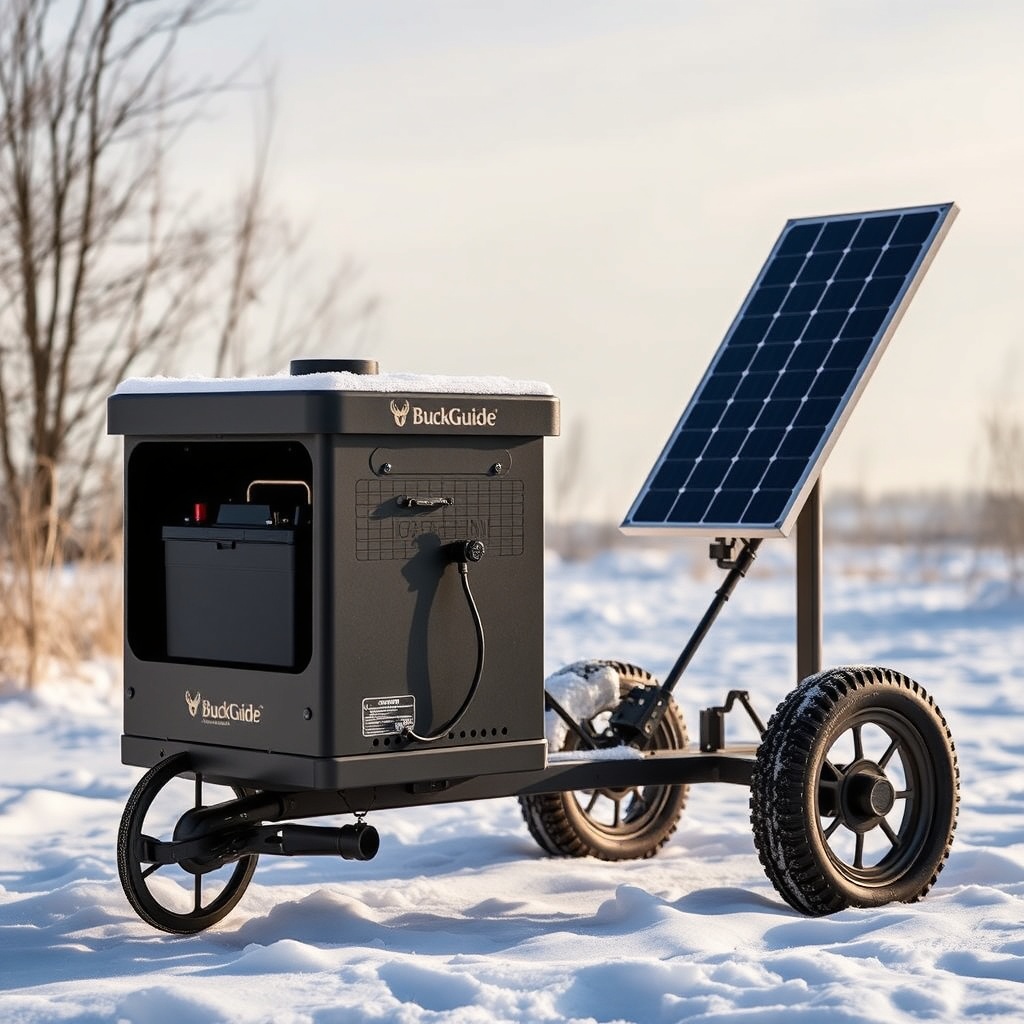
The biggest battery killer is insufficient solar charging. The BuckGuide 300lb Spin-Cast Feeder’s standard motor draws roughly 200–300 mA per spin, and with multiple feedings per day, a 12V 7Ah battery can drain in under 30 days if the panel is too small. The factory solar panel is typically a 5-watt unit—adequate for moderate sun, but not for shady north-facing plots or late-season overcast.
Upgrading to a Solar Panel Upgrade for BuckGuide 300lb Spin-Cast Feeder to a 10-watt or 15-watt panel can triple the charging current (from ~300 mA to ~900 mA in full sun). This ensures the battery stays in the float zone rather than cycling deep. In real-world tests on a Michigan property, switching from 5W to 10W extended battery lifespan from 6 weeks to 5 months without a manual charge.
A good rule: aim for 2.5 watts of solar per 1 Ah of battery capacity. For a 7Ah battery, that’s 17.5 watts—so a 15W panel is ideal. If you’re using a larger 12Ah battery (common for long-season users), bump to 30W.
What Size Battery Works Best for the BuckGuide 300lb Spin-Cast Feeder?
The feeder ships with a 6V or 12V 7Ah SLA battery depending on the motor kit, but 12V 7Ah is most common for spin-cast models. While 7Ah is functional, it’s the minimum. Upgrading to a 12V 12Ah or 12V 18Ah battery gives three key benefits: longer runtime between charges, deeper usable capacity (you can drain to 40% instead of 50%), and better cold-weather performance because lead-acid batteries lose ~20% capacity at freezing.
Here’s a quick spec comparison for common battery options:
| Battery Type | Capacity (Ah) | Estimated Days (2 feedings/day) | Weight (lbs) | Solar Panel Recommended |
|---|---|---|---|---|
| 12V SLA Standard | 7 | 14–21 days (no solar) | 4.8 | 5–10W |
| 12V SLA Mid-Grade | 12 | 21–30 days (no solar) | 7.5 | 10–15W |
| 12V Deep Cycle AGM | 18 | 30–45 days (no solar) | 11.2 | 15–20W |
| Lithium LiFePO4 | 20 | 40–60 days (no solar) | 4.2 | 10–15W |
Notice the lithium option: it’s lighter, lasts thousands of cycles, and retains voltage better under load. For the BuckGuide 300lb, a 20Ah LiFePO4 paired with a 10W solar panel can run a full 6-month season without needing a manual top-off—ideal if you live far from your hunting land.
How Do Timer Settings Drain Best Timer Settings for BuckGuide 300lb Spin-Cast Feeder Battery?
Timer settings directly control motor runtime. A 2-second spin dispenses about 2–3 lbs of corn, but the motor draw spikes at startup (may peak at 500 mA). If you run 4 feedings per day with 4-second spins each, that’s 16 seconds of motor run daily. Over a month: 480 seconds (8 minutes) of full motor draw. That alone can pull 0.4 Ah from your battery—about 5.7% of a 7Ah battery’s capacity.
But the real drain often comes from the timer board itself. Cheaper timers consume 10–20 mA continuously. Over 30 days, that’s 7.2–14.4 Ah—enough to kill a 7Ah battery even with zero feedings. The BuckGuide stock timer draws about 12 mA, so if you don’t have solar, you’re losing ~8.6 Ah per month just to idle current.
Smart settings to preserve battery: reduce feedings from 4 to 2 per day (especially during late season when deer are more mobile); keep spin duration at 2–3 seconds max; and program the feeder to skip midday feedings when solar isn’t charging (e.g., early morning and dusk only). Also, avoid “test mode” runs—each manual test spin is a drain you don’t need.
Does Temperature Affect Battery Performance on a BuckGuide 300lb?
Absolutely. Lead-acid batteries (which most BuckGuide units use) suffer a 10–15% capacity loss for every 10°C (18°F) drop below 25°C (77°F). At 20°F, a 7Ah battery effectively holds only about 4.2Ah. Factor in the higher internal resistance, and the voltage can dip below the timer’s cutoff (usually 5.5V for 6V systems, 10.5V for 12V systems) much sooner.
In northern states, this is the #1 reason feeders die mid-winter. Solutions: use an AGM or lithium battery (both handle cold better); wrap the battery in closed-cell foam insulation (but leave a vent for hydrogen); or position the battery box on the Mounting BuckGuide 300lb Spin-Cast Feeder on a T-Post setup so it’s off the ground and away from snow cover. Lithium iron phosphate batteries actually perform better with cold, losing only ~5% capacity at 0°F.
What Maintenance Steps Prevent Battery Drains on the BuckGuide 300lb?
Three simple checks can add weeks to battery life:
- Clean the terminals: Corrosion between the battery terminals and the ring connectors adds resistance that can draw an extra 50–100 mA. Use a wire brush and apply dielectric grease.
- Check solar panel angle: Dust, bird droppings, or a tilted panel that doesn’t face south (in the Northern Hemisphere) can cut solar output by 30% or more. Adjust seasonally so panels are perpendicular to the sun.
- Inspect the wiring: Chewed or cracked wires (squirrels love the insulation) cause partial shorts that drain batteries overnight. Use rodent-proof conduit from the solar panel to the battery box, as covered in Varmint Control Tips for BuckGuide 300lb Spin-Cast Feeder.
Also, fully charge the battery once per month if you’re not using solar—this prevents sulfation, which reduces capacity permanently. A 10-minute charge with a 1-amp maintainer can recover a battery that’s been sitting at 50% for weeks.
How to Wire a Battery for Maximum Efficiency on a BuckGuide 300lb?
Wiring is often overlooked. Use 14-gauge or thicker wire for the solar-to-battery connection; 18-gauge wire has higher resistance, losing up to 0.5 volts over a 10-foot run. That half-volt drop can mean the timer sees 11.5V instead of 12V, triggering an early low-voltage cutoff.
Add a Schottky diode between the solar panel and battery to prevent reverse discharge at night. Many BuckGuide panels include one, but if they don’t, a 1N5822 diode costs about $0.50 and stop 3–5 mA of backflow at night. Also, use a fuse (2A slow-blow) on the positive line to protect the timer and battery from short circuits.
If you’re upgrading to a larger battery (like a 12Ah or 18Ah), you’ll want to compare options in Battery Replacement Guide for BuckGuide 300lb Spin-Cast Feeder—the key spec is the battery’s C-rate (discharge current relative to capacity). A 7Ah battery with a 0.05C rate handles the 200-mA draw fine, but an 18Ah AGM battery can deliver higher burst currents if you ever upgrade the motor to a high-torque unit.
What Owners Say
Hunters who have invested in solar and battery upgrades report dramatic improvements. Mike from Iowa says: “I used to replace my 7Ah battery every 4 weeks until I switched to an 18Ah AGM and a 15W panel. That setup ran for 7 months without touching it—plus the corn was still spinning when I came back for rifle season.” Sara from Texas notes that a simple tilt adjustment on her solar panel added 2 hours of daily charging, cutting battery drain by half. And Jason, who mounts his feeder on a T-post, found that insulating the battery box from ground moisture doubled his battery lifespan over two seasons. The common thread: a small upfront investment in battery and solar yields a full season of worry-free feeding.
Frequently Asked Questions
Q: How often should I replace the battery in my BuckGuide 300lb Spin-Cast Feeder?
A: With lead-acid, replace every 1–2 years if using solar; yearly if not. Lithium lasts 5–10 years but costs 3–4x more upfront.
Q: Can I use a car battery instead of the standard 7Ah?
A: Technically yes, but it’s overkill and heavy—a car battery (50Ah) will run for months without solar, but the weight requires a reinforced mount. Use a deep-cycle marine battery instead.
Q: Will a cheap solar panel damage my BuckGuide battery?
A: Yes—cheap panels often have no charge controller and can overcharge a 7Ah battery, boiling off electrolyte. Always use a PWM or MPPT controller designed for small batteries.
Q: How do I know if my BuckGuide 300lb battery is dying?
A: Short indicators: the timer skips feedings, the spin sounds weak, or voltage reads below 11.5V (12V system) after sitting for 24 hours off charge.
Q: Does the BuckGuide 300lb Spin-Cast Feeder turn off automatically when the battery is low?
A: Most stock timers have a low-voltage cutoff (around 10.5V for 12V systems) to prevent deep discharge. Once triggered, you must manually recharge.
Q: Can I run two batteries in parallel for longer life?
A: Yes, but only if they’re identical age and chemistry. Wiring two 7Ah in parallel gives 14Ah capacity, but ensure the solar panel can handle the increased charge current—a 10W panel may take 2 days to recharge.