Solar Panel Compatibility with Moultrie 30-Gallon Pro Hunter Feeder
The Moultrie 30-Gallon Pro Hunter is a robust feeder designed for serious deer management, and integrating a solar panel is one of the smartest ways to extend its battery life and reduce maintenance. This article focuses specifically on solar panel compatibility, covering everything from voltage requirements to mounting options. Whether you’re adding solar for the first time or replacing a worn panel, understanding how to pair a solar panel with the Pro Hunter will keep your feeding schedule consistent without manual battery swaps.
What Voltage and Wattage Solar Panel Works Best with the Moultrie 30-Gallon Pro Hunter?
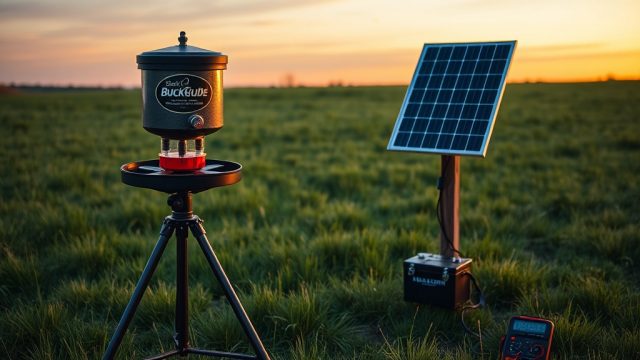
The Moultrie 30-Gallon Pro Hunter typically operates on a 6-volt or 12-volt battery system, depending on the model year and included components. The feeder’s timer and motor are designed to run efficiently on a 6-volt rechargeable battery, which is common in Moultrie’s Pro Hunter series. For solar compatibility, a 5-watt to 10-watt solar panel rated for 6 volts is ideal. A 5-watt panel provides enough amperage (around 0.8 amps) to keep the battery topped off during daylight hours, even in partly cloudy conditions. A 10-watt panel offers a safety margin for heavy-use scenarios or regions with low sunlight, charging at roughly 1.6 amps. Using a panel with higher wattage than 10 watts could overcharge a 6-volt battery without a proper charge controller, so stick to the recommended range. For 12-volt models, a 10-watt panel with a charge controller is necessary to prevent overvoltage, but many owners find the 6-volt setup more straightforward and cost-effective.
Always verify your specific feeder’s battery voltage by checking the battery compartment label or the included manual. Moultrie’s official solar kit for this feeder uses a 6-volt, 5-watt panel, which is a safe starting point. If you use an aftermarket panel, ensure it includes a blocking diode to prevent battery drain at night.
How Do I Wire the Solar Panel to the Battery Compartment?
Wiring the solar panel to the Moultrie 30-Gallon Pro Hunter is straightforward, but attention to polarity is critical. The battery compartment typically contains a 6-volt SLA (sealed lead-acid) battery with red positive and black negative terminals. Most solar panels come with pre-attached wires and alligator clips or ring terminals. For a permanent installation, cut the solar panel wires to length, strip about 1/4 inch of insulation, and connect them to the battery terminals using ring terminals that fit the screw posts. Positive (red) from the solar panel connects to positive on the battery, and negative (black) to negative. If the solar panel has a blocking diode built-in, no extra components are needed; if not, wire a 1N4001 diode in series with the panel’s positive lead to prevent reverse current at night. A fuse is not mandatory for a 5-watt panel, but adding a 2-amp inline fuse on the positive wire is good practice for protection against shorts.
For a tidy installation, route the solar panel wire through the feeder’s bottom access hole (where the drop tube exits) or drill a small 1/4-inch hole in the side of the hopper, sealing it with silicone afterward. Avoid routing wires near moving parts like the spinner plate or motor shaft. The feeder’s timer unit sits on top of the battery, so ensure wires don’t interfere with the timer door closing properly.
What Is the Best Way to Mount a Solar Panel on a Moultrie 30-Gallon Pro Hunter?
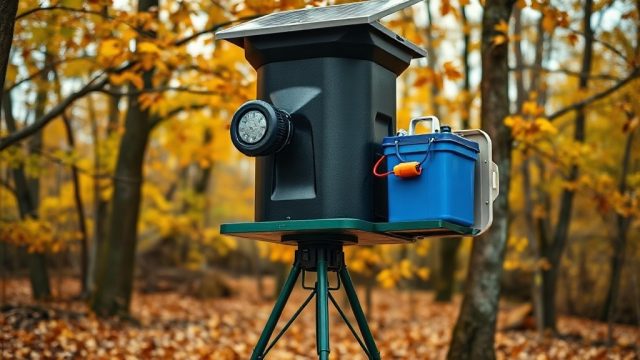
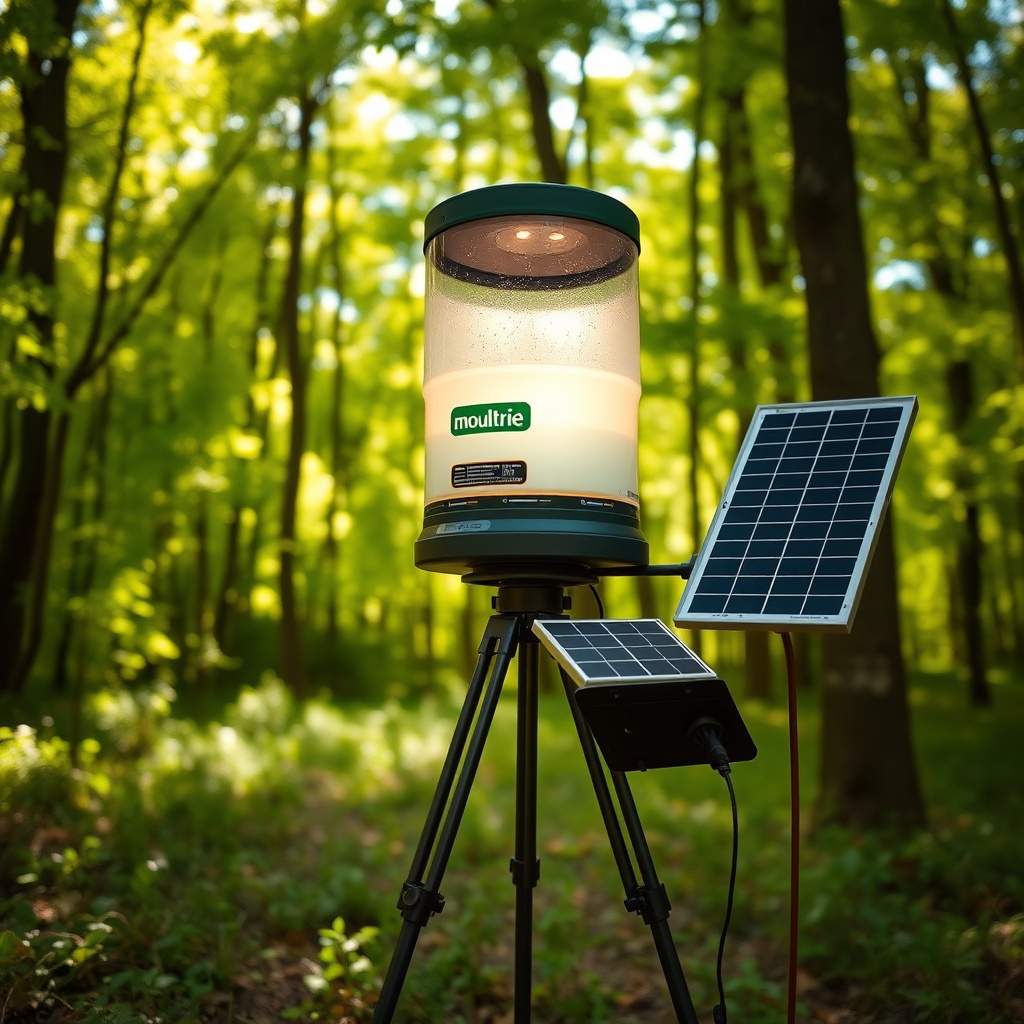
Mounting the solar panel requires balancing sun exposure with weather protection. The feeder’s 30-gallon barrel has a flat lid, which is an ideal surface for attaching a solar panel using adhesive-backed VHB tape or small brackets. Many owners drill two small holes in the lid and secure the panel with stainless steel screws and washers, using silicone sealant to prevent water intrusion. Attach the panel so it faces south (in the Northern Hemisphere) at an approximate 45-degree angle for maximum year-round sunlight capture. Alternatively, mount the panel on a separate pole or tree nearby, using a 12-foot solar extension cable to connect it to the feeder. This allows you to position the panel in full sun while the feeder sits in shaded timber. The Moultrie 30-Gallon Pro Hunter is often placed in wooded areas, so a remote mount can dramatically improve charging efficiency.
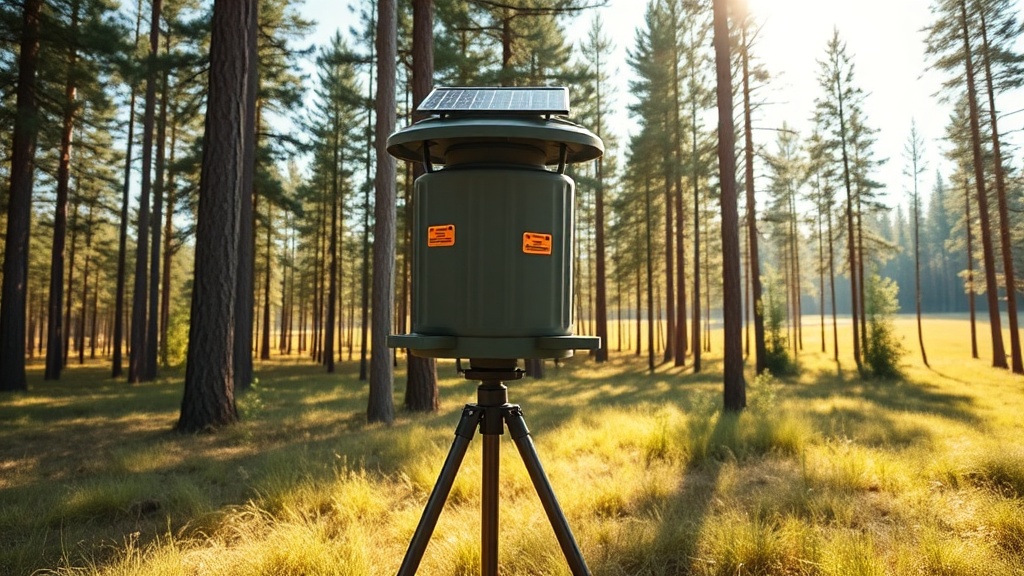
If using the lid mount, ensure the panel does not overlap the timer access door or the fill opening. A 5-watt panel measures roughly 8 x 6 inches, which fits comfortably on the 20-inch diameter lid. For tripod-mounted feeders (see Mounting the Moultrie 30-Gallon Pro Hunter on a Tripod), you can clamp the panel to the tripod leg with adjustable brackets, keeping it off the ground away from varmints.
Will the Solar Panel Work with the Moultrie Pro Hunter Timer Settings?
Yes, the solar panel is fully compatible with the How to Set the Timer on Moultrie 30-Gallon Pro Hunter functionality. The timer unit is powered by the same battery that the solar panel charges. As long as the battery maintains a voltage above the cutoff threshold (typically 5.4 volts for 6-volt systems), the timer will retain its programming. One of the common concerns is whether the timer draws power constantly and drains the battery at night. The Moultrie timer has a low power consumption of about 15 milliamps in standby mode, plus minimal draw during activation (spinning the motor for 2-10 seconds per feeding). A 6-volt, 5-amp-hour battery can run the timer for weeks without solar charging, but with a solar panel, the battery stays nearly full indefinitely.
If you are adjusting feed times or durations, the solar panel does not interfere with the timer’s settings. However, ensure that the panel is not shading the timer’s LCD or buttons, as direct sunlight can cause the display to become hard to read. Some users report that the timer’s built-in manual test button works fine even when solar charging is active. For detailed programming guides, refer to the feeder’s manual or the linked article above.
Do I Need a Charge Controller for the Solar Setup?
For a 5-watt to 10-watt panel on a 6-volt system, a charge controller is generally not required if the panel includes a blocking diode. The Moultrie official kit does not include a charge controller, relying on the battery’s internal resistance to prevent overcharging. Overcharging is unlikely because the 5-watt panel’s maximum charging current is low relative to the battery’s capacity. However, if you use a 10-watt panel or live in an area with intense year-round sunlight, adding a small 6-volt PWM charge controller (like the Morningstar or generic 6-amp model) adds a layer of protection. These controllers prevent overvoltage and can extend battery life by reducing water loss in SLA batteries. Most owners find that a 5-watt panel without a controller works fine for hunting seasons, but if you run the feeder year-round, the $15 investment in a charge controller is worthwhile.
If you upgrade to a 12-volt battery, a charge controller is mandatory. The Moultrie 30-Gallon Pro Hunter can be converted to 12-volt with minor wiring changes, but that is beyond the scope of this article. For standard configurations, keep it simple with a 6-volt system and a 5-watt panel.
How Long Does the Battery Last with Solar Charging on the Pro Hunter?
With a 6-volt, 5-amp-hour battery and a 5-watt solar panel, the battery can last 3-5 years before needing replacement, assuming daily sunlight exposure of at least 4 hours. Without solar, the same battery might need replacement every season. The solar panel keeps the battery at a full charge, preventing the deep discharge cycles that shorten SLA battery life. In real-world conditions, many users report that a single battery lasts the entire hunting season (6-8 months) without any issues, even in northern states with shorter winter days. The Moultrie feeder’s motor draws peak current of around 2 amps, but only for seconds at a time, so the battery’s capacity is rarely stressed. If you notice the timer resetting or the motor spinning slowly, check the battery voltage—anything below 5.0 volts indicates a need for replacement or a panel that is not getting enough sun.
The following table summarizes compatibility and specs for different solar panel options with the Moultrie 30-Gallon Pro Hunter:
| Solar Panel Size | Battery Voltage | Charge Controller Needed? | Estimated Battery Life | Cost Range (GBP) |
|---|---|---|---|---|
| 5 watts (6V) | 6V | No | 3-5 years | £20-£35 |
| 10 watts (6V) | 6V | Recommended | 4-6 years | £35-£50 |
| 10 watts (12V) | 12V | Yes | 3-5 years | £40-£60 |
| Official Moultrie Kit (5W, 6V) | 6V | No | 3-5 years | £30-£45 |
What Owners Say About Solar Panel Use on the Moultrie 30-Gallon Pro Hunter
Owner feedback on solar compatibility is largely positive. Many hunters highlight the convenience of not having to carry spare batteries into remote hunting spots. One common praise is that the 5-watt panel keeps the feeder running through entire seasons, even when the feeder is placed in partially shaded areas. Some users note that the official Moultrie panel is durable but the included wire length (about 6 feet) is too short for remote mounting, requiring an extension. Negative feedback centers on the panel’s adhesive failing on the lid in high winds, so drilling screws is recommended. Others mention that the Varmint Guard (reviewed in Moultrie 30-Gallon Pro Hunter Varmint Guard Effectiveness) can create shade on the panel if mounted too close, so leave at least 6 inches of clearance. Overall, the solar upgrade is considered a top recommendation for anyone buying this feeder for long-term use, especially when combined with a Best Deer Feeders Buying Guide for 2024 for overall feeder choice.
Frequently Asked Questions
Q: Can I use a 12-volt solar panel on a 6-volt Moultrie Pro Hunter?
A: No, a 12-volt panel will overcharge a 6-volt battery quickly unless you use a step-down converter or a PWM charge controller set to 6V. It is safer to match the panel voltage to the battery voltage.
Q: How do I clean the solar panel on my feeder?
A: Wipe the panel with a soft cloth and mild soapy water every few months to remove dust, bird droppings, or pollen. Avoid abrasive cleaners that can scratch the glass.
Q: Will the solar panel work in winter with snow cover?
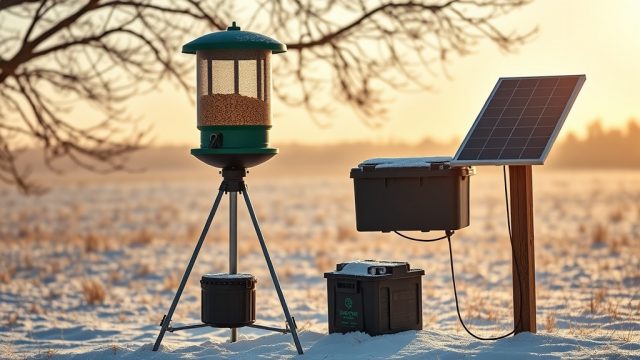
A: It will not charge if fully covered. Brush snow off the panel after storms, or mount it at a steep angle (60 degrees) to help snow slide off. In deep snow regions, remote mounting at eye level helps prevent accumulation.
Q: Does the solar panel require direct sunlight, or does it work in shade?
A: It works in direct sunlight best. Partial shade reduces output by 50-90%. For consistent charging, place the panel where it gets at least 4-6 hours of direct sun daily.
Q: Can I use the Moultrie 30-Gallon Pro Hunter with a gravity feed system and solar?
A: Yes, the feeder can be configured as a gravity feeder (see Moultrie 30-Gallon Pro Hunter Gravity Feed Review), and the solar panel simply charges the battery that powers the timer and motor for the spin plate. The two systems are independent.
Q: How long does the solar panel itself last?
A: A quality panel can last 10-15 years. The Moultrie official panel has a 1-year warranty, but aftermarket panels from Renogy or Coleman often have longer warranties.