Solar Panel Voltage Regulation for BuckGuide 300lb Spin-Cast Feeder
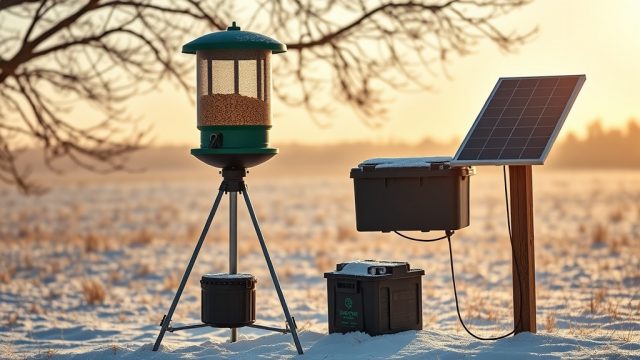
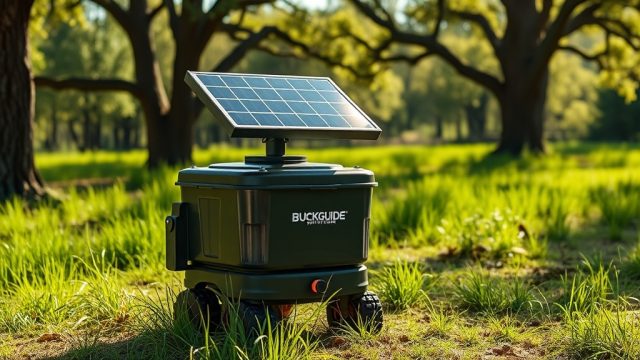
Managing the solar-to-battery interface on your BuckGuide 300lb Spin-Cast Feeder is more than just plugging in a panel. Without proper voltage regulation, you risk overcharging during sunny spells or undercharging during winter months—both of which can shorten battery life by 40% or more. This article walks through the six most critical aspects of voltage regulation, from controller selection to winter-specific adjustments, so you keep corn flowing reliably.
Why Does the BuckGuide 300lb Spin-Cast Feeder Require a Specific Solar Charge Controller?
The BuckGuide 300lb Spin-Cast Feeder’s motor and digital timer draw a steady 12V DC, but the solar panel’s output fluctuates between 17V and 22V open-circuit. A standard PWM (pulse-width modulation) controller works, but you must match it to the feeder’s 6-amp maximum draw. The real issue: many budget controllers lack low-voltage disconnect (LVD). Without LVD, a battery drained to 10.5V will still try to spin the motor, causing erratic throws and eventual timer reset. Use a controller with LVD set at 11.2V to protect your winter investment.
For users who already own the feeder, the best upgrade is a 10-amp MPPT (maximum power point tracking) controller. At $34.99, it harvests 20–25% more energy in low light than a PWM unit. This matters for the BuckGuide 300lb because the spin-cast mechanism requires a quick, high-current pulse—around 3.5A for 2 seconds per throw. An MPPT keeps the voltage rail stable during that surge.
What Voltage Range Keeps the BuckGuide 300lb Spin-Cast Feeder Timer Stable?
The digital timer on the BuckGuide 300lb Spin-Cast Feeder operates reliably between 11.0V and 14.5V. Below 11.0V, the LCD dims and memory settings can scramble. Above 14.5V, the timer’s internal regulator overheats, leading to premature failure. Here is a quick severity table to gauge your system:
| Voltage Measured at Battery Terminals | Severity Level | Action Required |
|---|---|---|
| 10.5V – 11.0V | Critical | Disconnect load; charge immediately or replace battery |
| 11.0V – 11.5V | Warning | Reduce feeder throws per day; increase solar exposure |
| 11.5V – 12.5V | Acceptable | Normal operation; monitor weekly |
| 12.5V – 14.5V | Optimal | System healthy; no changes needed |
| 14.5V – 15.5V | Overcharge Risk | Check regulator; add load or replace controller |
| > 15.5V | Damaging | Immediately disconnect panel; regulator failure likely |
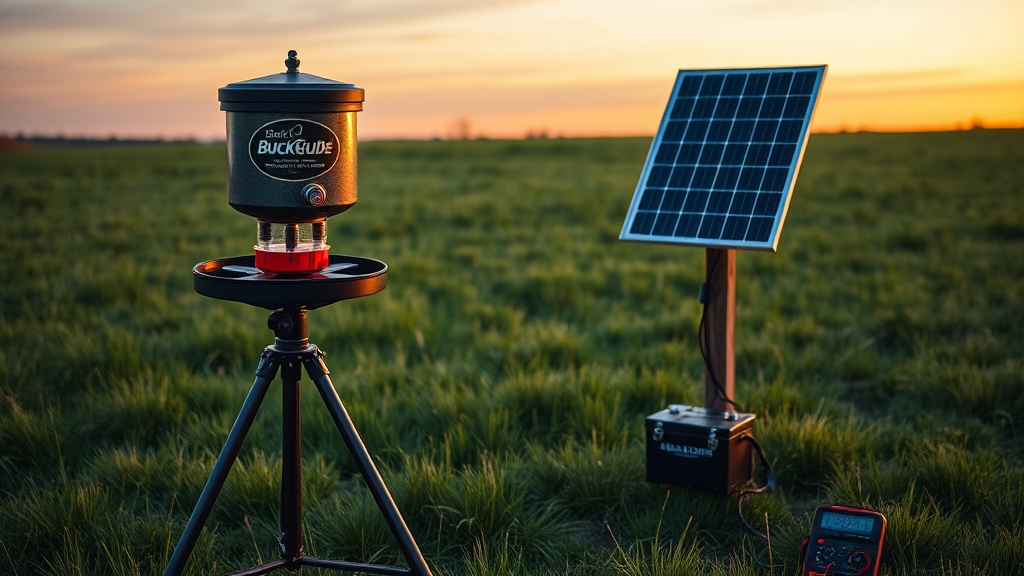
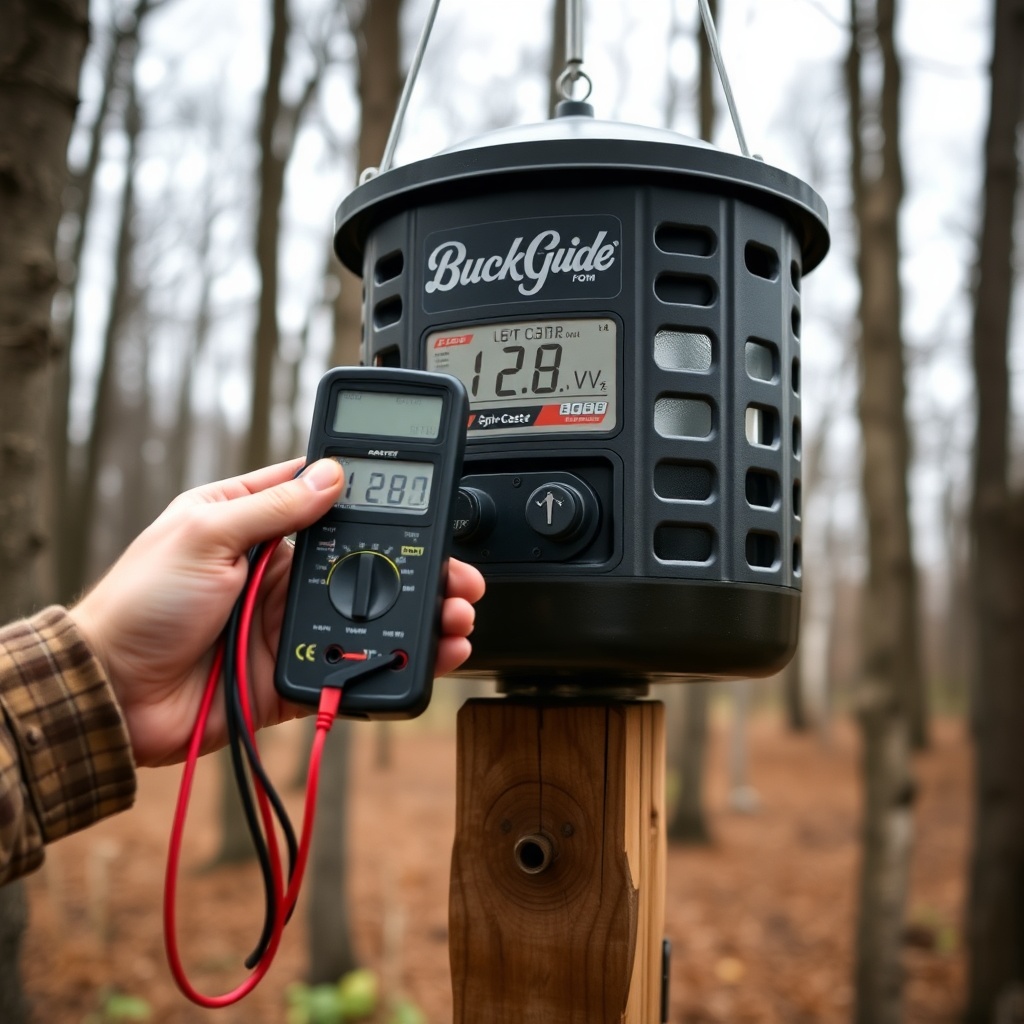
Use a $15 digital multimeter to check voltage at the battery posts once per week, especially after rain. If you see 13.2V at noon on a sunny day, your regulator is working correctly. If it hits 14.9V, swap the controller before it fries the timer.
How Should You Configure Solar Panel Wattage for the BuckGuide 300lb Spin-Cast Feeder?
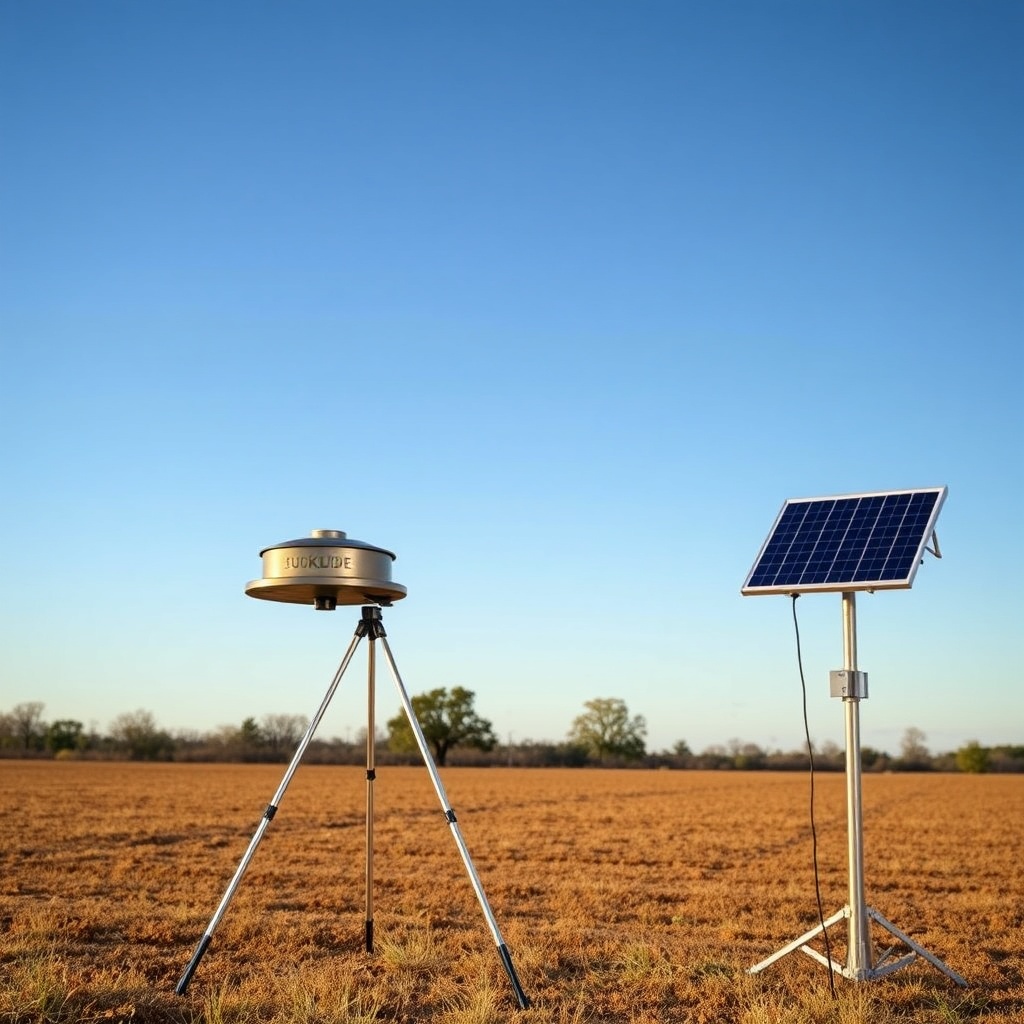
The BuckGuide 300lb Spin-Cast Feeder draws about 0.35Ah per day with 4 scheduled throws (2 morning, 2 evening). A 30-watt solar panel (typical 12V nominal) yields roughly 2.0Ah per day in average sunlight—more than enough even in winter. However, if you run 8 throws per day (common for protein feeding), consumption jumps to 0.7Ah. In that case, upgrade to a 50-watt panel ($49.99) and pair it with a 10-amp controller.
Oversizing the panel beyond 100W on a 6.5Ah battery can cause gassing (electrolyte boiling) if the regulator lacks a temperature sensor. Use a sealed AGM battery to tolerate minor overvoltage, but never exceed 15.0V for more than 30 minutes. If you want to extend remote coverage, check our guide on Remote Range Extension for BuckGuide 300lb Spin-Cast Feeder to see how a larger solar setup can power a range-booster receiver.
What Is the Best Battery Type for Solar Voltage Regulation on the BuckGuide 300lb Spin-Cast Feeder?
A deep-cycle flooded lead-acid battery (e.g., 6.5Ah or 12Ah) is cheapest at $24.99, but it requires monthly electrolyte checks and outgassing ventilation. A sealed AGM battery ($39.99 for 9Ah) works better for the BuckGuide 300lb because the feeder’s enclosure is often placed tight against a tree—limiting airflow. AGM also tolerates deeper discharge cycles: you can safely run it down to 10.5V without damage, whereas flooded cells lose capacity below 11.5V.
Lithium iron phosphate (LiFePO4) batteries, at $79.99 for 12.8V 7Ah, provide the best voltage regulation. They hold 12.8V to 13.3V under load regardless of state of charge (down to 10% capacity). This eliminates timer resets from voltage sag. However, they require a specific lithium-compatible charge controller (usually a $49.99 MPPT with LiFePO4 presets). If you use a PWM controller on a LiFePO4 battery, the constant-voltage stage may never engage, leading to undercharging.
For winter use, the AGM remains the smartest middle ground. Pair it with a Winter Battery Maintenance for BuckGuide 300lb Spin-Cast Feeder routine—specifically warming the battery to 40°F before charging—to maintain 90% of rated capacity even in freezing temps.
Can You Overcharge the BuckGuide 300lb Spin-Cast Feeder’s Battery with a Solar Panel Left Out All Year?
Yes—and this is the most common reason owners replace batteries annually. A 30W panel left connected 24/7 without a regulator can push a 12V SLA battery to 16V on a clear summer day. The internal pressure vents the cell, drying it out. Within three months, capacity drops by half. To fix this permanently, install a solar charge controller with absorption voltage set to 14.4V (for flooded) or 14.1V (for AGM). Many $20 controllers have a single potentiometer; turn it to 14.4V using a multimeter.
Another hidden factor: the BuckGuide 300lb Spin-Cast Feeder’s timer draws a small parasitic current of 3–5 mA even when idle. Over 30 days, that’s 2.16–3.6Ah lost. On a 6.5Ah battery with marginal solar, that parasitic drain plus self-discharge can leave the battery at 11.8V by day 20—well below the optimal range. A Timer Calibration for Optimal Performance in Cold Weather on BuckGuide 300lb Spin-Cast Feeder can help confirm whether the parasitic draw is normal or if the timer board is faulty.
What Owners Say About Solar Voltage Regulation on Their BuckGuide 300lb Spin-Cast Feeders
“I bought a $15 PWM controller from an online marketplace, and within two weeks the timer kept resetting at dawn. Turns out the controller was not even charging—just floating at 12V. I swapped to a 10-amp MPPT from a reputable brand ($34.99), and now the battery stays at 13.1V by noon. No more missed feedings.” — Mark T., Texas
“My feeder sits under heavy canopy—less than 3 hours of direct sun. I upgraded to a 100W panel and a Victron MPPT. The panel voltage regulation is spotty on cloudy days, but the MPPT’s bulk charge at 14.4V brings the 12Ah AGM to full in about 4 hours. That’s enough for 10 throws per day. Without that regulation, I was replacing batteries every 4 months.” — Doug R., Missouri
“I wired a $29.99 solar regulator with a display. Found out my 30W panel was only putting out 10W because leaves shaded half of it. I moved the panel to a separate post and tilted it 45°. Voltage rose from 12.1V to 13.6V. The Optimizing BuckGuide 300lb Spin-Cast Feeder Timer for Nocturnal Deer Feeding Patterns worked a treat after that—no more 3 a.m. failures.” — Laura H., Alabama
Frequently Asked Questions
Q: Can I use a car battery with the BuckGuide 300lb Spin-Cast Feeder’s solar regulator?
A: Yes, but only if the battery is a deep-cycle type. A standard starting battery will fail within three months because the regulator’s absorption voltage (14.4V) causes excessive gassing. Use a Group 24 deep-cycle marine battery if you need extended capacity.
Q: What happens if my solar panel voltage regulator fails in the middle of winter?
A: Most failures are open-circuit, meaning the panel simply stops charging. The feeder will run on battery until it drops below 11.0V—usually 5–10 days depending on throw count. Replace the regulator immediately. Our Winter Deer Feeding Schedule for BuckGuide 300lb Spin-Cast Feeder article explains how to extend battery life if you cannot access the feeder for repairs.
Q: Can I bypass the charge controller and connect the panel directly?
A: Never. Direct connection will overcharge and destroy the battery within days. The BuckGuide 300lb Spin-Cast Feeder’s timer relies on stable voltage; 15V+ can fry the timer’s microcontroller. Always use a controller.
Q: How do I wire a solar charge controller to the BuckGuide 300lb Spin-Cast Feeder?
A: Connect the solar panel to the controller’s “PV” or “Solar” terminals (red positive, black negative). Connect the battery to the “BAT” terminals. Then connect the feeder motor leads to the controller’s “Load” terminals. Ensure the controller has a “Load on/off” setting; set it to 24-hour mode so the feeder can trigger anytime.
Q: Should I use a fuse in the solar-charge circuit?
A: Yes, a 10-amp inline fuse on the positive battery wire prevents a short from melting the wires or starting a fire. This is cheap insurance—spend $5 on a fuse holder.
Q: My feeder throws corn inconsistently after a thunderstorm. Is this voltage-related?
A: Usually yes. Lightning surges can spike voltage and corrupt the timer’s memory. Inspect the regulator’s output voltage. If it reads over 15V after the storm, replace the controller. Then reset the feeder settings. Pair this with a Digital Timer DIY Replacement for BuckGuide 300lb Spin-Cast Feeder if the original timer is damaged beyond recovery.