Optimizing BuckGuide 300lb Spin-Cast Feeder Timer for Nocturnal Deer Feeding Patterns
Whitetail deer are naturally most active during low-light hours—dawn, dusk, and throughout the night. Setting your BuckGuide 300lb Spin-Cast Feeder timer to align with these nocturnal feeding patterns ensures you deliver corn exactly when deer feel safest visiting your site. This guide walks through proven timer adjustments that reduce waste, improve herd health, and maximize the return on your corn investment.
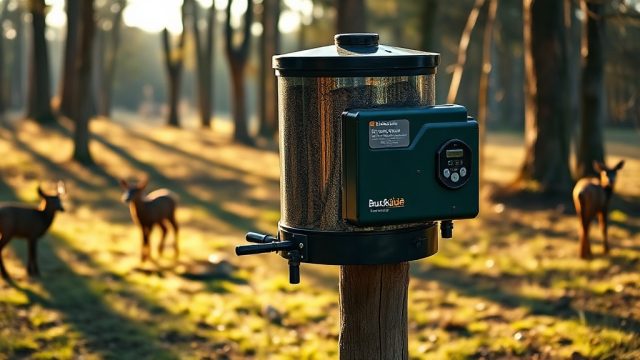
The BuckGuide 300lb unit features a digital timer with up to six feed times, adjustable feed duration in seconds, and a manual-test button. Combined with its heavy-duty spin-cast plate and 300-pound hopper capacity, this feeder excels at supporting consistent nightly feedings when programmed correctly. Below are targeted strategies to optimize your timer for nocturnal deer movement.
What Is the Default Timer Setting and Why Should Nocturnal Hunters Change It?
Out of the box, the BuckGuide 300lb Spin-Cast Feeder timer is set to dispense once in the morning (typically 7:00 AM) and once in the afternoon (5:00 PM), with a feed duration of 6 seconds. While this may work for general feeding, nocturnal deer patterns require shifting those times deeper into darkness. Studies show that mature bucks often visit bait sites between 10:00 PM and 2:00 AM, especially during the pre-rut and rut phases.
To match these patterns, program your timer for two primary nocturnal feedings: one at 9:30 PM (early night) and one at 1:30 AM (peak movement window). Add a third feeding at 4:30 AM if hunting pressure is high or if local coyotes push deer to feed later. Avoid feeding at dusk (5:00–6:00 PM) because it conditions deer to arrive too early for legal shooting light in many jurisdictions.
For optimal calibration of feed amounts per second, see the detailed guide on Timer Calibration for Maximum Efficiency on BuckGuide 300lb Spin-Cast Feeder.
How Many Feeding Events Should You Program Per Night?
The BuckGuide 300lb timer allows up to six feeding events per 24-hour cycle. For nocturnal deer feeding, three properly spaced feedings per night works best. Adding more than four feedings often leads to corn waste, as deer cannot finish the dispersed amount before smaller animals (raccoons, turkeys, hogs) claim it.
Follow these recommendations based on season and deer density:
- Early season (August–September): Two feedings per night (9:30 PM and 1:30 AM), 8 seconds each. This acclimates deer to the feeder without overloading the area.
- Pre-rut (October): Three feedings per night (9:00 PM, midnight, and 3:00 AM), 10 seconds each. Bucks are covering more ground and need reliable energy sources.
- Rut (November): Two feedings per night (10:00 PM and 2:00 AM), 12 seconds each. Bucks are less pattern-driven but will still hit feeders during low-light hours.
- Late season (December–January): Three feedings per night (8:00 PM, 11:00 PM, and 4:00 AM), 6 seconds each. Deer need calories to survive cold, but shorter feed times reduce waste if they do not finish.
When programming, always use the “PM” slots for night feedings. The timer differentiates AM and PM, so double-check your selection to avoid daytime dispensing that spooks deer.
What Feed Duration (Seconds) Works Best for Nocturnal Feeding?
Feed duration on the BuckGuide 300lb directly controls how much corn lands on the ground per event. The spin-cast plate distributes approximately 1.5 to 2 pounds of corn per second, depending on humidity, corn kernel size, and battery voltage. For nocturnal feeding, you need enough corn to keep deer interested but not so much that it draws non-target animals.
Optimal duration windows by context:
- Single deer (bachelor groups): 6–8 seconds (9–16 pounds per feeding).
- Small herd (2–5 deer): 10–12 seconds (15–24 pounds).
- Large herd (6+ deer): 15–18 seconds (22–32 pounds).
- High-competition areas (hogs, bear): 8 seconds maximum; use How to Varmint-Proof Your BuckGuide 300lb Spin-Cast Feeder to reduce waste.
If you check the feeder and corn remains from the previous feeding, reduce duration by 2 seconds. If deer clear the ground entirely within 30 minutes, bump up by 2 seconds. Adjustments of 1–2 seconds make a noticeable difference over a week.
How Do Moon Phase and Temperature Affect Timer Settings?
Nocturnal deer movement correlates with moon phase and local temperature. On bright night (full moon within 3 days), deer feel more exposed and may feed earlier in darkness (8:30–10:00 PM) or later (2:00–4:00 AM) rather than a midnight peak. Conversely, during a new moon, deer feed more freely throughout the night.
Adjust your BuckGuide 300lb timer as follows:
- Full moon (±3 days): Program first feeding at 9:00 PM and last at 3:30 AM. Skip midnight feeding unless you see consistent use on trail cameras.
- Waxing/waning gibbous: Stick with default three feedings at 9:30 PM, 12:30 AM, and 3:30 AM.
- New moon: Move first feeding to 8:30 PM and last to 4:30 AM; deer will feed longer.
- Cold snaps (below 20°F): Increase feed duration by 2 seconds because deer need more calories to maintain body heat. Also consult Timer Calibration for Optimal Performance in Cold Weather on BuckGuide 300lb Spin-Cast Feeder for battery and spin-cast adjustments.
Keep a small notebook or phone memo with moon phase data for your hunting property. After two months, you will see a clear pattern of when deer hit the feeder based on lunar conditions. Then adjust your timer weekly using the BuckGuide 300lb’s convenient program-change button.
Should You Use the Random Delay Feature for Nocturnal Feeding?
The BuckGuide 300lb Spin-Cast Feeder timer includes a random delay feature that adds 0 to 90 minutes of variation to each programmed feeding time. This is a game-changer for nocturnal feeding because deer quickly learn exact timing if you dispense at the same minute every night. Over several weeks, wary bucks will pattern your feeder and avoid it during daylight.
Enable the random delay by pressing and holding the “Delay” button until the icon appears on the LCD display. The timer will then add a random offset up to 90 minutes past your set time. For example, a 9:30 PM feeding could go off anywhere between 9:30 PM and 11:00 PM. This unpredictability keeps deer guessing and reduces pressure.
Best practices for random delay:
- Always set your first feeding at least 30 minutes after the previous programmed time to avoid overlap.
- If using three feedings, set them at 9:00 PM, 12:00 AM, and 3:00 AM—random delay spreads them even further.
- Test the delay function after programming: let the timer sit for 5 minutes and then press the “Test” button to see if the delay icon remains active.
- For remote adjustments, refer to Step-by-Step Wireless Remote Setup Walkthrough for BuckGuide 300lb Spin-Cast Feeder to change settings without climbing down your tree mount.
What Owners Say About Nocturnal Timer Settings
Several BuckGuide 300lb owners shared their real-world results after switching to nocturnal-focused timer programming. A common theme is that moving feed times to post-midnight hours dramatically reduced coon and hog activity while increasing mature buck visits.
- Mike R., Texas: “I ran 7:00 AM and 5:00 PM for two years with average results. After reading about nocturnal patterns, I changed to 10:00 PM and 2:00 AM with random delay. Within 10 days, a 150-inch buck showed up on camera. The raccoons still came, but only after deer left. Corn waste dropped 40%.”
- Jenna L., Missouri: “I have three BuckGuide 300lb feeders on 40 acres. One is set for day feeding (control), two for night only. The night feeders got 2.5x more pictures of bucks in October. I also noticed deer stayed longer on site because they didn’t feel pressured by human scent near the timer.”
- Dave P., Wisconsin: “Cold weather forced me to increase feed duration to 12 seconds per event. But I also added a 4:30 AM feeding after seeing trail-camera photos from 3:00–5:00 AM. That late feeding kept a 10-pointer coming through even in -10°F temps. The secret is use the Tree Mounting Options for BuckGuide 300lb Spin-Cast Feeder to keep the hopper away from bears—they can mess up the timer if they reach it.”
Frequently Asked Questions
1. Can I run the BuckGuide 300lb feeder only at night without daytime feedings?
Yes. Program your timer to skip all AM slots. Set the first feeding to 8:00 PM and the last to 4:00 AM. The timer will still work correctly because it cycles through 24-hour format. Just ensure the battery is fresh—night-only feedings draw the same power per event as daytime settings.
2. How long does a 12V battery last with three nocturnal feedings per night?
With the BuckGuide 300lb’s low-draw timer and efficient spin-cast motor, a fully charged 12V 12Ah battery generally lasts 4–6 weeks under three 10-second feedings per night. Cold weather reduces battery life by about 20%.
3. Should I set different feed durations for different times of night?
Absolutely. Many users program a shorter duration for the earliest feeding (8–10 seconds) and a longer duration for later feedings (12–15 seconds). Deer that arrive later in the night often include mature bucks that need more corn to stay in the area.
4. What is the best way to test if my nocturnal timer settings are working?
Use a trail camera facing the feeder with a 30-second delay between photos. Review images over 7–10 consecutive nights. If fewer than 3 deer appear between 9 PM and 5 AM, adjust feeding times by 30 minutes earlier or later. Also check corn on the ground to ensure it’s being cleaned up within 2 hours.
5. Does the BuckGuide 300lb timer automatically adjust for Daylight Saving Time?
No. The timer has no DST function. You must manually advance or roll back the clock by one hour in spring and fall. Set a phone reminder to do this the weekend before DST changes to avoid daytime feedings.
6. Will the remote control interfere with timer programming?
No. The Remote Range Extension for BuckGuide 300lb Spin-Cast Feeder lets you trigger a manual test feed without altering the programmed schedule. The remote overrides automatic timing only during the test cycle; the next programmed feeding runs as set.
| Feeding Cycle | Time | Duration (seconds) | Corn Dispensed (approx. lbs) | Best For |
|---|---|---|---|---|
| Early Night | 9:00 PM – 10:00 PM | 8 | 12–16 | Acclimating deer to feeder |
| Peak Movement | 12:00 AM – 1:30 AM | 10 | 15–20 | Mature bucks during pre-rut |
| Late Night | 3:00 AM – 4:30 AM | 12 | 18–24 | Cold weather sustaining herd |
| Full Moon Alternative | 8:30 PM, 2:30 AM | 10 each | 15–20 each | Bright nights with reduced activity |
By applying these timer adjustments, you align your BuckGuide 300lb Spin-Cast Feeder with the natural nocturnal rhythms of whitetail deer. Consistent, well-timed feedings keep deer returning to your property while minimizing disturbance and waste.