How Does the BuckGuide 300lb Spin-Cast Feeder’s Timer Affect Feed Efficiency?
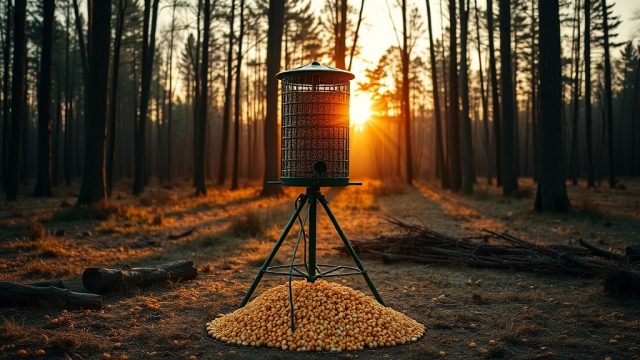
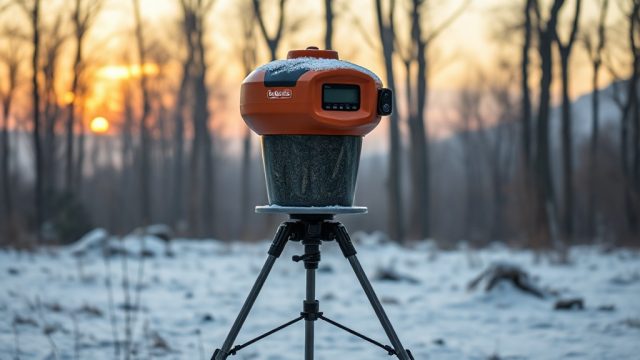
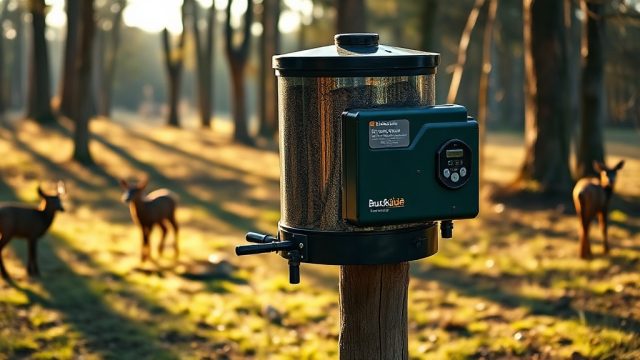
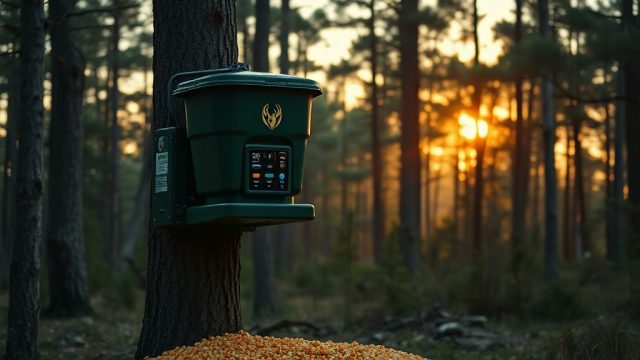
The BuckGuide 300lb Spin-Cast Feeder stands as a robust solution for serious deer managers aiming to deliver consistent rations across large properties. With its 300-pound hopper capacity and durable spin-cast mechanism, this unit reduces fill frequency, but its true value lies in precise timer calibration. An improperly set timer can lead to overfeeding, spoilage, or missed feeding windows, costing you both feed and opportunity. By mastering the timer programming outlined in our Step-by-Step Timer Setup for BuckGuide 300lb Spin-Cast Feeder, you can maximize pellet efficiency and deer visitation.
What Is the Optimal Feed Duration for Adult Whitetails on the BuckGuide 300lb Spin-Cast Feeder?
Feed duration—how long the spin-cast plate throws pellets each cycle—directly dictates portion size. For adult whitetails, a feed duration of 3 to 5 seconds per feeder cycle typically suits most scenarios, assuming the timer is set to two to four feed events daily. In regions with moderate deer density (one deer per 10–20 acres), 4 seconds at each of three feedings dispenses roughly 6 to 8 pounds per day, which aligns with recommended supplemental feeding rates. Adjust duration downward if tuning for fawns or upward during antler growth, but always cross-reference with consumed feed volume. A 300lb hopper filled with 0.250-inch pellet feed can sustain this pattern for 40 to 50 days without refill, a key advantage over smaller units. For severe terrain where feeder tilt might alter throw patterns, review our Mounting BuckGuide 300lb Spin-Cast Feeder on Steep Terrain guide to ensure consistent output.
How Do You Properly Set the Feeding Times to Avoid Spooking Deer?
Deer become meal-trapped when feed times are erratic. The BuckGuide 300lb Spin-Cast Feeder’s timer can be programmed with a 12-hour AM/PM cycle or 24-hour schedule. Set feed times during low-light periods (dawn: 5:30–7:00 AM; dusk: 5:00–6:30 PM) to align with natural movement. Avoid midday feedings in open areas where human scent may linger. A common, efficient setup is three feed events: one 30 minutes before sunrise, one at solar noon, and one 30 minutes before sunset. Always account for time zone and daylight saving—many timers are factory-set to UTC standards. Verify your unit using the digital readout; if using a remote to adjust, check our Step-by-Step Wireless Remote Setup Walkthrough for BuckGuide 300lb Spin-Cast Feeder for pairing instructions. Overlapping with natural browse times keeps deer comfortable and reduces feeding site stress.
Which Timer Programming Settings Yield the Best Pellet Economy per Day?
Pellet economy is optimized by balancing total feed output against deer usage. Below is a recommended calibration table for the BuckGuide 300lb Spin-Cast Feeder timer, assuming standard 6mm deer pellets and a 1–2 second delivery rate of 0.5 lb per second.
| Feed Events/Day | Duration (seconds) | Estimated Daily Output (lbs) | Target Deer/Feeder | Hopper Refill Interval (days) |
|---|---|---|---|---|
| 2 | 3 | 3.0 | 5–8 | 100 |
| 2 | 5 | 5.0 | 8–12 | 60 |
| 3 | 4 | 6.0 | 10–15 | 50 |
| 4 | 3 | 6.0 | 12–18 | 50 |
| 4 | 5 | 10.0 | 18–25 | 30 |
Note: The 3-second, 4-event option yields the same total as 4-second, 3-event but spreads feeding pressure. For maximum economy in areas with high raccoon or squirrel activity, run two events at 4 seconds each and use a varmint cage—read our article on How to Varmint-Proof Your BuckGuide 300lb Spin-Cast Feeder. The 300lb capacity allows longer intervals between refills when durations are tight; a 3-second, 2-event setup can stretch up to 100 days, ideal for remote hunting camps.
How Do Environmental Factors Affect Timer Calibration for the BuckGuide 300lb Spin-Cast Feeder?
Environmental variables like humidity, pellet moisture, and temperature directly impact timer accuracy. The spin-cast plate’s speed can slow by up to 10% in freezing conditions (below 32°F or 0°C), causing shorter throw distances. When calibrating the timer in autumn, set durations 0.5 seconds longer than your summer baseline to compensate for slower plate movement. Conversely, in high humidity (above 80%), pellet clumping can reduce actual dispensed weight per second. Always run a test cycle with 10 seconds of throw and weigh the output; adjust duration to achieve desired poundage. Solar interference is another factor—the BuckGuide 300lb timer works best with a quality solar panel; if you’re using solar, refer to our Optimal Solar Panel Mounting Angle for Winter on BuckGuide 300lb Spin-Cast Feeder for angle guidance in low-light months. A fully charged battery ensures consistent motor speed, critical for precise timer function.
What Common Timer Issues Occur When Programming the BuckGuide 300lb Spin-Cast Feeder?
Common issues include clock drift from the factory-default 24-hour format to 12-hour AM/PM, especially when using the remote. Symptoms: feed events at wrong times (e.g., feeding at 2:00 PM instead of 4:00 AM). Solution: After programming, verify the time using the amber LCD’s “time set” mode; press and hold the SET button for 3 seconds until the hour blinks, then adjust. Another frequent error is the “cycle stuck” problem where the timer fails to stop after the set duration. This is often caused by a loose wire connection within the control box—ensure the spin-cast plate’s reed switch is engaging. If the feeder runs continuously, it can drain a 12V battery in under two hours. Always test with a manual override before leaving the site. For physical mounting remedies, see our Tree Mounting Options for BuckGuide 300lb Spin-Cast Feeder for vibration damping solutions that prevent timer board dislodgment. Lastly, set the timer only after the hopper is filled to avoid feed bridging that delays motor start.
What Owners Say
BuckGuide 300lb owners consistently praise the timer’s ease of use once they lock in calibration. “I had to adjust from 5 seconds to 3 seconds because my deer were bulking up too fast—now I get two weeks more from a fill,” says Mark T., a Texas cattle rancher using the feeder for protein supplements. Another owner, Sheila R. from Wisconsin, notes: “At first, my timer was off by 45 minutes—I reset it manually and now it’s spot-on. The remote pairing walkthrough helped me fix it.” Some users mention that during early spring, a 4-second duration at three feedings produced too much waste when fewer deer visited; switching to a 2-second, once-daily setting solved this. Several owners recommend keeping a log of feed weights versus timer numbers for the first month to fine-tune adjustments. “The 300lb hopper is a gamechanger for backcountry hunts. I set it for 4 a.m. and 6 p.m., and deer hit it like clockwork,” adds Jake P. from Montana. Overall, the spin-cast pattern is reliable, but timer precision is the key to long-term satisfaction with this unit.
Frequently Asked Questions
Can the BuckGuide 300lb Spin-Cast Feeder timer run on solar power alone?
Yes, provided the solar panel can maintain a 12V battery above 12.4 volts. In winter, low sun angles reduce output; mount the panel at a 45–50 degree angle facing south. For a dedicated guide, see our Optimal Solar Panel Mounting Angle for Winter on BuckGuide 300lb Spin-Cast Feeder for exact angle calculations.
How do I set the timer to feed twice daily on the BuckGuide 300lb?
Press the MODE button until “2” appears next to the event count. Then set the first feed hour (e.g., 6:00 AM) and second (e.g., 6:00 PM), each with a duration of 3–5 seconds. Confirm by pressing SET. Follow our Step-by-Step Timer Setup for BuckGuide 300lb Spin-Cast Feeder for a visual walkthrough.
What is the maximum number of feed events per day?
The timer supports up to 6 feed events in a 24-hour cycle. However, 2–4 events are recommended for most deer management plans to avoid overdispersion and waste.
Why does my BuckGuide 300lb feeder spin for the wrong duration?
Check the battery voltage—if below 12V, motor speed drops and the timer may misinterpret the cycle. Also ensure the spin-cast plate is not obstructed. If persistent, reset the timer by removing the battery for 30 seconds.
How often should I recalibrate the timer?
At least twice per season: at the start of fall (September) and after the first frost. Seasonal temperature swings affect motor performance. Weigh dispensed feed monthly and adjust duration if output deviates more than 25% from your target.
Does the timer retain memory after battery disconnection?
Yes, the BuckGuide 300lb timer has internal non-volatile memory that retains feed schedules even when the 12V battery is removed for up to 90 days. After that, the clock may reset, but feeding times and durations are preserved.