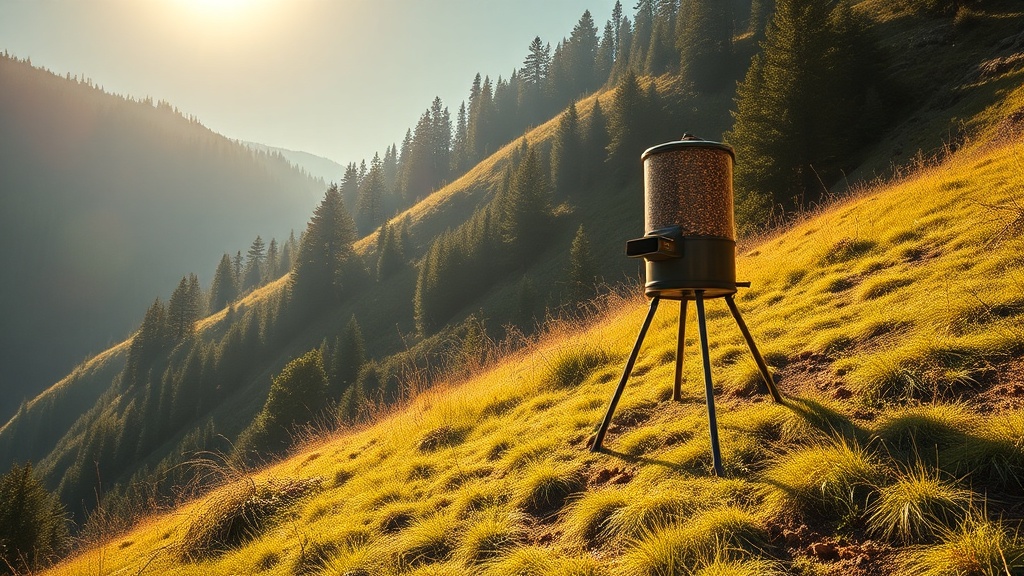
Mounting a BuckGuide 300lb Spin-Cast Feeder on steep terrain presents unique challenges that require careful planning and execution. Improper mounting can lead to tipping, inaccurate spin patterns, and reduced deer visitation over time. This guide covers the specific steps, hardware choices, and adjustments needed to secure your feeder on slopes of 20 degrees or more, ensuring reliable operation through the season.
What Makes Steep Terrain Risky for the BuckGuide 300lb Spin-Cast Feeder?
The BuckGuide 300lb Spin-Cast Feeder holds 136 kg of corn, creating a high center of gravity when fully loaded. On a slope, the weight shifts downhill, increasing lateral stress on the legs and base plate. If the feeder is not leveled properly, the spin-cast mechanism can tilt, causing uneven feed distribution—corn may pile on one side while the other remains bare. Additionally, wind loads (common on ridges) compound the tipping risk. The feeder’s wide 35 cm spinner plate and 12V motor assembly add weight up high, so the mounting system must counteract both gravitational pull and gust forces. A common mistake is assuming standard tripod legs can handle any angle; on slopes above 15 degrees, you need adjustable or extendable legs to redistribute the load.
Before installing, survey the terrain for erosion channels, rock outcroppings, or soft soil that could shift under the feeder’s 300 lb capacity. The structural integrity of the mount point matters as much as the feeder itself. For rocky slopes, consider whether a wind resistance kit is needed to anchor against gusts funneled through draws.
Which Mounting Hardware Is Best for Slopes Up to 30 Degrees?
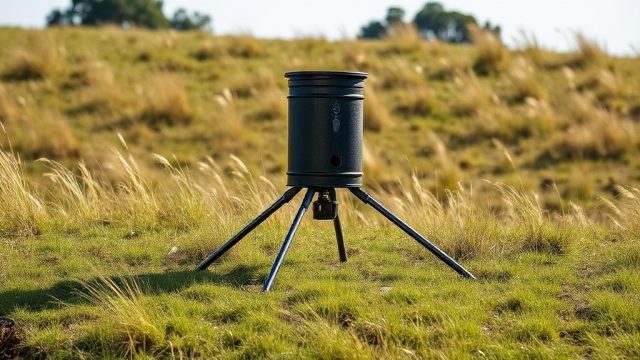
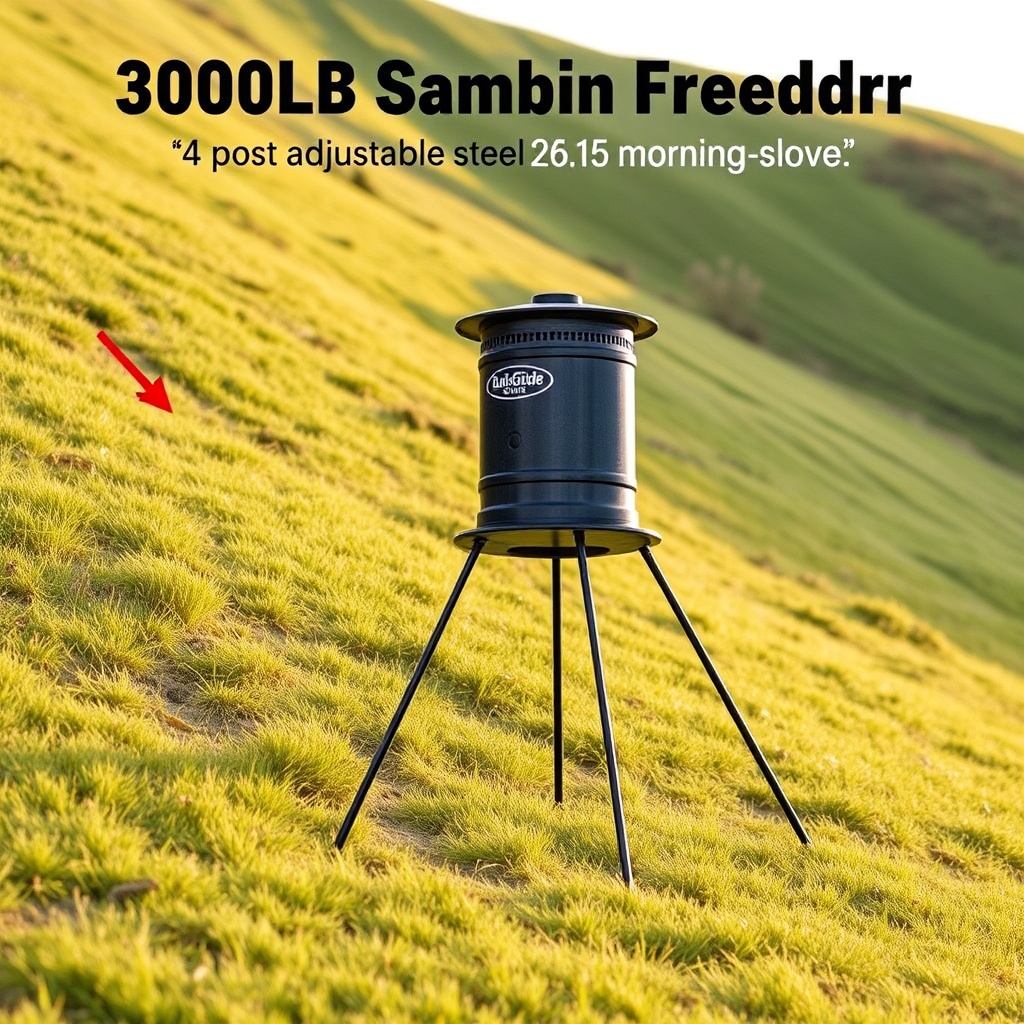
Standard 3-leg tripods from BuckGuide work on flat ground but struggle on steep terrain. For slopes, the ideal hardware is a 4-post steel stand with adjustable feet or a heavy-duty pyramid base. The BuckGuide accessory 4-post mounting kit (available separately for £129) uses 50 mm square tubing with threaded feet that can extend up to 15 cm. This allows you to level the feeder by adjusting each post individually—critical when the downhill side sits lower. Alternatively, a single-post sink-in method (using a 2.5 m galvanized pipe set in concrete) works for slopes under 25 degrees, but you must weld on a top flange that matches the feeder’s 40 cm base plate bolt pattern.
For slopes exceeding 30 degrees, consider a reinforced solar panel bracket integrated into the mount structure. The table below compares three mounting options based on severity, cost, and stability:
| Mount Type | Max Slope Angle | Cost (GBP) | Stability Rating | Ease of Leveling |
|---|---|---|---|---|
| 3-leg tripod (stock) | 15° | £89 (included) | Moderate | Low |
| 4-post adjustable base | 30° | £129 | High | High |
| Single post with concrete | 25° | £55 (post + concrete) | Very High | Low (must cast level) |
Also check the local soil composition. On loose talus or sand, the 4-post base may require anchoring spikes (sold separately for £18) driven 30 cm into the ground at each foot. The feeder’s 300 lb capacity does not mean it can resist lateral slide—that depends on the mount’s footprint.
How Do I Level the Spin-Cast Mechanism on a Slope?
Leveling the spin-cast mechanism is non-negotiable: even a 3-degree tilt throws off the centrifugal throw, causing corn to concentrate within 3 meters instead of the intended 10-15 meter radius. First, mount the feeder on your adjusted base, then use a 120 cm torpedo level placed across the spinner plate. Adjust each leg or post until the bubble sits dead center. For the 4-post base, turn the threaded feet in half-turn increments; for tripods, loosen the locking collars and slide legs in/out. After leveling, tighten all fasteners to 25 Nm using a torque wrench—overtightening can strip the aluminum frame’s threads.
An additional check: rotate the spinner plate manually through one full revolution while watching the level. If it wobbles, the center shaft may be bent from previous uneven loading. On slopes, the feed tube’s orientation also matters. Rotate the tube so the opening faces uphill—this prevents corn from spilling downhill before the motor engages. For motor alignment, refer to the motor troubleshooting guide if you hear grinding or uneven rotation after leveling.
What Is the Recommended Footprint for Stability?
On flat land, a standard tripod’s footprint (0.6 m between leg tips) suffices. On steep terrain, that footprint must increase to compensate for the downhill shift of the center of gravity. For slopes of 20-25 degrees, extend the footprint to at least 1.2 m equilateral triangle (for tripods) or a 1.5 m square (for 4-post). You can achieve this by using extended leg attachments that add 30 cm to each leg. These attachments come with anti-sink plates—flat steel squares (20 cm x 20 cm) that prevent the legs from punching into soft soil.
On hard-packed slopes, dig small recesses (5 cm deep) for each foot to prevent sliding. On loose soil, lay a 60 cm x 60 cm geotextile pad under the feeder’s base before deploying the legs. The pad distributes the 136 kg load over a wider area. If the feeder site is on a ridgeline with high winds, sink the legs into 30 cm deep post holes filled with crushed stone—this locks them in place. For severe slopes, professional guides often use a 2 m x 2 m anchored platform built from pressure-treated lumber, but this adds £200-300 to the setup.
How Does Drainage Affect Mounting on a Slope?
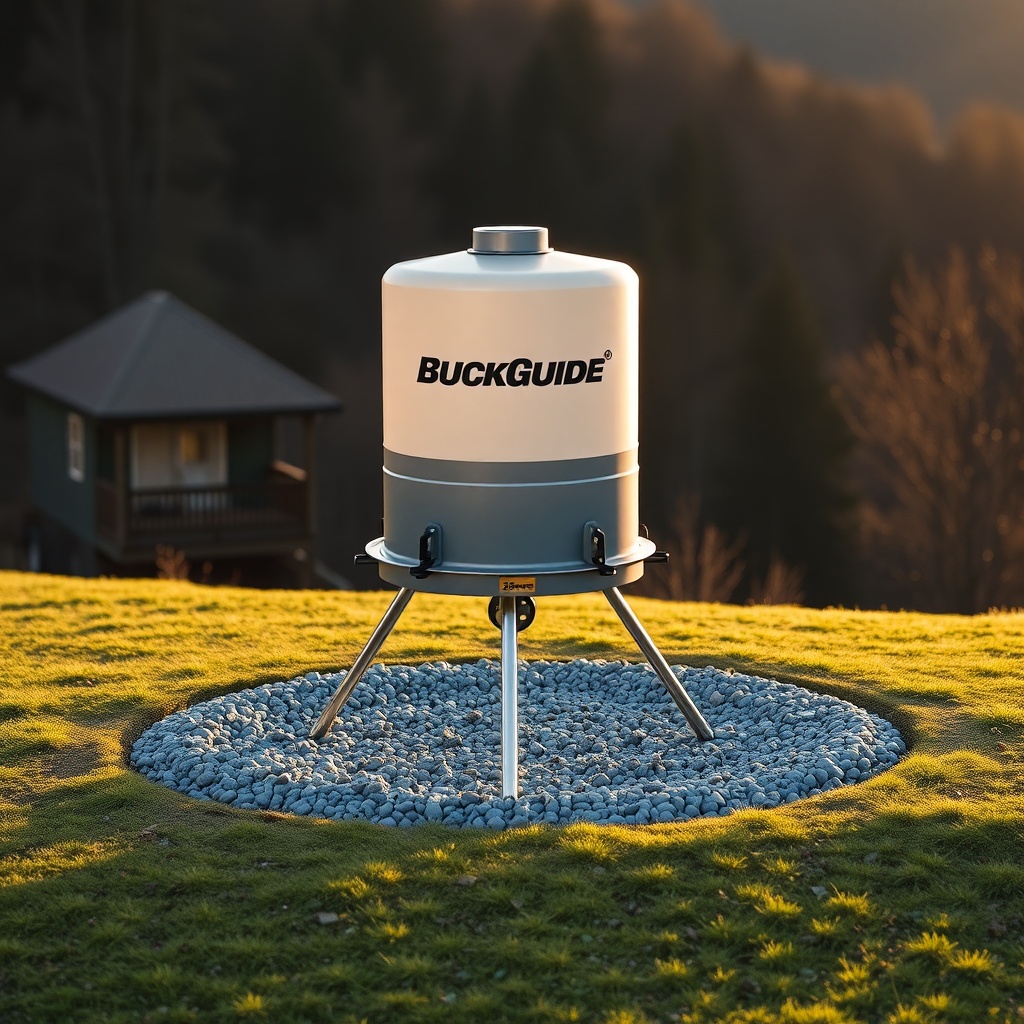
Steep terrain channels water downhill fast. If your feeder’s base sits in a natural drainage path (even small rivulets), the soil will erode around the legs within weeks, causing the feeder to lean. Before mounting, check the site after a rainstorm—look for eroded channels or standing water. Position the feeder 3-5 meters uphill from any visible drainage line, or on a small terrace you cut into the slope. You can also build a gravel ring (50 cm radius, 15 cm deep) around the feeder’s base to divert water. Compact the gravel with a hand tamper to reduce settling.
If the slope is part of a creek floodplain, elevate the feeder’s entire mount on a 20 cm high concrete pedestal. The BuckGuide 300lb Spin-Cast Feeder’s motor and electronics are not waterproof—the battery box and spin mechanism must stay above splash zone. For wiring considerations in wet conditions, see optimal solar panel mounting angle to ensure panels stay dry and at the correct tilt.
What Owners Say
Hunters in Appalachia and the Scottish Highlands report mixed experiences with the BuckGuide 300lb Spin-Cast Feeder on slopes. John M., a land manager from West Virginia, writes: “I used the 4-post adjustable base on a 22-degree ridge. The threaded feet held perfectly through two snow melts. The spinner throws corn evenly now, whereas before with the tripod it used to pile up on the downhill side.” Sarah T., a deer biologist in Scotland, notes: “On peat soils, the legs sank 10 cm into the ground after a week. I had to pull it and install anti-sink plates. After that, stable.” Common praise includes the feeder’s 300 lb capacity reducing refill frequency on steep sites where ATV access is difficult. Complaints center on the stock tripod’s inability to handle even moderate slopes—many upgrade immediately. One owner cautions that the spinner’s 12V motor draws 2.5 amps under load; on slopes with partial shading, solar panels may require squirrel-proof wiring conduits if animals gnaw on cables near the battery.
Frequently Asked Questions
Can I mount the BuckGuide 300lb Spin-Cast Feeder on a slope above 35 degrees?
Not without significant reinforcement. Above 35 degrees, a 4-post base is insufficient—you would need a 1 m x 1 m concrete pad with anchoring bolts. The feeder’s weight and wind exposure become too dangerous. Consider a different feeder location on a gentler contour.
How often should I check leveling on a steep slope?
Every 2-3 weeks during the first season, then monthly after. Soil compaction and erosion can shift legs 1-2 cm per month on slopes. Use a portable level each time.
What if my slope has a rock outcrop in the mounting area?
You can use a rock drill and expansion anchors to bolt the 4-post base directly into bedrock. This is the most stable option but requires a 10 mm masonry bit and anchor bolts rated for 200 kg each. Expect £40 in hardware.
Does the wind affect the feed pattern more on slopes?
Yes. Wind funnels up draws and over ridges, deflecting the spin at low speeds. On slopes, mount the feeder so the prevailing wind hits it from the side (perpendicular to the slope direction), not directly uphill or downhill. The wind resistance troubleshooting guide includes baffles that attach to the spin-cast housing.
Can I use a tree mount on steep terrain?
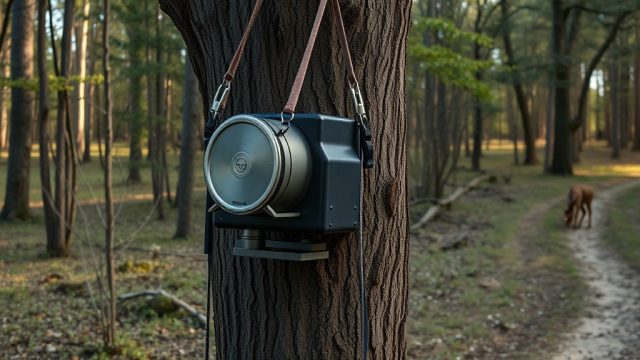
Only if you have a straight-trunked tree at least 40 cm in diameter. Tree mounting (using the BuckGuide tree bracket, £45) works on slopes because the trunk provides natural leveling. However, ensure the tree is not leaning more than 5 degrees from vertical, or the feeder will tilt with it.
Should I adjust the feed timer for steep terrain?
Absolutely. On slopes, corn slides away from the feeder faster. Set the timer for 2-4 seconds per feeding instead of the default 6-8 seconds; otherwise, excess corn collects at the downhill edge. The BuckGuide 300lb Spin-Cast Feeder’s digital timer allows 1-second increments.