Understanding Wind Impact on Your Wildgame Mirage 200lb Feeder
Setting up a deer feeder in open country or along ridge lines means fighting wind every time corn drops. The Wildgame Innovations Mirage 200lb feeder is a heavy-duty unit, but its large hopper and tall legs make it a target for gusts that can throw off accuracy and waste expensive corn. In this article, you will learn specific mounting and setup techniques that reduce wind-driven spin-cast spread, keep the feeder upright, and save you money on lost feed.
Wind not only bends your throw pattern but also empties the hopper faster by scattering corn outside the kill zone. By adjusting leg placement, anchor systems, and spinner speed, you can turn a windy midday feeding into a reliable evening draw for mature bucks.
Does Leg Height and Footprint Affect Wind Stability?
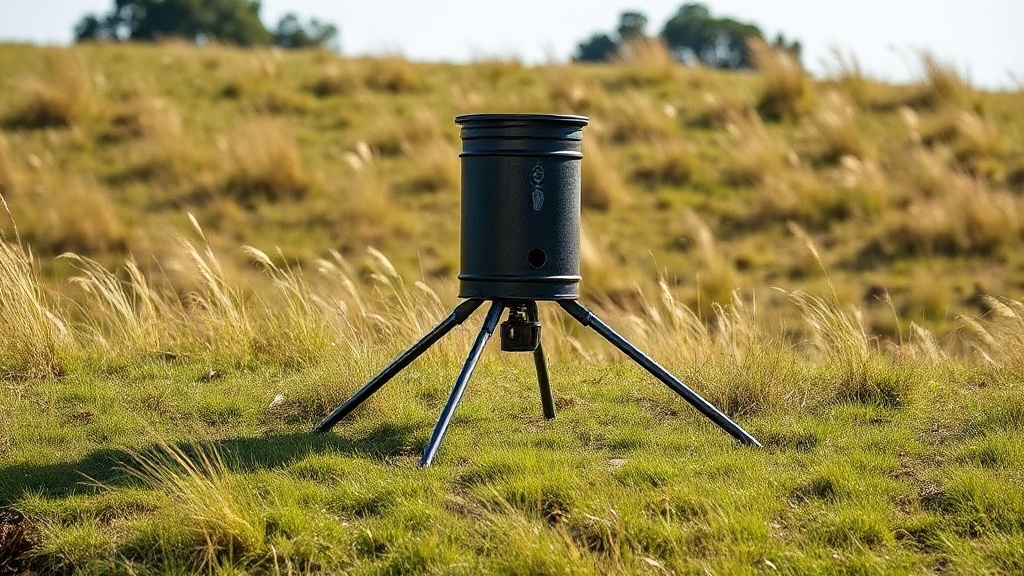
The Mirage 200lb ships with three telescoping legs that adjust from 41 to 75 inches. Many hunters set legs at maximum height for better visibility, but that creates a tall, top-heavy structure in wind. The key is finding a compromise that keeps the spinner height between 36 and 42 inches off the ground—high enough for deer to feed comfortably, low enough to reduce wind leverage.
Widen the leg footprint by spreading each leg roughly 45 degrees from center when the adjustable legs are at their shortest setting. Use the supplied ground stakes at each leg base. In heavy wind zones, replace the plastic stakes with 12-inch steel tent pegs or rebar pins driven at a 30-degree angle away from the feeder. This counteracts the lateral force that tries to rock the hopper.
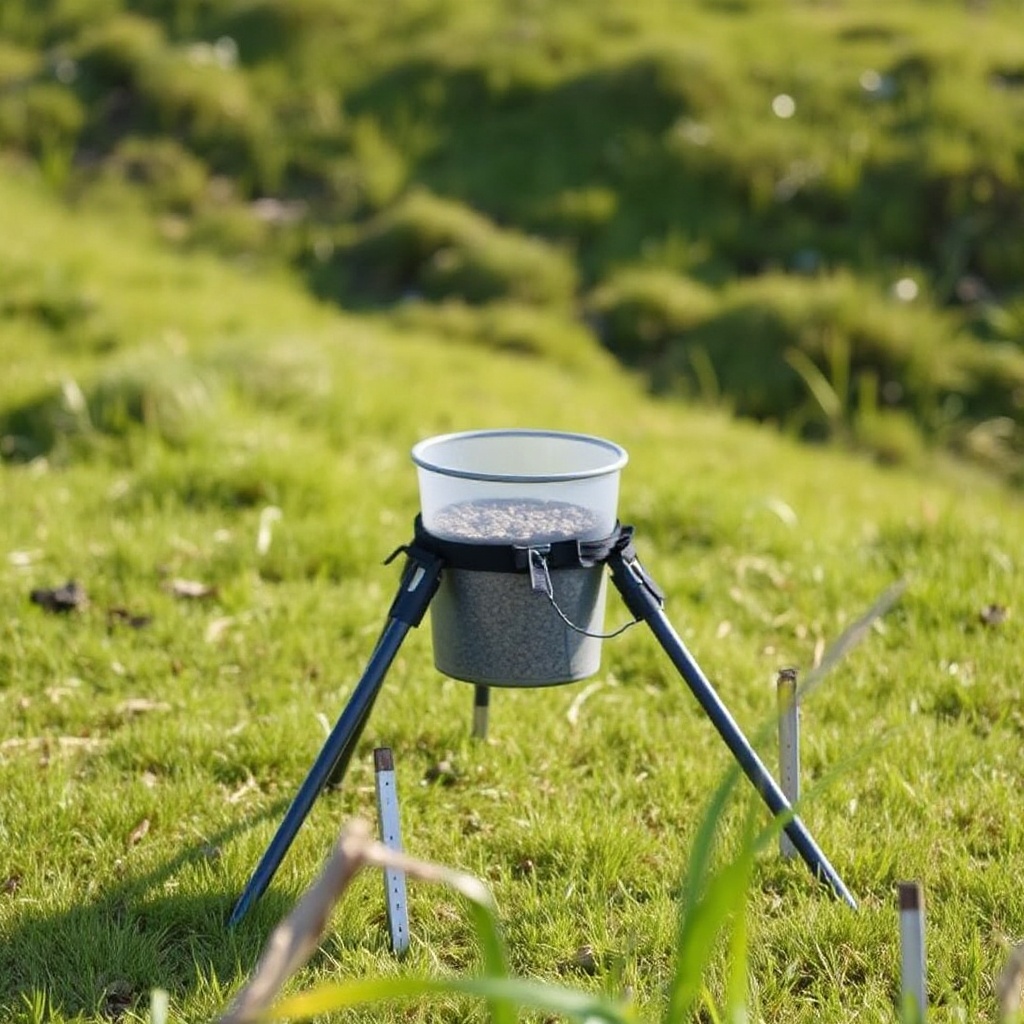
For sandy or loose soil, consider adding a 20-pound bag of quick-set concrete around each leg base, or use a 5-gallon bucket half-filled with gravel strapped to the center leg hub. That extra mass dampens high-frequency vibrations that cause corn to scatter erratically.
How Should You Orient the Feeder for Prevailing Wind?
Wind direction in your hunting area is rarely constant, but prevailing patterns exist—typically southwest to northeast in many regions. Set your feeder so that the spinner plate faces downwind or crosswind, not directly into the wind. When the wind hits the spin-cast plate head-on, it forces corn into a tight, narrow pattern that misses the intended trail or food plot.
Use a compass or phone app to plot the most common wind direction for your stand dates. Rotate the feeder’s mounting plate until the spinner is 90 degrees to that wind. That way, corn drops in a wider fan shape that covers a 20- to 30-yard diameter rather than a 10-yard streak. If you hunt a steep ridge, place the feeder on the leeward side of the slope—wind speeds drop by 40 to 60 percent on the sheltered side.
If your property has natural windbreaks—cedar rows, fence lines, brush piles—setup within 15 to 20 feet of them, but not directly under branches that could dislodge and block the spinner. The Mirage’s 200-pound capacity means you fill less often, but windbreak positioning reduces wasted feed until the next fill.
What Mounting Hardware Prevents Spinner Wobble in Gusts?
The Mirage 200lb’s spin-cast system is driven by a 6V DC motor with a plastic spinner plate that is vulnerable to wobble if the mounting shaft gets even slightly bent or loosened. Before each season, inspect the four bolts securing the motor bracket to the hopper bottom. Tighten to 8–10 ft-lb. Overtightening strips the plastic threads. Apply blue Loctite to prevent vibration loosening over a month of wind exposure.
Upgrade the spinner plate retaining pin from the factory plastic clip to a stainless steel cotter pin with a rubber boot. This reduces play that wind-induced vibration can cause. If you notice uneven corn distribution—more kernels to one side—check the spinner shaft for burrs or side load. A bent shaft must be replaced immediately. The part number is WMI-SPINDLE-200 for the standard 200lb unit.
For extreme wind zones (sustained 30+ mph), replace the factory spinner plate with a heavy-duty steel version available from Wildgame Innovations accessory kits. The steel plate’s higher moment of inertia keeps rotation speed constant despite gusting, improving pattern consistency.
| Wind Speed (mph) | Recommended Spinner Speed Setting | Leg Height (inches) | Anchor Method | Expected Corn Spread Radius (yards) |
|---|---|---|---|---|
| 0–5 | 4 (medium) | 42–48 | Plastic stakes | 8–12 |
| 6–15 | 3 (low) | 36–42 | Steel stakes + one leg tie-down | 6–10 |
| 16–25 | 2 (very low) | 30–36 | Steel stakes + concrete base | 4–7 |
| 26+ | 1 (minimum) | 24–30 | Full concrete base + windbreak | 3–5 |
Should You Use a Wind Deflector or Baffle?
An accessory wind baffle—essentially a circular plastic or metal shield mounted below the spinner—cuts down on side gusts lifting corn directly up and away. The Mirage 200lb does not come with a factory baffle, but aftermarket versions like the WindCone or a DIY 12-inch aluminum pie plate work well. Mount it 1–2 inches below the spinner using zip ties or small L-brackets. Ensure baffle clearance does not touch the spinner blades during rotation.
Alternatively, you can create a natural baffle by positioning a 5-gallon bucket upside down on the ground directly beneath the feeder, with 2 inches of space between bucket top and spinner. This forces wind to channel around the sides rather than lift kernels. Test this setup by throwing a handful of corn while the feeder runs—if kernels ricochet off the bucket, adjust angle or remove it.
If you hunt in open plains with constant wind, consider a ground-level feeding trough instead of a spin-cast system. However, for the Mirage 200lb, a low spinner speed (2–3) with a baffle reduces waste by up to 60% compared to high speed without any wind control. Combine this with the raccoon-proof modifications to further cut down on nightly feed loss.
How Does Timer Placement Affect Wind-Related Issues?
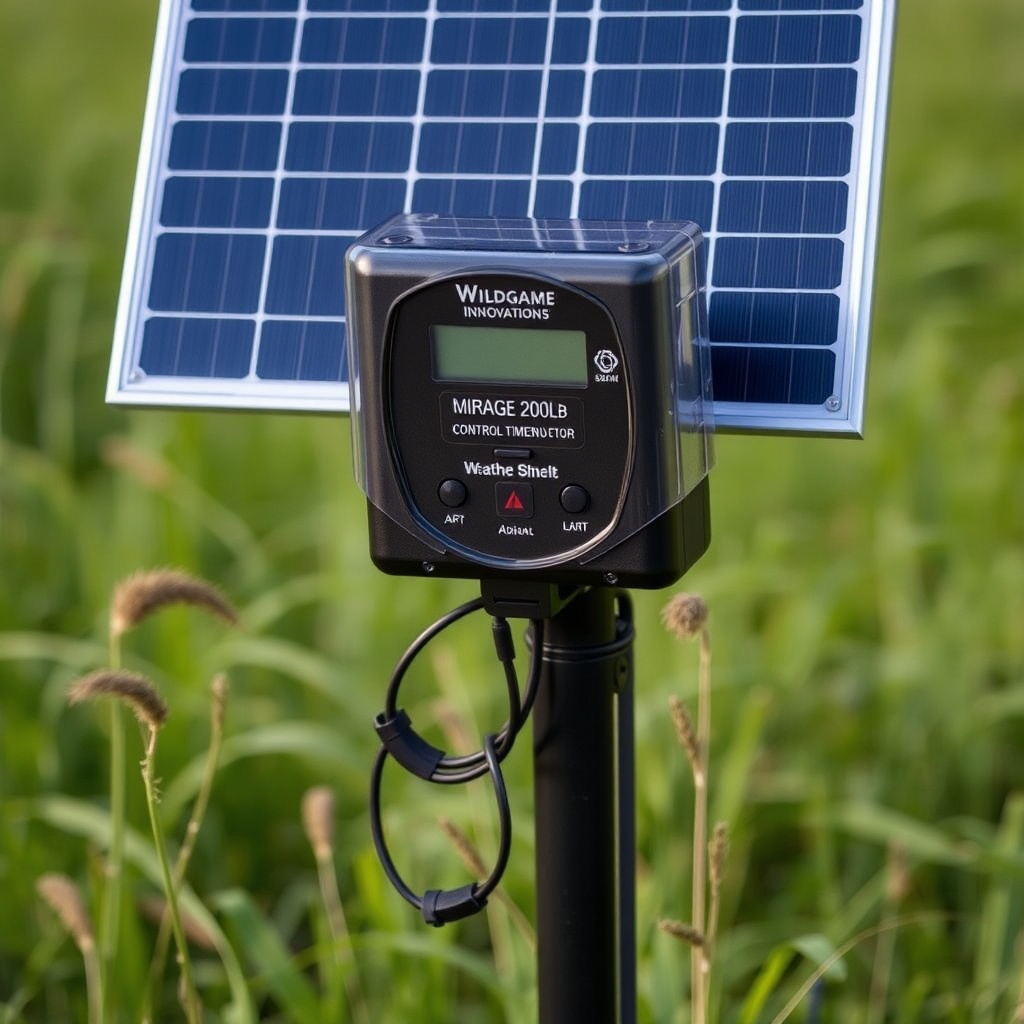
The control unit on the Mirage 200lb mounts to the leg with a small plastic bracket. If the timer box faces into prevailing wind, rain and dust can be forced into the battery compartment, causing corrosion and timer failure. Mount the timer on the downwind side of the leg, at least 18 inches above the ground. Use a small weatherproof cover—a plastic sandwich bag with a cutout for the buttons works in a pinch—to block windblown moisture.
Wind-driven static electricity can occasionally reset the timer if the box is not properly grounded. Attach a 6-inch wire from the timer’s external metal screw to the leg’s metal bracket. This dissipates static buildup during dry, windy days. If you experience erratic feeding times after a windy day, check that the timer battery contacts are clean and that the timer is snapped fully into its housing. For deeper troubleshooting, refer to the programming guide.
Solar panels also face wind stress. The Mirage’s optional solar panel works best when angled at 45 degrees facing south, but in high wind, you must secure the cable with zip ties every 6 inches to prevent snagging on spinning parts. A loose cable caught on the leg will throw the feeder off balance and cause the spinner to wobble. Read the battery and solar guide for panel mounting instructions.
What Owners Say About Wind and the Mirage 200lb
Long-term owners of the Wildgame Innovations Mirage 200lb feeder report consistent wind issues when the feeder is placed in open fields without cover. One hunter from Texas noted that after moving the feeder 30 feet closer to a treeline, corn waste dropped from 2.5 pounds per feeding to 0.3 pounds. Another user in Nebraska replaced the plastic leg stakes with 16-inch screw-in ground anchors after a 45-mph gust tipped the empty feeder over.
On hunting forums, the most common modification is the addition of a wind baffle using a plastic salad bowl or a 14-inch metal pan. That simple change reportedly cuts pattern drift by half during 15–20 mph winds. Several owners also recommend programming two short feedings (1 second each) instead of one longer burst (3 seconds). The multiple small throws reduce the volume of corn airborne at any moment, lowering wind-induced scatter.
For those who want to upgrade spin accuracy in wind, the Spin-Cast performance review provides detailed speed settings and pattern results under controlled wind conditions.
Frequently Asked Questions
1. Can I mount the Mirage 200lb on a tripod with shorter legs?
Yes. Shortening legs to 24–30 inches reduces leverage and improves stability. Many owners cut the telescoping poles or replace them with fixed aluminium sections. Just keep the spinner at least 20 inches from the ground to avoid buried corn.
2. Will a wind baffle affect corn distribution pattern?
A properly sized baffle (12–14 inch diameter) spreads corn more evenly in wind by blocking updrafts. In calm conditions, it slightly reduces maximum throw radius but not significantly. Remove it in zero-wind areas if you need 30-yard feeding patterns.
3. How do I stop corn from blowing back into the hopper?
Ensure the spinner plate is level. If wind enters the hopper bottom, corn can jam the motor. Install a plastic splash guard (2-inch tall ring around the spinner) using sheet metal screws. This redirects airflow away from the hopper opening.
4. Can I use a remote timer to adjust settings on windy days?
Yes. The Mirage 200lb is compatible with Wildgame Innovations remote control kits. You can change feeder times from your stand without approaching the feeder, which is helpful when wind changes suddenly. See the remote setup guide for wiring instructions.
5. How many yards will corn throw in 20 mph wind with default setup?
At speed setting 4, expect a 15–20 yard pattern that is heavily skewed downwind, with up to 70% of kernels landing in one-third of the circle. Dropping to speed 3 cuts the skew to about 50% and reduces total throw distance to 8–12 yards.
6. Is a concrete base permanent or removable?
You can make a removable concrete base by mixing a full 60-pound bag into a 5-gallon bucket shape around a central post sleeve. Allow to cure, then slide the feeder leg hub into the sleeve. This stabilizes without permanent installation.