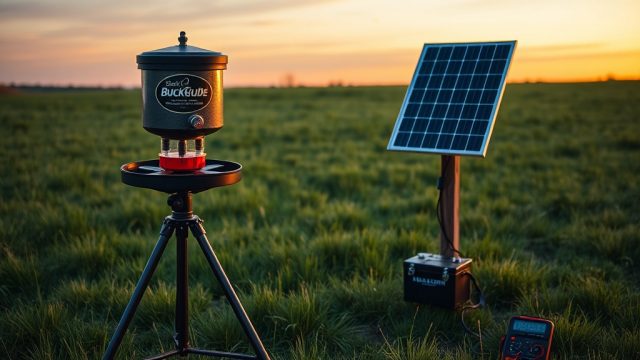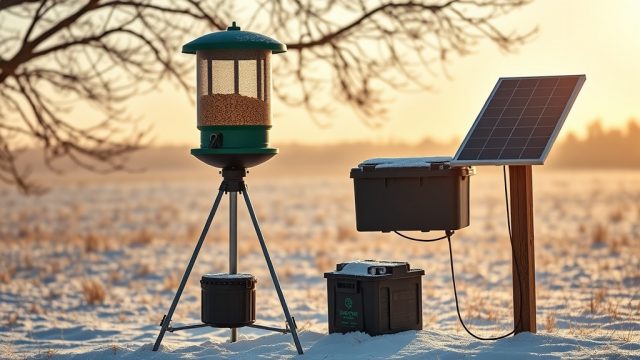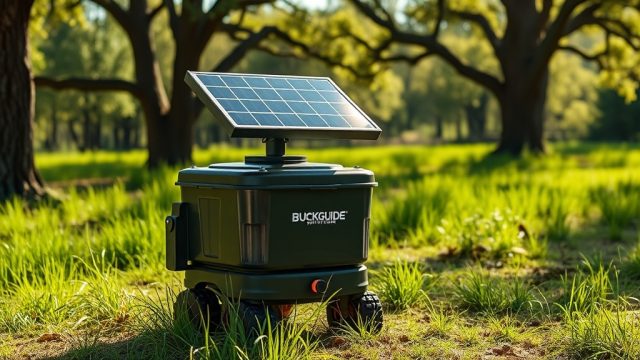
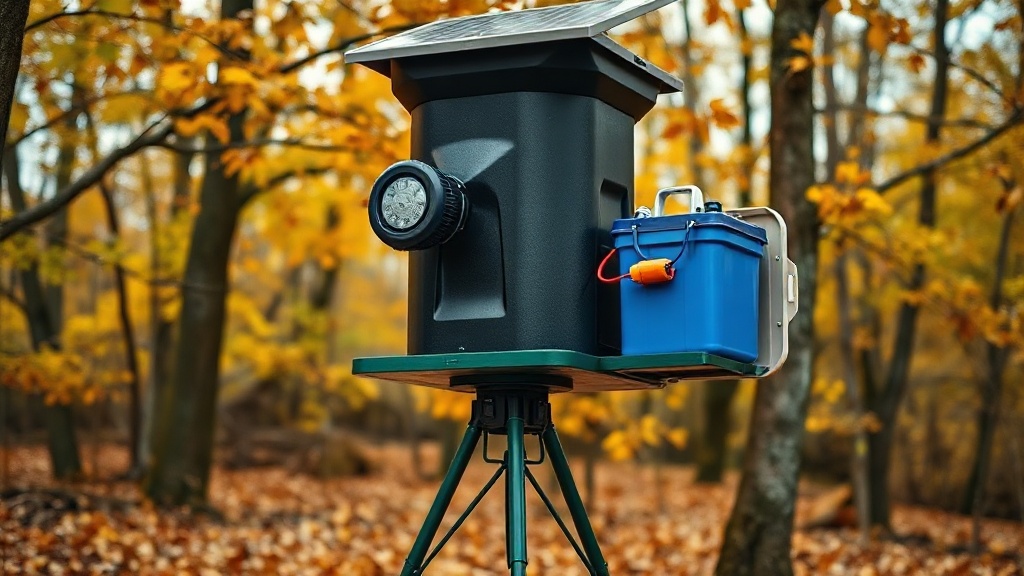
What makes the solar panel on the BuckGuide 300lb Spin-Cast Feeder drain the battery?
Many owners of the BuckGuide 300lb Spin-Cast Feeder assume that the included 10-watt solar panel will perpetually top off the 12V battery without issue. In reality, the solar panel’s charging system has a specific flaw: it lacks a smart charge controller that can prevent overcharging during peak sun hours, yet it also fails to deliver adequate current during overcast conditions. The result is a battery that often sits in a state of partial charge, leading to sulfation and premature failure. Additionally, the factory-installed timer’s quiescent current draw—typically around 15–20 mA—slowly saps power even when the feeder is not throwing corn. Over a two-week period of low sun, this parasitic drain alone can reduce a fully charged 9 Ah battery by more than 40%. Optimizing the solar input begins with understanding that the standard setup uses a direct connection, meaning the panel voltage can climb above 18V on a clear day, which can damage the battery if left unchecked. By addressing regulation and daily power balance, you can extend battery life by several seasons. For a deeper look at voltage regulation specifics, read our article on Solar Panel Voltage Regulation for BuckGuide 300lb Spin-Cast Feeder.
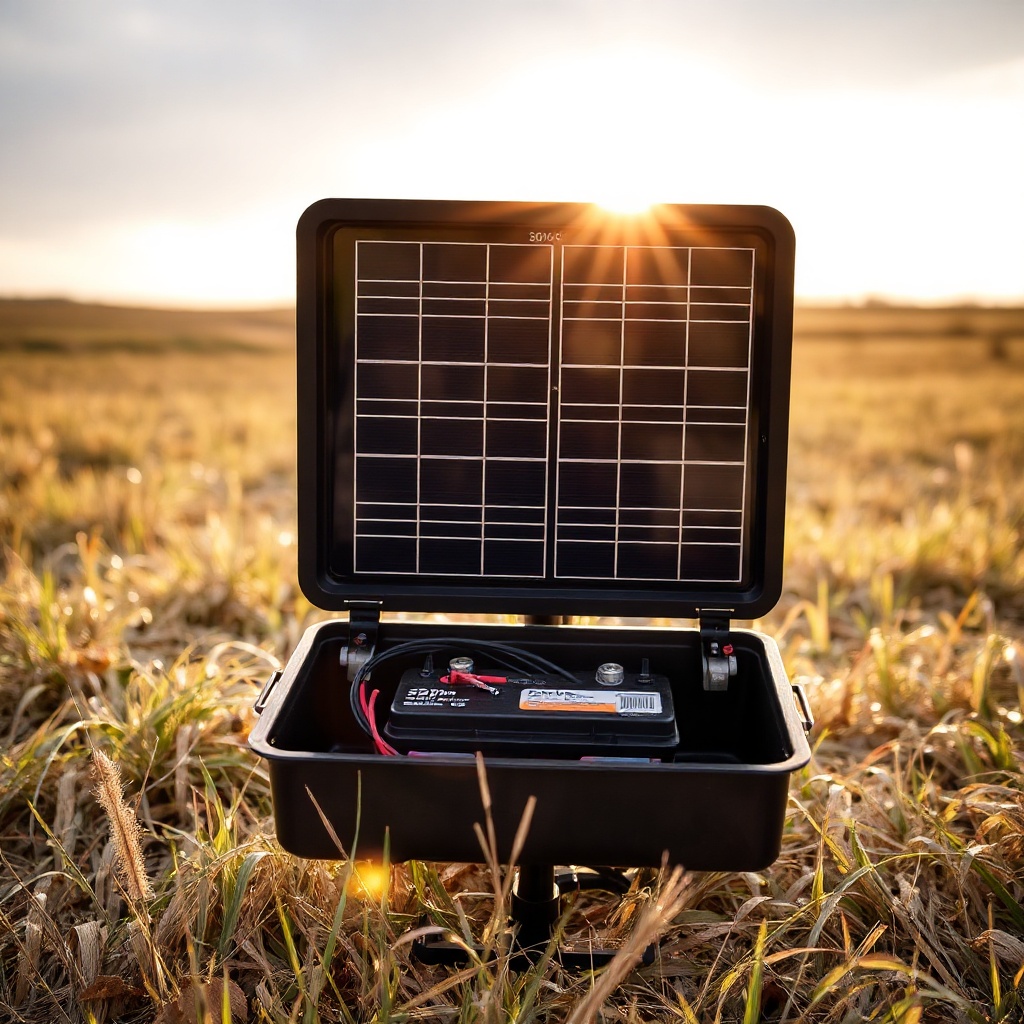
Should I replace the factory solar panel with a higher wattage unit?
Replacing the standard 10-watt panel with a 20-watt or 30-watt model can improve charging in low-light conditions, but doing so without adjusting the system’s regulation exposes the battery to higher overvoltage risks. The BuckGuide 300lb Spin-Cast Feeder’s wiring is rated for 5A max, so a 30-watt panel (which can produce up to 1.7A) is within safe limits for the wire gauge. The real gain comes from increased amp-hours per day: in partial shade, a 20W panel delivers roughly 50% more current than a 10W panel. However, cost matters. A 20W polycrystalline panel costs around $45–$60, while a 10W replacement sits at $25–$35. For feeders in areas with heavy tree canopy or less than 4 hours of direct midday sun, the upgrade is worth the expense. Pairing a larger panel with a PWM or MPPT charge controller yields even better results. For feeders programmed with specific schedules that require longer run times, such as the Optimizing BuckGuide 300lb Spin-Cast Feeder Timer for Nocturnal Deer Feeding Patterns, a larger panel may be essential to maintain battery state-of-charge.
What size battery should I use for optimal solar charging with this feeder?
The factory BuckGuide 300lb Spin-Cast Feeder ships with an 18 Ah battery, but many owners find that upgrading to a 20 Ah or even 24 Ah deep-cycle sealed lead-acid (SLA) battery provides a better solar charging buffer. The key specification is the charge acceptance rate: SLA batteries should receive a charge current between 10% and 20% of their Ah rating. For an 18 Ah battery, that means 1.8–3.6A. A standard 10W panel puts out about 0.6A in full sun, which is far below the ideal charging rate. A 20W panel delivering 1.2A in full sun brings the charge current closer to the sweet spot. Here is a comparison of battery options and their solar compatibility:
| Battery Type | Capacity (Ah) | Price (USD) | Ideal Solar Charge Current (A) | Typical Days to Full Charge with 10W Panel (6h sun) | Recommended Solar Panel (W) |
|---|---|---|---|---|---|
| Standard SLA | 18 | $32 | 1.8–3.6 | 5–8 | 20W |
| Deep-cycle SLA | 20 | $38 | 2.0–4.0 | 6–9 | 25W |
| LiFePO4 | 20 | $110 | 2.0–5.0 | 3–4 | 20W |
| AGM Deep-cycle | 24 | $48 | 2.4–4.8 | 7–10 | 30W |
As the table shows, upgrading the battery alone without increasing panel wattage extends recharge time. For winter months, a larger capacity battery paired with a 20W panel ensures the feeder stays operational even with reduced sun. Battery performance in cold temperatures further emphasizes this need—see Winter Battery Maintenance for BuckGuide 300lb Spin-Cast Feeder.
How do I set up the charge controller for the BuckGuide 300lb Spin-Cast Feeder?
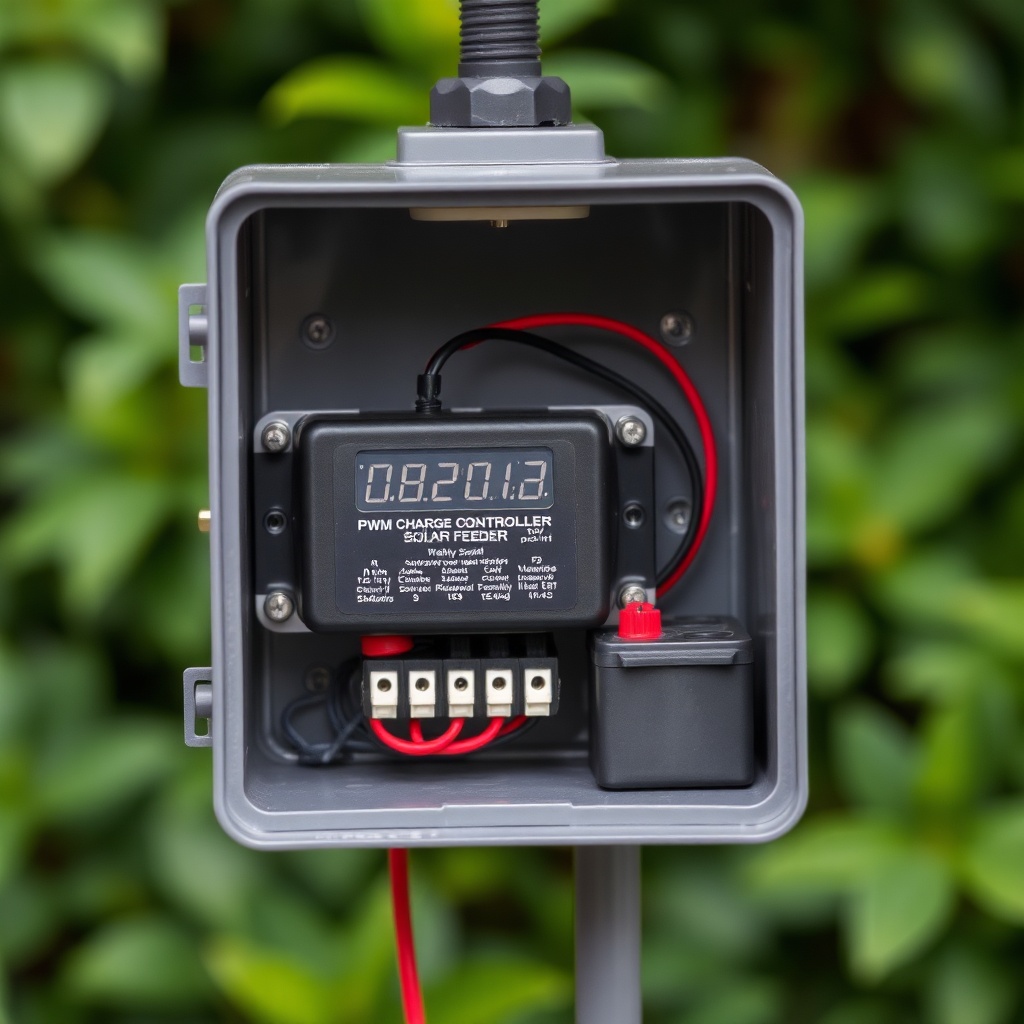
The factory model does not include a charge controller, but installing one is straightforward and critical for battery longevity. A PWM (Pulse Width Modulation) controller costs $12–$25 and prevents overcharging by reducing current as the battery reaches full voltage. An MPPT (Maximum Power Point Tracking) controller, priced at $35–$60, is more efficient in low light but is often unnecessary for small panels under 30W. For the BuckGuide 300lb Spin-Cast Feeder, a 6A to 10A PWM controller works perfectly with a 10–30W panel. Connect the panel to the controller’s solar input terminals (positive and negative), then connect the battery to the controller’s battery terminals. The controller automatically monitors battery voltage and adjusts the charging profile. Set the controller to Gel or AGM mode if available, as these settings match sealed lead-acid chemistry. The timer should be connected directly to the battery, not through the controller, because the timer’s load draw is low and the controller’s load output may not support the timer’s operation. For feeders with extended night-time schedules, a timer replacement can reduce standby drain—see Digital Timer DIY Replacement for BuckGuide 300lb Spin-Cast Feeder.
How much sun does my feeder get, and how does it affect charging?
Solar charging performance hinges on solar insolation—the amount of sunlight your feeder’s location receives measured in peak sun hours (PSH). Most of the continental U.S. gets between 3.5 and 6 PSH per day in summer, dropping to 1–3 PSH in winter. To calculate daily charge output: multiply panel wattage by PSH by 0.8 (system efficiency). For a 10W panel in 4 PSH, that’s 10 × 4 × 0.8 = 32 watt-hours, or about 2.6 Ah into a 12V battery. A single feeding event (2 seconds of spin-cast) draws roughly 0.03 Ah. If your feeder runs 4 times per day, that’s 0.12 Ah daily. In summer, you have a surplus; in winter, a deficit. To compensate for winter, tilt the panel more vertically (45–60 degrees) to catch low-angle sun. Also, trim any overhanging branches that cast shade. A solar pathfinder tool can help you measure PSH accurately for your specific feeder location. For scheduling adjustments that minimize battery drain in low-sun periods, refer to Winter Deer Feeding Schedule for BuckGuide 300lb Spin-Cast Feeder.
What owners say: Battery-solar optimization experiences with the BuckGuide 300lb Spin-Cast Feeder
Across hunting forums and product reviews, owners of the BuckGuide 300lb Spin-Cast Feeder share consistent experiences. Many report that the stock 10W panel keeps up with summer feeding but leaves the battery flat after three weeks of winter cloud cover. One owner in Minnesota switched to a 20W panel and a $15 PWM controller, and his feeder ran through a -20°F stretch without a battery swap. Another common fix is adding a small 12V 1A trickle charger for cloudy weeks. However, some owners caution against over-paneling: a 30W panel without a controller can boil an SLA battery in less than a month. The general consensus is that a $50 investment in a bigger panel and a controller pays off in three seasons of reliable operation. For feeders used for Timer Programming for Dusk-Only Feeding on BuckGuide 300lb Spin-Cast Feeder, battery life improves further because the unit operates only once per day, reducing load.
Frequently Asked Questions
Can I use a car battery with the BuckGuide 300lb Spin-Cast Feeder?
While possible, a standard car battery is not designed for deep discharge and will degrade quickly. A deep-cycle marine or AGM battery is recommended for solar charging with this feeder.
How often should I clean the solar panel on the BuckGuide 300lb Spin-Cast Feeder?
Clean the panel every 4–6 weeks during high-pollen or dusty seasons. A light wipe with a damp cloth improves charging efficiency by up to 15–20%.
What is the best way to mount the solar panel for maximum winter sun?
Mount the panel on a south-facing bracket at an angle equal to your latitude plus 15 degrees. This minimizes snow accumulation and captures low winter sun.
Will a solar trickle charger work with the BuckGuide 300lb Spin-Cast Feeder?
A 1.5W trickle charger may work in summer but will not keep up with the timer’s draw in low light. Use at least a 10W panel for reliable year-round performance.
My battery voltage reads 11.8V after a sunny day. Is that normal?
No. A healthy 12V SLA battery should read 12.6–12.8V when fully charged. 11.8V indicates a significant discharge. Check for a malfunctioning controller or panel obstruction.
How do I protect the battery and controller from rain?
Mount the battery and control components inside the feeder’s storage box or a sealed plastic enclosure. Ensure the solar panel’s junction box faces downward to prevent water ingress.