Winter Battery Maintenance for BuckGuide 300lb Spin-Cast Feeder
Winter can be the toughest season on a deer feeder’s battery system, and the BuckGuide 300lb Spin-Cast Feeder is no exception. With freezing temperatures reducing battery capacity by up to 40%, proactive maintenance ensures your feeder continues dispensing corn reliably through the cold months. This guide covers essential battery and solar panel care to keep your unit operational when deer need supplemental feed most.
Whether you are running a single 12V deep-cycle battery or a solar-recharged setup, following these steps will prevent unexpected shutdowns and extend equipment life. For best results, pair your battery maintenance schedule with proper timer adjustments discussed in Timer Calibration for Optimal Performance in Cold Weather on BuckGuide 300lb Spin-Cast Feeder.
How Often Should I Check the Battery Voltage in Winter?
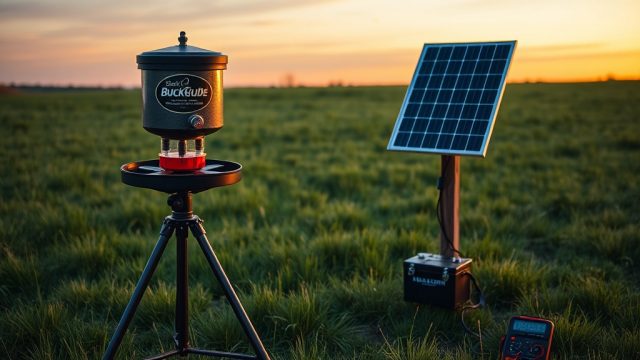
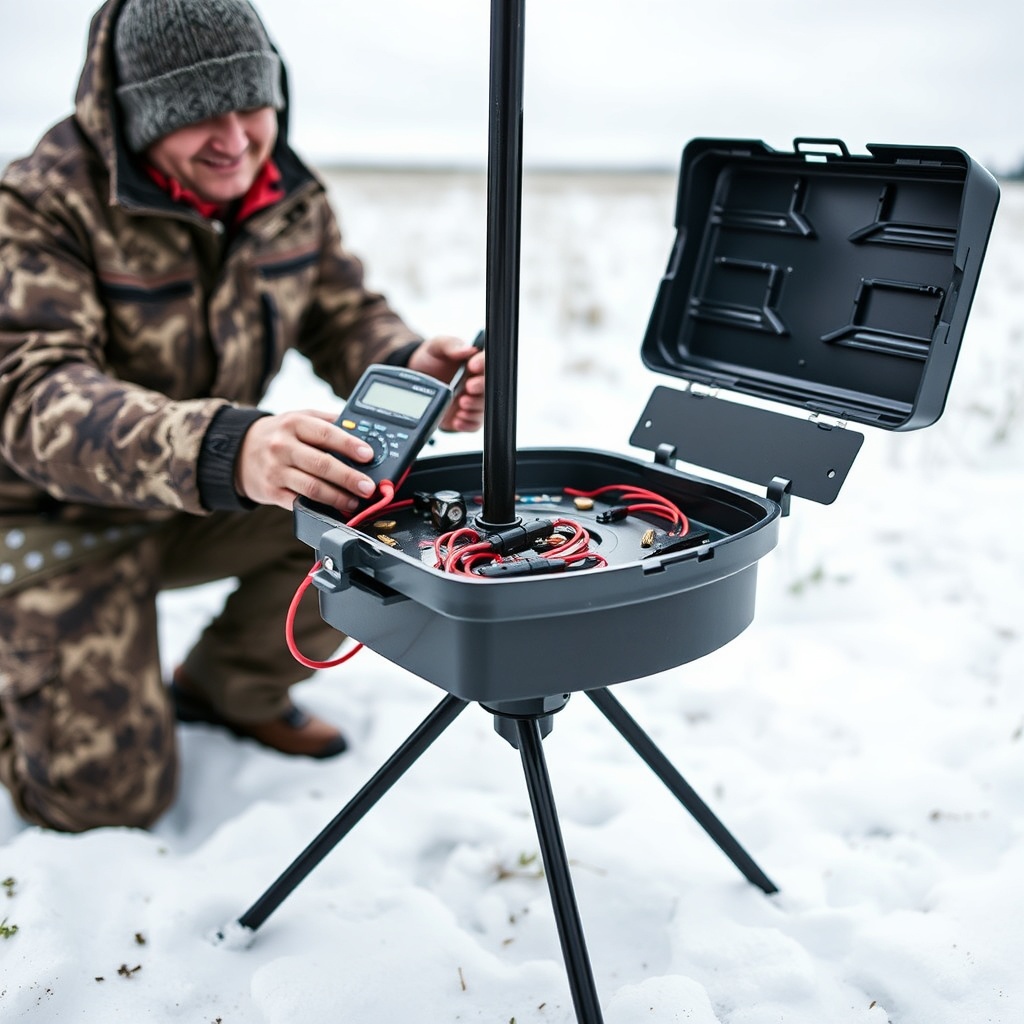
During winter, check the battery voltage at least every two weeks. Cold weather increases internal resistance and accelerates self-discharge. A fully charged lead-acid battery reads 12.6V to 12.8V at 20°C, but at -10°C, the same battery may show 12.4V even when fully charged. Use a digital multimeter to measure voltage at the battery terminals while the feeder is idle (no motor running). If voltage drops below 12.2V, recharge immediately to prevent sulfation. For solar setups, also monitor panel output on cloudy days—a partially shaded panel in winter can drop voltage below the charge controller’s threshold.
What Is the Ideal Battery Type for Freezing Conditions?
For the BuckGuide 300lb Spin-Cast Feeder in winter, sealed AGM (Absorbent Glass Mat) batteries outperform standard flooded lead-acid. AGM batteries have lower internal resistance, better cold-cranking amps, and zero maintenance. They also resist freezing better—a discharged flooded battery can freeze at -10°C, while an AGM with full charge survives to -30°C. If you must use a flooded battery, ensure it stays above 80% charge to avoid freeze damage. Gel batteries work but are more expensive and require specific charging profiles. Lithium iron phosphate (LiFePO4) batteries offer the best cold-weather performance but cost 2-3 times more than AGM. For most users, a 12V 35Ah AGM battery balances cost and reliability for the BuckGuide 300lb system.
Match the battery capacity to your feeding schedule. For overnight or noctural feeding windows, refer to Optimizing BuckGuide 300lb Spin-Cast Feeder Timer for Nocturnal Deer Feeding Patterns to calculate energy draw. A 35Ah battery can typically run two feedings per day for 3-4 weeks before needing a recharge.
How Do I Protect Solar Panel Connections from Ice?
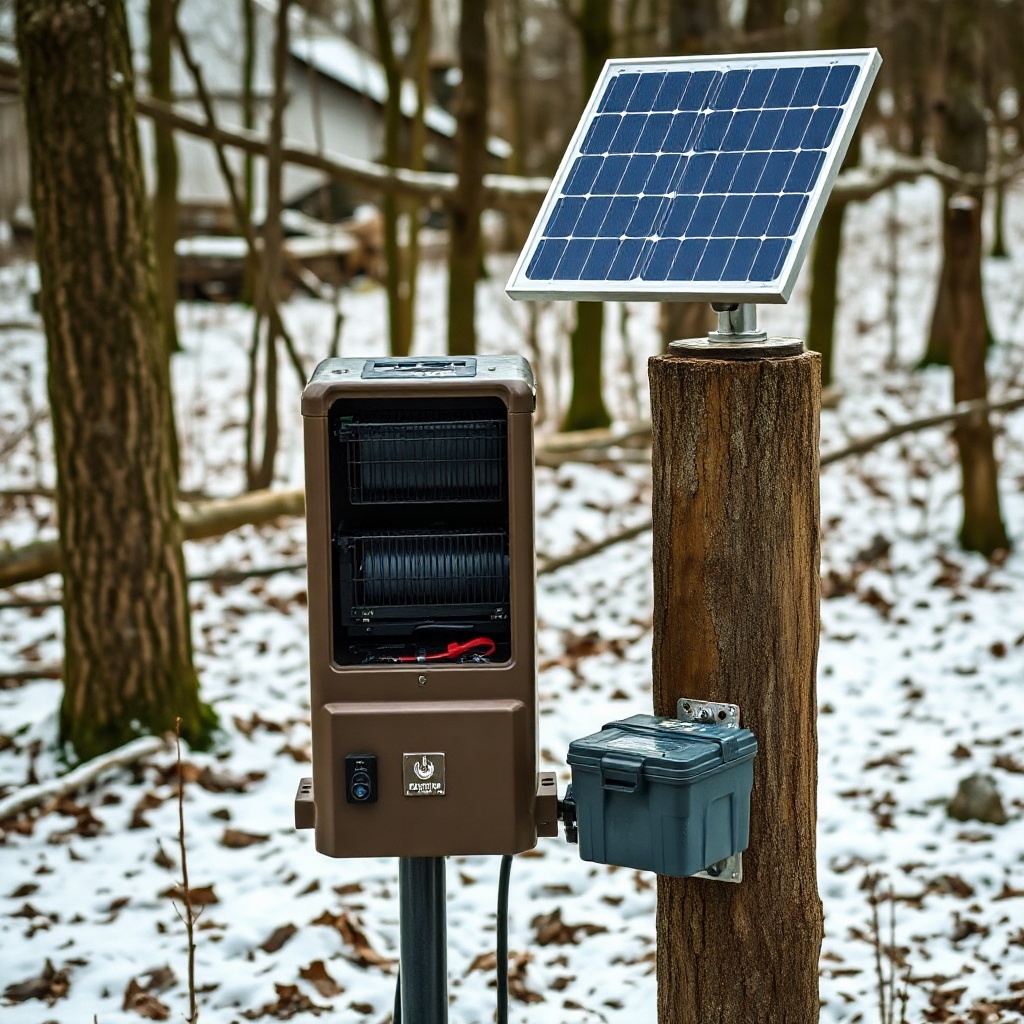
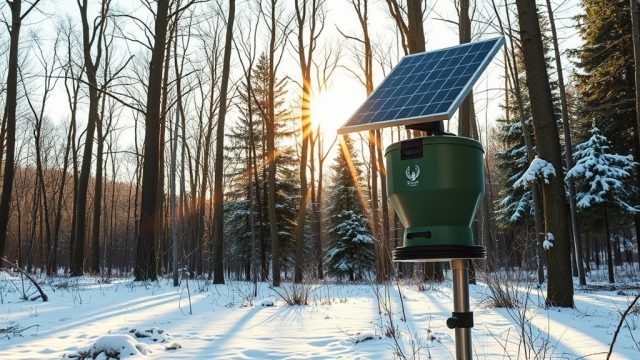
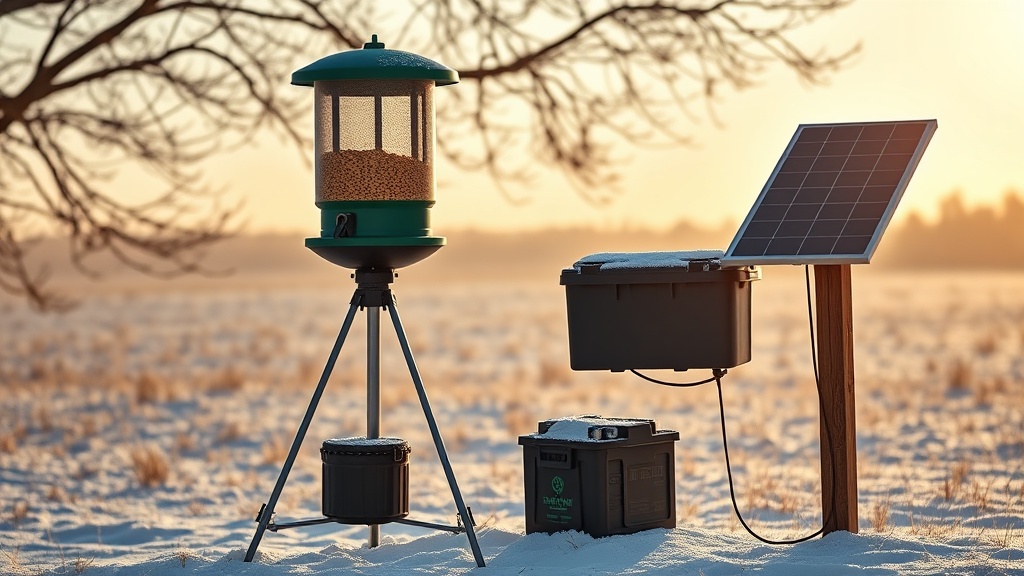
Solar panel connections are vulnerable to moisture freezing and expanding, which fractures seals and corrodes contacts. Use dielectric grease on all MC4 connectors and terminals before winter. Wrap connections with self-amalgamating silicone tape (not electrical tape, which hardens and peels in cold). Mount the panel at a 45-degree angle to shed snow and ice—this also improves winter light capture. If your feeder uses a portable panel on a stake, move it to a south-facing slope for maximum exposure. Inspect wire insulation monthly; rodents occasionally chew cables in winter when food is scarce. A damaged wire can short the battery overnight.
Should I Disconnect the Battery During Extreme Cold Spells?
Only if the feeder will not be used for more than two weeks. Otherwise, let the battery remain connected so the timer and solar charge controller can maintain a float charge. Disconnecting the battery in sub-zero conditions can cause it to self-discharge faster and potentially freeze if the charge drops too low. However, if temperatures fall below -20°C and you cannot check voltage weekly, bring the battery indoors if possible. Store it at 50% charge in a cool (0-5°C) location to minimize degradation. Before reinstalling, fully charge the battery and test it. For complete guidance on digital timer settings post-disconnection, see Digital Timer DIY Replacement for BuckGuide 300lb Spin-Cast Feeder.
What Size Solar Panel Works Best with the BuckGuide 300lb Feeder in Winter?
Winter sunlight is weaker and days are shorter, so oversizing the panel compensates for lower insolation. A 20W to 30W polycrystalline panel is the sweet spot for the BuckGuide 300lb feeder in most northern latitudes. Monocrystalline panels are more efficient in low light but cost more. Ensure the panel’s operating voltage (Vmp) matches the charge controller—most small controllers need 18V to 22V panel output for a 12V battery. Use a PWM charge controller for budget setups or an MPPT controller for best winter performance (MPPT can extract 15-20% more wattage in cloudy conditions). Below is a comparison of common solar configurations:
| Panel Wattage | Charge Controller Type | Winter Daily Output (Wh) – Cloudy Day | Winter Daily Output (Wh) – Sunny Day | Suitable Battery Capacity (Ah) |
|---|---|---|---|---|
| 10W | PWM | 25-35 | 50-60 | 18-20 |
| 20W | PWM | 50-70 | 100-120 | 35 |
| 30W | MPPT | 90-110 | 170-200 | 55 |
| 40W | MPPT | 120-150 | 240-270 | 70 |
Choose a panel with at least 20W for northern states (Minnesota, Wisconsin) and 30W for areas with heavy snowfall. Always mount the panel securely to the tripod or a nearby post to prevent wind damage.
How Do I Clean the Solar Panel in Winter Without Damaging It?
Dirt, frost, and snow reduce panel output by 30-50% if not removed. For safety, never climb an icy ladder. Use a long-handled soft brush with a rubber squeegee. Spray warm water (not hot) on the glass if ice is present—thermal shock can crack the panel. Avoid abrasive cloths or solvents. Clean the panel monthly and after major snowstorms. If the panel is tilted at 45°, most snow slides off naturally within two hours of sunrise. For feeds in dense woods, trim branches that drop debris. Note that dirty panels undercharge the battery, which cascades into timer malfunction. For precise timer adjustments after cleaning, check Timer Calibration for Maximum Efficiency on BuckGuide 300lb Spin-Cast Feeder.
What Owners Say
Users across the Midwest report that winter battery failures are the number one reason for feeder downtime. “I switched to an AGM battery two winters ago, and my BuckGuide 300lb never missed a feed even in -15°F,” says Mark from Wisconsin. Another owner in Pennsylvania notes that mounting the solar panel on a separate pole (rather than on the feeder tripod) prevented shadow from the hopper reducing output by 40%. Several forum members advise keeping a spare 12V 7Ah battery for emergencies—enough to run the timer and dispense a few feedings if the main battery dies. “The best upgrade I made was adding a wireless battery monitor that alerts my phone when voltage hits 12.2V,” writes a user from Michigan. For remote range issues in snowy conditions, see Remote Range Extension for BuckGuide 300lb Spin-Cast Feeder.
Frequently Asked Questions
Q: Can I use a car battery for my BuckGuide 300lb feeder?
A: Yes, but it is not ideal. Car batteries are designed for short, high-current bursts and deeper discharges will shorten their life. Use a deep-cycle marine or AGM battery instead.
Q: How long does a 12V 35Ah battery last in winter with daily feedings?
A: Expect 2-3 weeks between charges for two feedings per day at 6 seconds each. Solar recharging extends this significantly—up to 6 weeks on partially sunny days.
Q: The solar panel shows voltage but the battery stays low. Why?
A: Check the charge controller connections. A common issue is loose MC4 connectors or a blown fuse. Also verify the controller’s low-voltage disconnect is not set too high. For timer-related power issues, visit Winter Deer Feeding Schedule for BuckGuide 300lb Spin-Cast Feeder.
Q: Will a lithium battery survive -20°C?
A: Most LiFePO4 batteries with built-in low-temperature protection will not charge below -4°C, but they still discharge fine. For winter use, choose a model with integrated heating pad or keep it inside an insulated battery box.
Q: How do I test if the solar panel is charging?
A: With the panel in full sun, measure voltage at the charge controller’s input terminals. It should read 18-22V for a 12V panel. If lower than 12V, the panel may be faulty or shaded.
Q: What is the best way to secure the battery box from moisture?
A: Use a weather-sealed plastic battery box with a gasket. Drill a small drainage hole at the lowest point to let condensation escape. Place the battery on a wooden block to keep it off the cold ground.