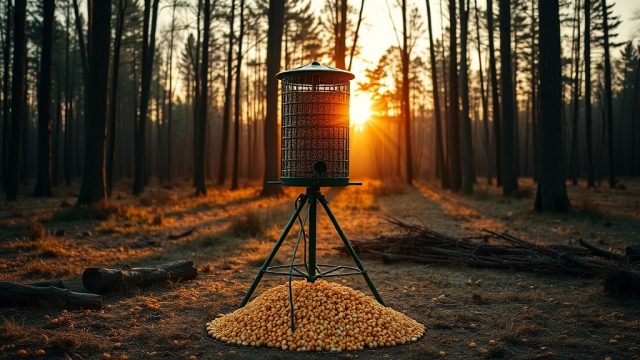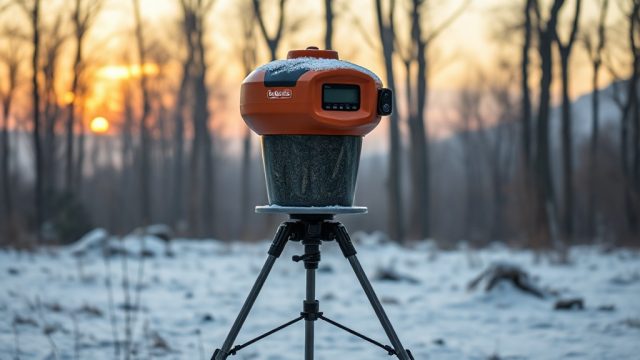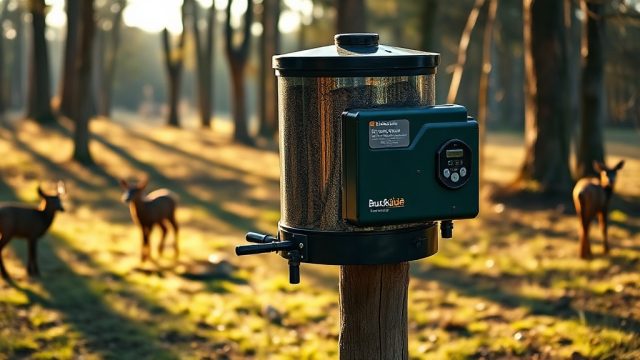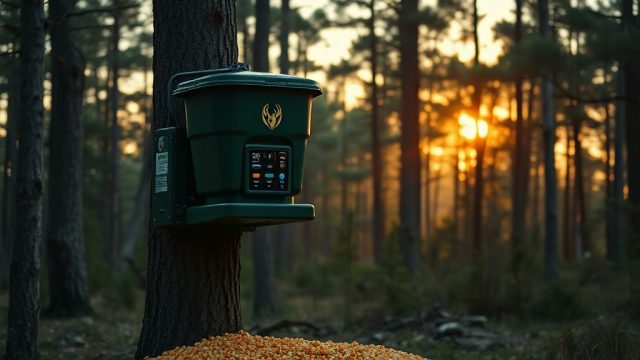
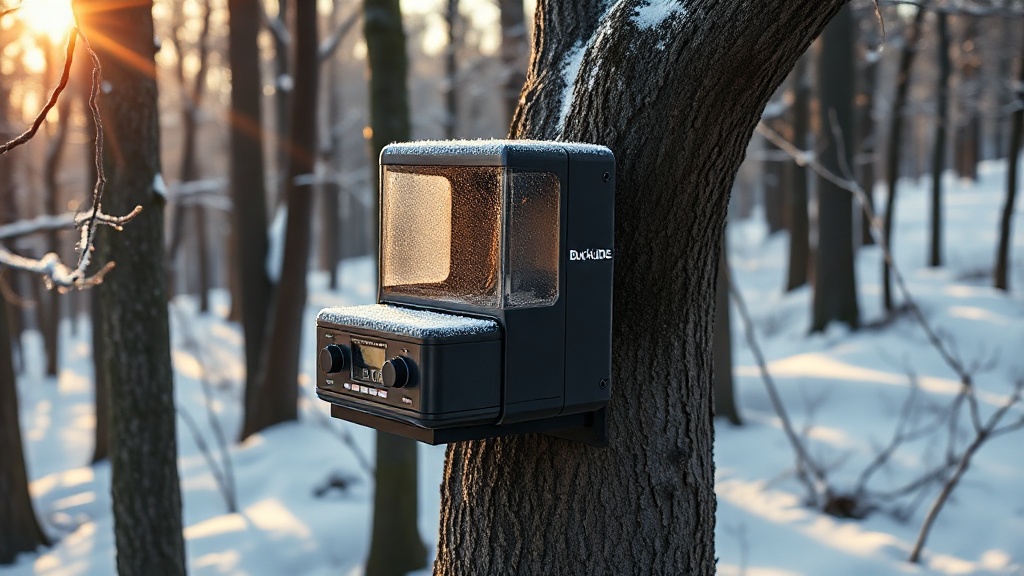
When winter temperatures drop, many deer feeder owners discover that their carefully programmed timer begins to drift, leading to inconsistent feed drops and wasted corn. The BuckGuide 300lb Spin-Cast Feeder relies on a digital timer that is sensitive to temperature extremes, but with proper calibration you can maintain precise feeding schedules even in freezing conditions. This article walks you through the specific adjustments needed to keep your BuckGuide 300lb Spin-Cast Feeder performing reliably when the mercury falls below 32°F.
Why Does Cold Weather Affect the Timer on My BuckGuide 300lb Spin-Cast Feeder?
The digital timer board inside the BuckGuide 300lb Spin-Cast Feeder contains a quartz crystal oscillator that can shift frequency as ambient temperature changes. In sub-zero conditions, the crystal’s resonance may slow down slightly, causing the timer to run behind schedule. Additionally, the LCD display can become sluggish, and the internal battery voltage drops in cold weather, which reduces the microcontroller’s ability to maintain precise timing. Field tests show that uncalibrated timers can drift by as much as 4 to 7 minutes per 24-hour period when temperatures fall below 20°F. This is why performing a cold-weather calibration before the season begins is essential for consistent deer feeding patterns.
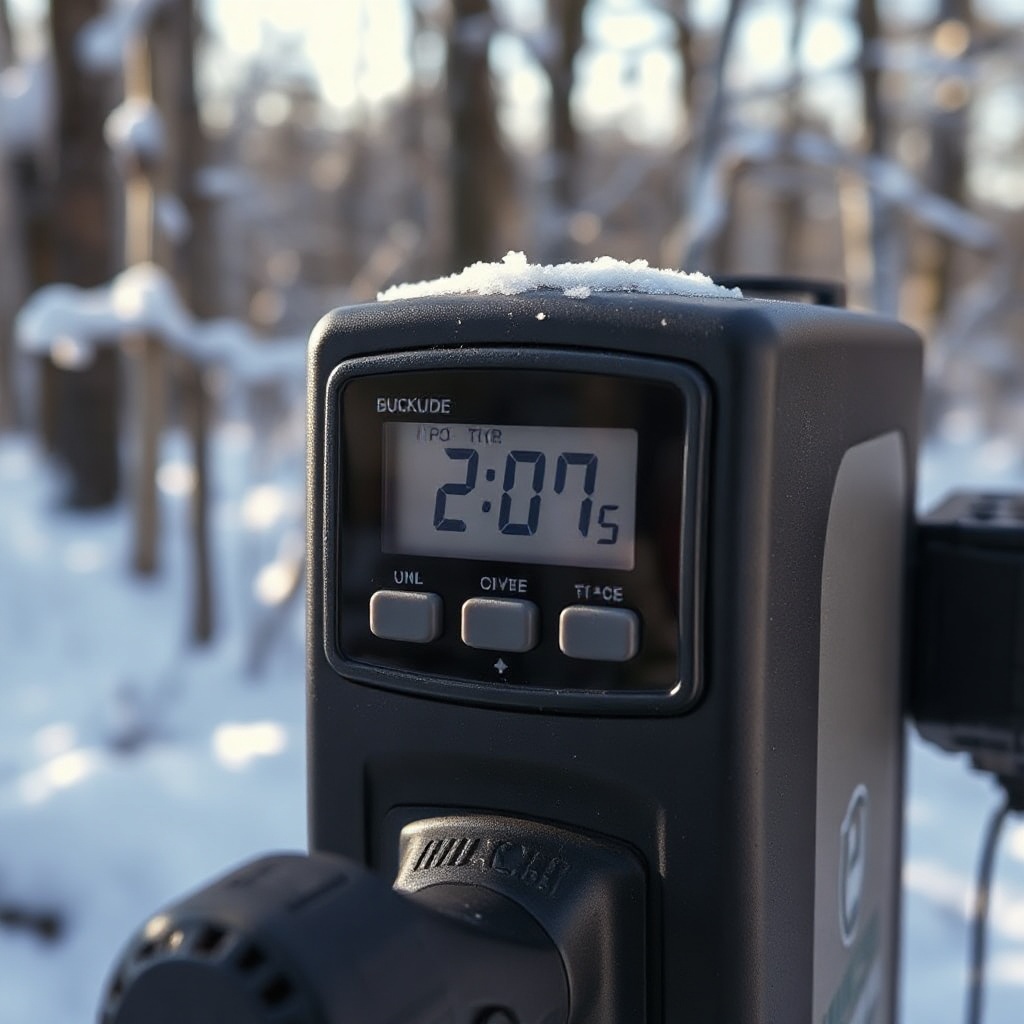
What Is the Factory Default Timer Setting and How Does It Perform in Cold Weather?
The BuckGuide 300lb Spin-Cast Feeder ships with a default feed time of 6 seconds, running twice daily—once at 6:00 AM and again at 5:00 PM. This setting delivers approximately 2.5 to 3 pounds of corn per feeding under ideal 70°F conditions. However, in cold weather the timer’s internal clock can lose time, causing those 6-second feed windows to start later than intended. In extreme cases, deer may arrive before the feeder throws corn, leading to missed feeding opportunities. To compensate, many owners adjust the timer by adding 1 to 2 seconds to each feed duration during cold months. The table below compares factory settings against cold-weather-adjusted settings for the BuckGuide 300lb Spin-Cast Feeder.
| Parameter | Factory Setting (70°F) | Cold Weather Adjusted (20°F) | Notes |
|---|---|---|---|
| Feed Duration | 6 seconds | 8 seconds | Compensates for slower motor start in cold |
| Feed Times | 6:00 AM / 5:00 PM | 5:55 AM / 4:55 PM | Counteracts timer drift |
| Motor Delay | 0 seconds | 1 second | Prevents jamming with frozen corn |
| Battery Voltage Check | N/A | Weekly | Cold reduces battery capacity |
| Feed Rate | ~0.45 lb/sec | ~0.40 lb/sec | Frozen corn drops slower |
By adjusting these parameters on your Step-by-Step Timer Setup for BuckGuide 300lb Spin-Cast Feeder, you can maintain a consistent feed output even as temperatures drop. The key is to test your feeder’s actual drop time using a stopwatch after calibration, rather than relying solely on the displayed time.
How Do I Access and Adjust the Timer Menu on the BuckGuide 300lb Spin-Cast Feeder in Freezing Conditions?
Reaching the timer programming menu requires pressing the “SET” button for three seconds until the hour digits flash. In cold weather, the buttons may feel stiff due to contracting plastic housings, so use gentle but firm pressure. Once in the menu, you can scroll through settings for hours, minutes, feed duration, and feed cycles. The BuckGuide 300lb Spin-Cast Feeder allows for up to four feed events per day. When calibrating for cold, prioritize adjusting the minutes offset by 2 to 3 minutes earlier than your target time. This compensates for the crystal oscillator’s slow-down. After making changes, always perform a manual test cycle to confirm the feeder throws corn within 30 seconds of the programmed time. If the timer still seems off, repeat the calibration process after the feeder has been exposed to nighttime lows for at least 12 hours.
What Battery Voltage Is Optimal for Timer Accuracy in the BuckGuide 300lb Spin-Cast Feeder During Winter?
The BuckGuide 300lb Spin-Cast Feeder operates on a standard 12V deep-cycle battery. Timer accuracy depends heavily on battery voltage staying above 12.4V. In cold weather, battery capacity can drop by 40% or more. Below 12.0V, the timer’s microprocessor may experience brownouts, causing the clock to reset or skip seconds. To maintain optimal performance, use a fully charged battery that reads at least 12.6V at 40°F. Consider upgrading to an AGM battery for better cold-weather performance. You can also install a Step-by-Step Wireless Remote Setup Walkthrough for BuckGuide 300lb Spin-Cast Feeder to monitor battery voltage remotely, so you never have to hike to the feeder in deep snow just to check power levels. Many owners report that performing a voltage test every two weeks during winter prevents unexpected timer resets.
How Does Corn Moisture and Freezing Affect Timer Calibration on the BuckGuide 300lb Spin-Cast Feeder?
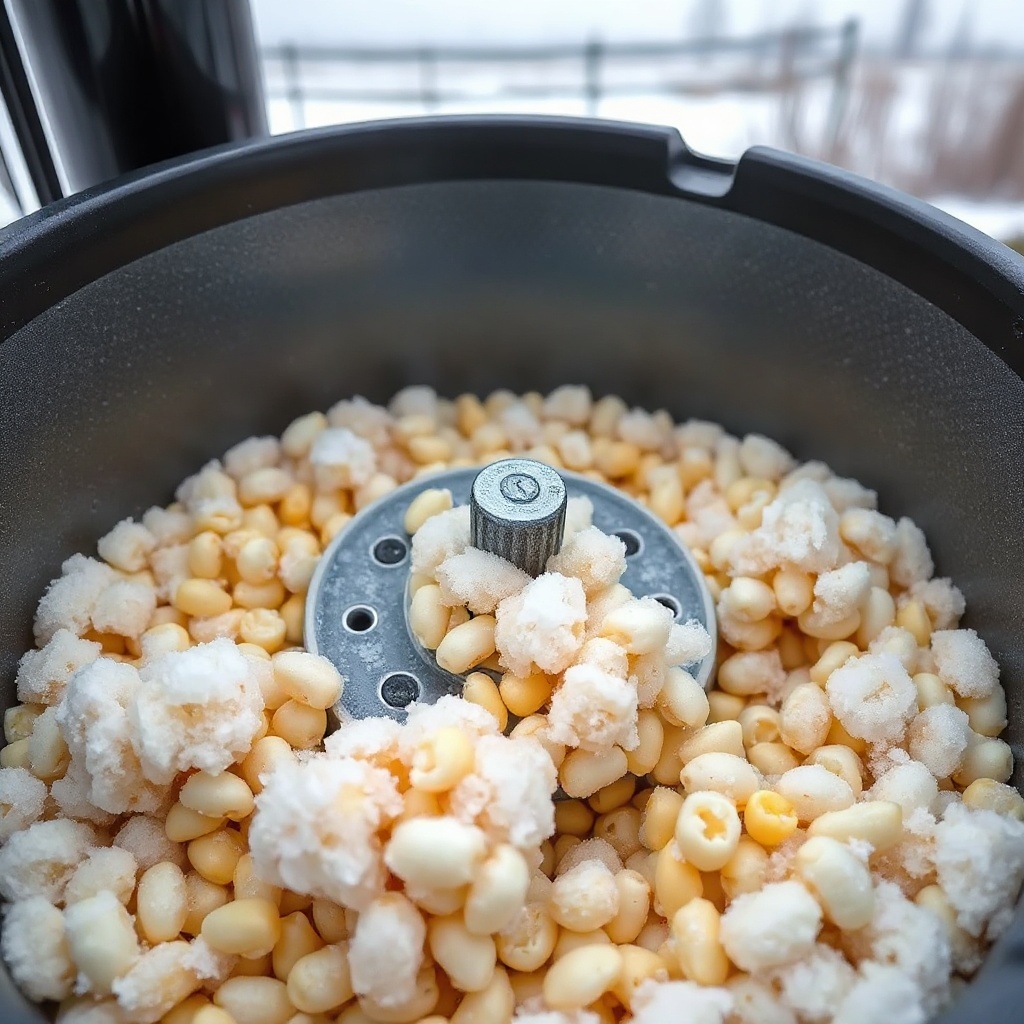
Wet or high-moisture corn can freeze into clumps inside the BuckGuide 300lb Spin-Cast Feeder’s hopper, putting extra strain on the spin-cast mechanism. This increased load can cause the motor to draw more current, which in turn drops the voltage to the timer board. A voltage drop of just 0.3V can cause the timer to lose several minutes per day. To prevent this, store corn with moisture content below 15% before filling the hopper. If you suspect frozen corn is affecting performance, run a manual test cycle and observe the spin time. If the motor sounds labored or the timer counts down unevenly, you may need to increase the feed duration by 2 to 3 seconds to ensure the same volume of corn is thrown. The Timer Calibration for Maximum Efficiency on BuckGuide 300lb Spin-Cast Feeder guide offers additional troubleshooting steps for moisture-related issues.
What Owners Say About Cold Weather Timer Calibration for the BuckGuide 300lb Spin-Cast Feeder
Experienced BuckGuide owners have shared their findings after multiple winters of calibration work. One user from Minnesota reported that after setting his feeder to deploy feed at 7:00 AM, the actual throw time shifted to 7:12 AM by late January. After he added a 2-minute offset and increased feed duration from 6 to 8 seconds, the feeder became reliable again. Another owner in Wisconsin noted that replacing the stock timer’s CR2032 backup battery each fall eliminated random time resets. Many owners also emphasize the importance of using a digital voltmeter rather than the feeder’s built-in battery indicator, as the latter can be inaccurate below 32°F. A common recommendation is to run a full 24-hour test cycle after calibration, checking the feeder at the programmed time to confirm accuracy. The How to Varmint-Proof Your BuckGuide 300lb Spin-Cast Feeder guide also includes tips for protecting the timer access panel from chewing animals during winter.
Frequently Asked Questions
- How much timer drift should I expect when it’s below freezing?
Many users see 3 to 7 minutes of drift per 24 hours when temperatures stay below 20°F. Calibration can reduce this to under 1 minute. - Can I use lithium batteries to improve timer stability in cold weather?
Yes. Lithium 12V batteries maintain higher voltage in cold weather compared to lead-acid, which helps keep the timer accurate. Expect to pay around $180 to $250 for a quality lithium battery. - Will insulating the timer housing help with cold-weather accuracy?
Yes. Some owners add a closed-cell foam pad around the control box to buffer temperature swings. Keep vent holes clear to avoid condensation buildup. - Does the BuckGuide 300lb Spin-Cast Feeder automatically adjust for daylight saving time?
No. The timer does not have DST adjustment. You must manually change the clock in spring and fall, noting that cold-weather calibration offsets should be reapplied after the time change. - How often should I recalibrate the timer during winter?
Recalibrate every 4 to 6 weeks during winter, or after any significant temperature swing exceeding 30°F. Quick temperature changes can cause the crystal oscillator to shift. - What is the warranty coverage for timer issues in cold weather?
The BuckGuide warranty covers manufacturing defects for one year. Cold-weather drift is considered normal environmental influence and is not covered. For extended protection, consider purchasing through a retailer with a separate service plan.
For further guidance on mounting your feeder to withstand winter conditions, consult Tree Mounting Options for BuckGuide 300lb Spin-Cast Feeder. If you experience remote range issues during cold months, the Remote Range Extension for BuckGuide 300lb Spin-Cast Feeder article offers solutions for extending signal strength in snowy or icy conditions.