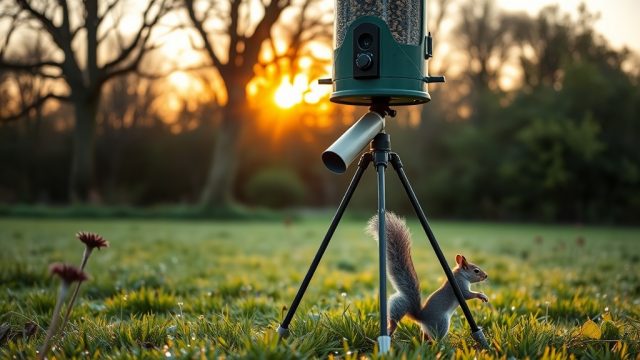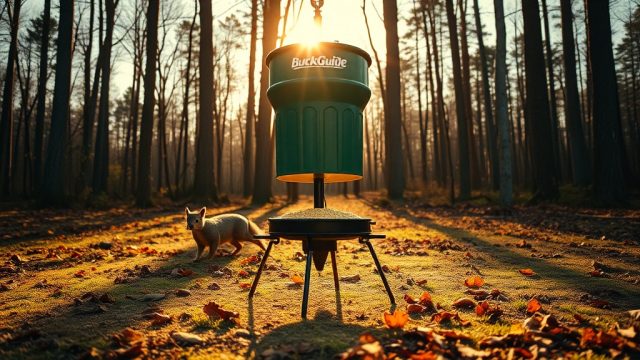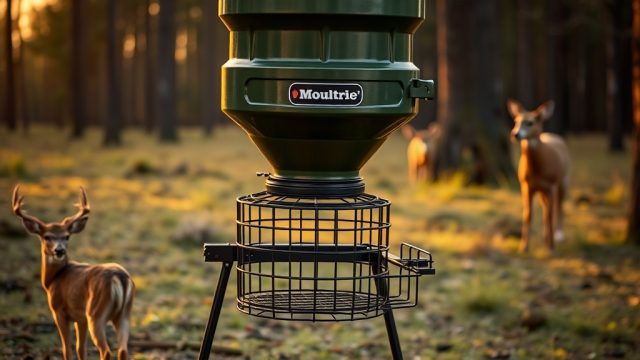
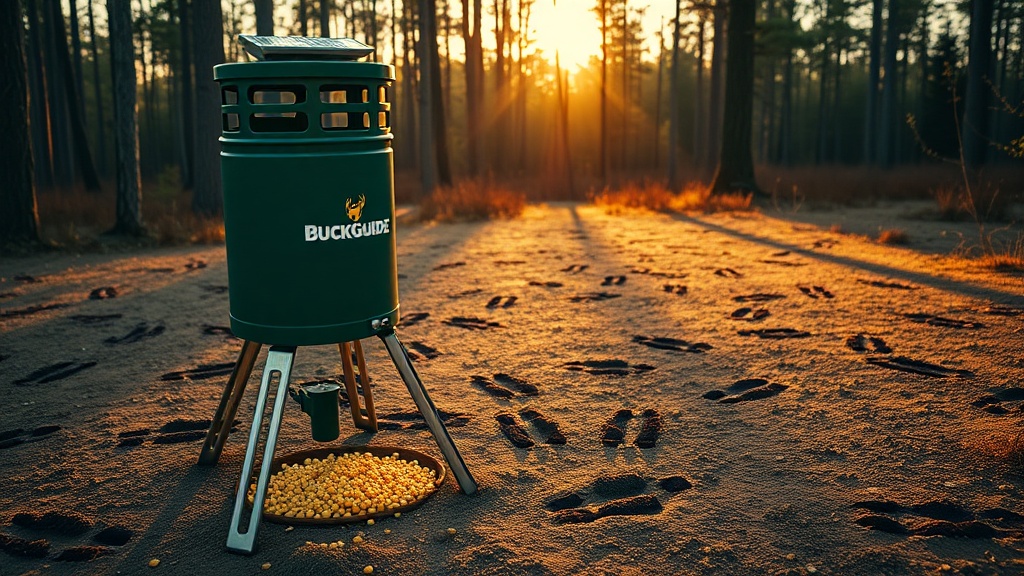
Raccoons, squirrels, and even bears have a keen sense for free corn, and a standard BuckGuide 300lb Spin-Cast Feeder can be an open buffet if not properly fortified. Without proactive varmint-control measures, a landowner can lose hundreds of pounds of corn in a single week and risk damaging the feeder’s motor and timer assembly. This guide walks through the specific hardware modifications and setup strategies that keep the BuckGuide 300lb Spin-Cast Feeder dispensing for deer, not destroying the budget.
Why Are Varmints Targeting the BuckGuide 300lb Spin-Cast Feeder?
Varmints are drawn to three things: the smell of shelled corn, the noise of the spinning plate, and the mechanical vulnerability of the unit. The BuckGuide 300lb Spin-Cast Feeder uses a clear PVC drop-tube and a heavy-duty spinner plate that, unfortunately, is easy for a raccoon’s nimble paws to manipulate. The auger system inside the cone creates a vibration that broadcast out through the legs, signaling to nearby animals that food is present. Additionally, the 300lb capacity means the feeder holds enough corn to sustain a family of raccoons for weeks, making it a high-value target. The primary failure points are the timer housing (often cracked by chewed wires) and the spin-cast motor shaft (stripped when animals climb the cone).
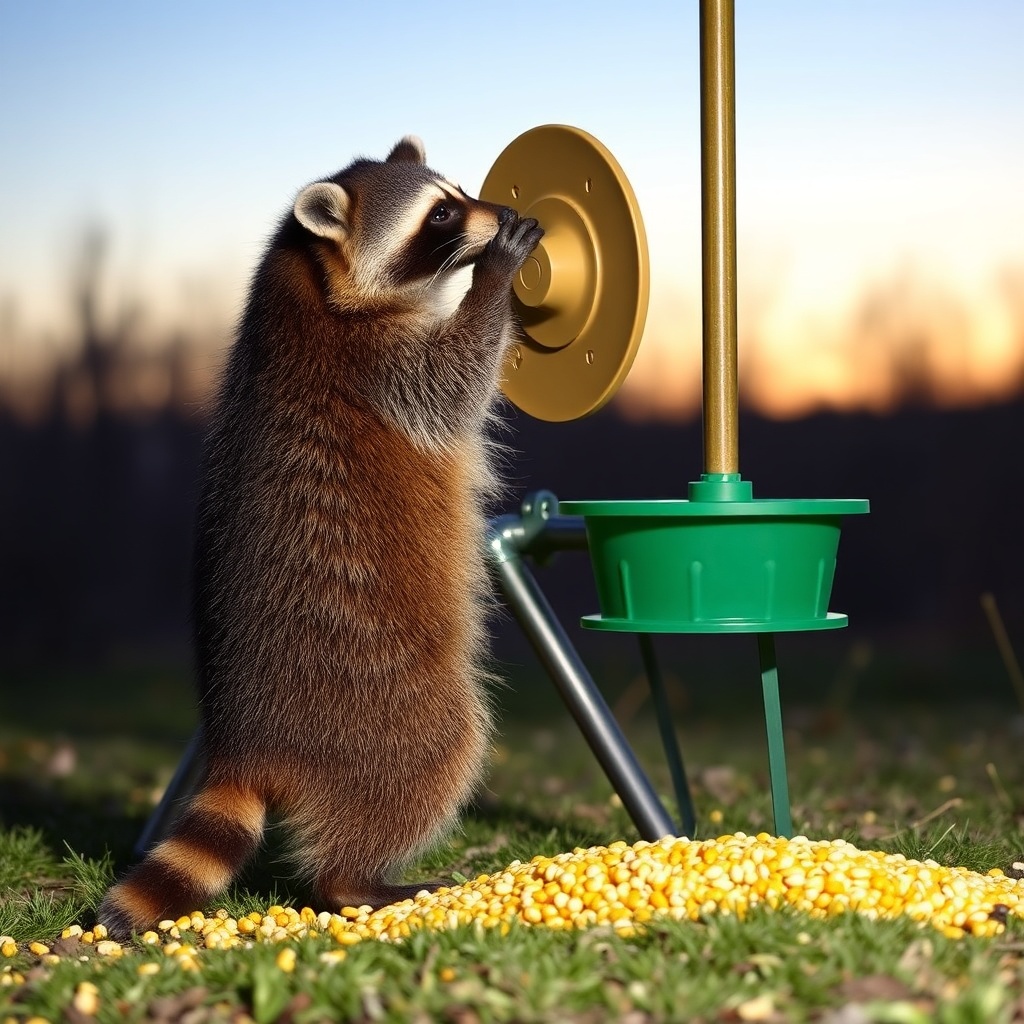
What Physical Barriers Stop Raccoons From Climbing the Feeder Legs?
The most common and effective method is installing a feeder skirt (also called a varmint guard) around the upper portion of the legs, just below the cone. For the BuckGuide 300lb Spin-Cast Feeder, which has three legs with 30-inch spacing, a 20-gauge galvanized steel wrap works best. You can purchase pre-formed raccoon shields that slip over each leg, but many owners prefer to buy a 4-foot by 4-foot sheet of smooth metal and cut it into three curved pieces. When properly attached, the slick metal surface prevents any claw hold. Alternatively, wrap the leg section below the cone with a 16-inch-wide strip of 2-mil PVC sheet and secure it with stainless steel zip ties. PVC wrap is less expensive (about $12 per feeder) but needs replacement after two years of UV exposure. For the most aggressive varmints, consider adding a grease collar—a 10-inch band of non-toxic grease smeared on the leg, but check it every 30 days as dirt can reduce its effectiveness.
How to Prevent Squirrels From Climbing the BuckGuide 300lb Feeder’s Drop-Tube?
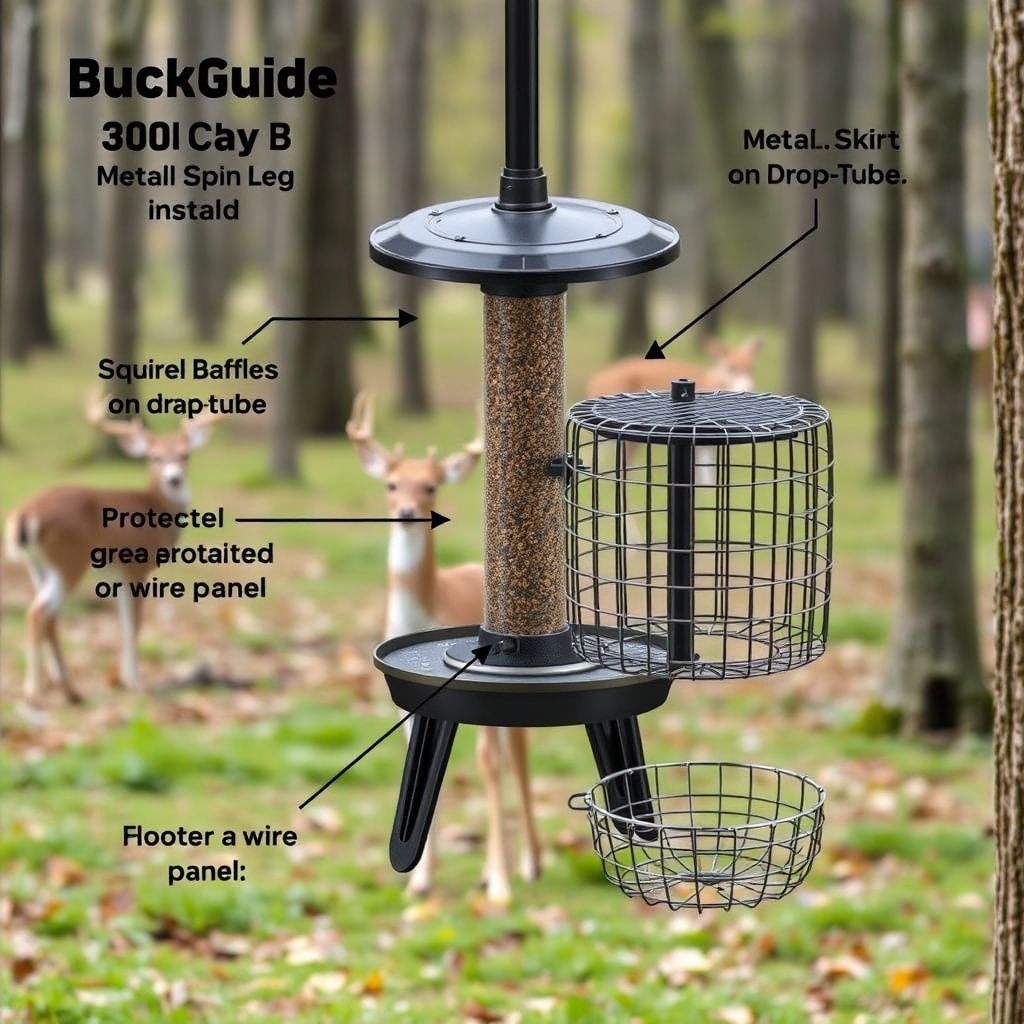
Squirrels are master climbers and can easily scale the clear PVC drop-tube that connects the cone to the spinner plate. On the BuckGuide 300lb Spin-Cast Feeder, this tube is 12 to 15 inches long, and a squirrel can shimmy up it in seconds. The solution is to install a squirrel baffle—a cone-shaped metal or plastic guard that sits around the drop-tube. Purchase a 10-inch diameter conical baffle designed for bird feeders and mount it so the wide end faces downward, centered on the drop-tube. For a more permanent fix, replace the standard smooth PVC tube with a section of 3-inch-diameter schedule 40 PVC pipe and wrap the top 6 inches with a 4-inch-wide piece of 1/4-inch hardware cloth (wire mesh). The mesh gives you a place to secure the baffle, and the rough texture of the schedule 40 pipe is harder for squirrels to grip. You can also spray the drop-tube with a silicone-based lubricant twice per season, which creates a slick surface without harming the feeder’s works.
Can a Modified Speed Setting Reduce Varmint Damage?
Yes, adjusting the spin duration and frequency on the BuckGuide 300lb’s timer can indirectly limit varmint access. Varmints learn feeding schedules quickly. If the feeder dispenses corn at the same time each day, raccoons will wait near the spinner plate and swipe at the corn mid-air. To break this pattern, change the timer to random duration settings. On the BuckGuide timer, set the “feed time” to between 3 and 6 seconds at random intervals, and program the feeder to spin every 4 to 6 hours instead of twice daily. The table below shows the relationship between feed duration and varmint risk:
| Spin Duration (seconds) | Corn Dispensed (approx.) | Varmint Risk Level | Recommended For |
|---|---|---|---|
| 2 | 0.3 lb | Low | Places with heavy raccoon pressure |
| 4 | 0.6 lb | Medium | Mixed deer and squirrel areas |
| 6 | 1.0 lb | High | Low varmint areas, bucks only |
| 8 | 1.3 lb | Very High | Not recommended near varmints |
Additionally, consider pairing your timer with a Step-by-Step Timer Setup for BuckGuide 300lb Spin-Cast Feeder to ensure the motor isn’t spinning unnecessarily when no deer are present, reducing the auditory cue for varmints.
What Is the Best Way to Protect the Timer and Solar Panel From Chewing?
Rodents and raccoons love to chew on wires, especially the thin power cables running from the solar panel to the timer on the BuckGuide 300lb Spin-Cast Feeder. The first line of defense is to encase all exposed wiring in wire-loom conduit (1/2-inch split tubing). Run the solar panel wire along the feeder leg, secured with zip ties, and sleeve the entire length. For terminal connections at the timer, apply a dab of dielectric grease to each terminal before sealing the lid—this prevents corrosion if varmints manage to partially pry the lid open. A more aggressive measure is to install a metal timer housing (available as an aftermarket part for the BuckGuide line). It replaces the plastic box and features a locking latch that is nearly impossible for raccoons to open. Finally, never leave excess cable coiled near the timer; cut it to length or use a small bundle wrapped in aluminum tape, which varmints dislike gnawing.
For solar panel protection, mount the panel on an Optimal Solar Panel Mounting Angle for BuckGuide 300lb Spin-Cast Feeder but also add a small cage of 1-inch chicken wire around the panel’s glass face. This prevents squirrels from chewing on the frame or rubbing against the surface, which can scratch the coating and reduce efficiency.
What Owners Say
Raymond, a landowner in Alabama, shared his experience: “After two weeks, my BuckGuide 300lb was completely emptied by coons. I installed a 20-gauge steel skirt around all three legs and added a baffle on the drop-tube. Now, six months later, no damage and the corn only gets eaten by deer.” Jessica in Texas noted, “I tried the grease collar method. It works, but you have to reapply every few weeks. The best fix for me was swapping to a metal timer housing—the coons learned to pop the plastic lid open.” Several owners also pointed out that Troubleshooting Motor Spin Issues on BuckGuide 300lb Spin-Cast Feeder often reveals broken wires from chewing, so checking the motor wiring is a good indicator of varmint activity. Overall, owners advise starting with leg skirts and a drop-tube baffle, as those are the cheapest and most effective upgrades.
Frequently Asked Questions
Q1: What is the cost of varmint-proofing a BuckGuide 300lb Spin-Cast Feeder?
A: Basic materials like a PVC wrap and zip ties cost about $15 to $20 in USD. A full metal skirt set runs $40 to $50, while a metal timer housing is around $25. Expect to spend under $100 total.
Q2: Will the metal skirt affect the feeder’s stability in wind?
A: No, the skirt attaches only to the upper 18 inches of each leg and adds negligible weight. However, if you live in high-wind areas, ensure the skirt is solidly attached with at least six screws per leg to prevent rattling.
Q3: Can bears break into a varmint-proofed feeder?
A: The BuckGuide 300lb Spin-Cast Feeder is not bear-proof. For bear country, you need a heavy-duty steel frame and a locking cone. The methods in this article will deter raccoons and squirrels but not bears. Consider a dedicated bear-resistant feeder for those areas.
Q4: How often should I inspect the varmint-proofing modifications?
A: Check leg skirts and baffles at the start of each season and after heavy storms. Inspect wire loom for chewing monthly. Replace grease collars every 30 to 45 days.
Q5: Does the feeder’s height affect varmint access?
A: Yes. Mounting the BuckGuide 300lb Spin-Cast Feeder on a taller tripod or Mounting BuckGuide 300lb Spin-Cast Feeder on Steep Terrain so the spinner plate is at least 5 feet off the ground reduces jumping access. On steep terrain, use a leveling kit to keep the timer and solar panel properly oriented.
Q6: Do solar panel angle adjustments help with varmint control?
A: Not directly, but a properly angled panel (see Optimal Solar Panel Mounting Angle for Winter on BuckGuide 300lb Spin-Cast Feeder) ensures the timer battery stays charged, which prevents the motor from stalling unexpectedly—a situation that can attract varmints to investigate. A well-charged battery also powers the timer’s random feed feature more reliably.