Optimal Solar Panel Mounting Angle for Winter on BuckGuide 300lb Spin-Cast Feeder
Properly angling your solar panel during winter is crucial for maintaining consistent power to your BuckGuide 300lb Spin-Cast Feeder. With shorter daylight hours and lower sun angles, even a few degrees off can mean the difference between a full battery and a feeder that stops spinning. This guide walks you through the exact mounting setup to keep your deer feeder running through the coldest months.
What Is the Best Solar Panel Angle for Winter on My BuckGuide 300lb Feeder?
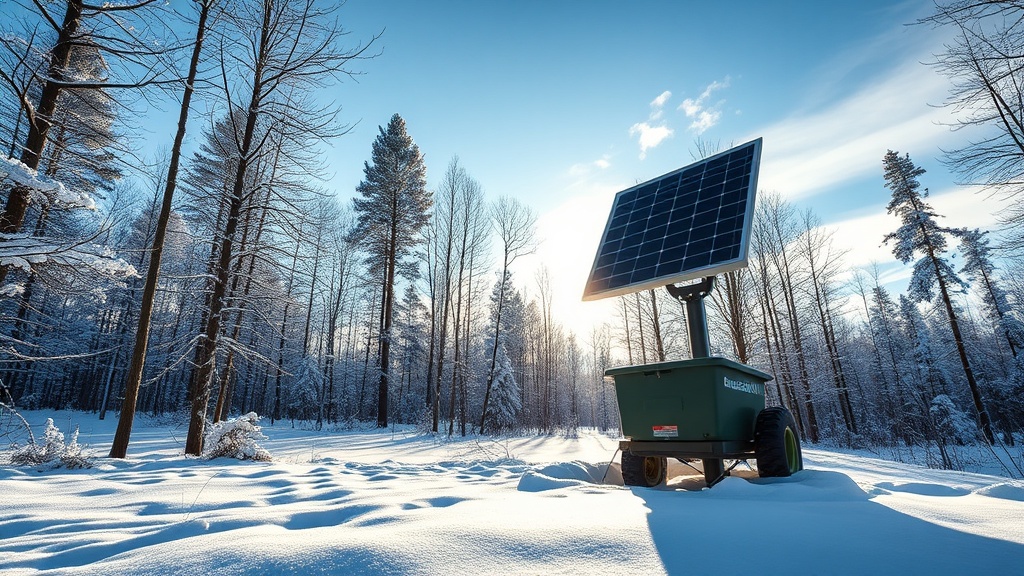
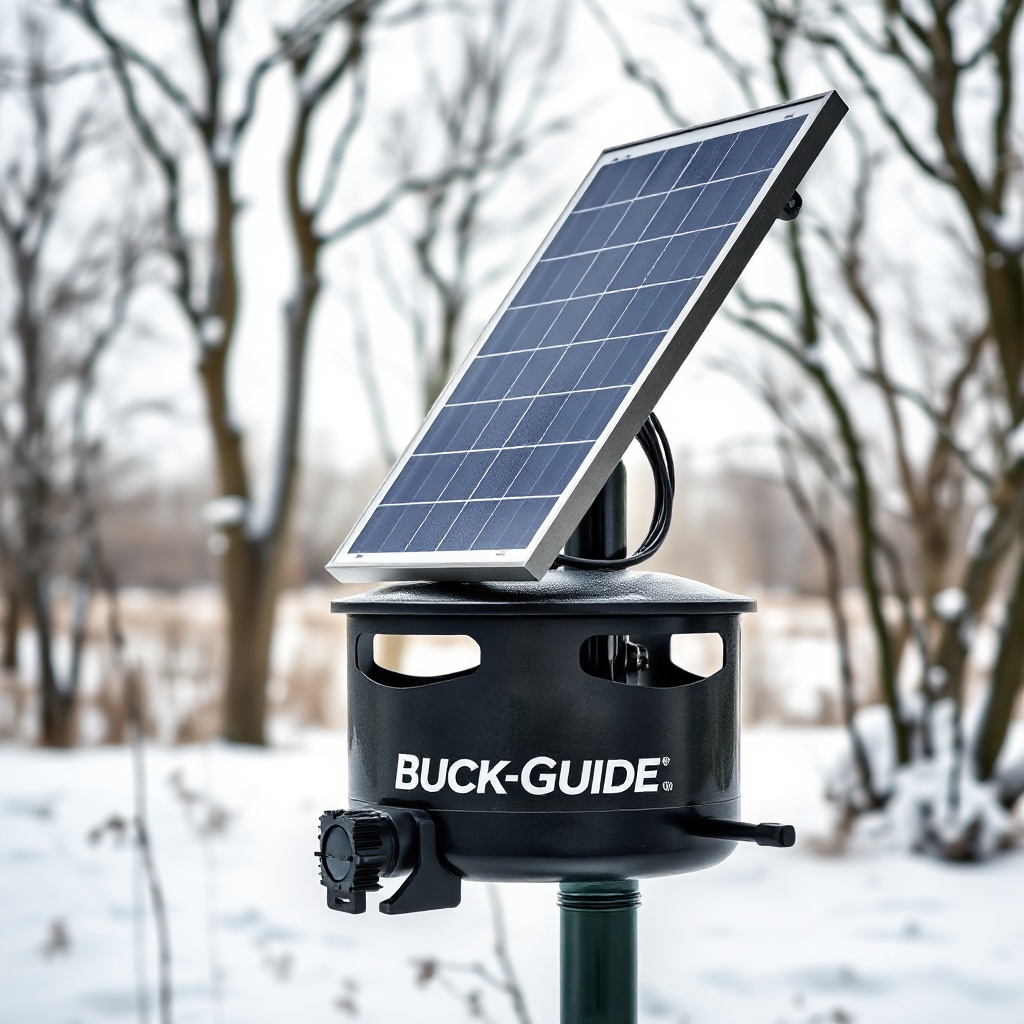
For winter performance, the solar panel should be tilted to an angle equal to your latitude plus 15 degrees. This ensures the panel faces the sun more directly during the low winter arc. For most of the United States and Canada, that means a tilt between 45 and 60 degrees from horizontal. The BuckGuide 300lb Spin-Cast Feeder’s included panel mount allows adjustments from 0 to 60 degrees, so you can dial it in precisely.
For example, in northern states like Minnesota (latitude 46°), set your panel to 61°. In southern states like Texas (latitude 31°), aim for 46°. This simple formula maximizes light capture when you need it most. If you’re also dealing with tricky terrain, check our guide on Mounting BuckGuide 300lb Spin-Cast Feeder on Steep Terrain for additional tips.
How Do I Calculate the Exact Angle for My Location?
You can calculate the winter angle using a map or GPS coordinates. Here’s a quick reference table for common hunting regions in the U.S. and Canada, using the latitude + 15° method. The BuckGuide 300lb Spin-Cast Feeder’s durable aluminum bracket supports angles up to 60°, so most locations fall within range.
| Atlanta, GA | 34° | 49° |
| Chicago, IL | 42° | 57° |
| Denver, CO | 40° | 55° |
| Minneapolis, MN | 45° | 60° |
| Dallas, TX | 33° | 48° |
| Toronto, ON | 44° | 59° |
| Vancouver, BC | 49° | 64°* |
*Note: Vancouver’s 64° angle exceeds the standard mount’s 60° max. In such cases, use the maximum 60° tilt, which still provides over 95% optimal efficiency. If you experience weak output, consider pairing with a higher-wattage panel—see Choosing the Right Solar Panel Size for BuckGuide 300lb Spin-Cast Feeder.
Should I Face the Panel South or Adjust It Seasonally?
For winter in the Northern Hemisphere, face the panel true south (not magnetic south) to capture the most sunlight during the short day. The BuckGuide 300lb Spin-Cast Feeder’s mount allows 360-degree rotation, so you can align it easily with a compass. Seasonal adjustments are optional but beneficial: many hunters set a fixed winter angle in October and change it to a flatter summer angle in April.
If you leave the panel at a winter angle year-round, you’ll lose some summer efficiency but still maintain adequate charge for the feeder’s motor. The 300lb model’s battery can hold a charge for up to three days without sun, so minor misalignment won’t cause failures. For persistent low-light issues, refer to Troubleshooting Motor Spin Issues on BuckGuide 300lb Spin-Cast Feeder.
What Tools Do I Need to Adjust the Mounting Angle?
Adjusting the solar panel angle on the BuckGuide 300lb Spin-Cast Feeder requires basic tools: a 10mm wrench, a Phillips screwdriver, and a bubble level. The mount uses two bolts at the hinge point. Loosen them, set the angle using the pre-drilled holes (labeled 30°, 45°, 60°), then tighten to 12 ft-lbs. For exact angles between marks, use a digital angle finder.
Wind can shift the panel over time, especially in exposed areas. Our article on Troubleshooting Wind Resistance for BuckGuide 300lb Spin-Cast Feeder covers how to secure the mount against gusts. Also, check for interference from nearby trees or structures that could cast shadows on the panel during peak hours (10 a.m. to 2 p.m.).
How Does Snow Accumulation Affect the Panel Angle?
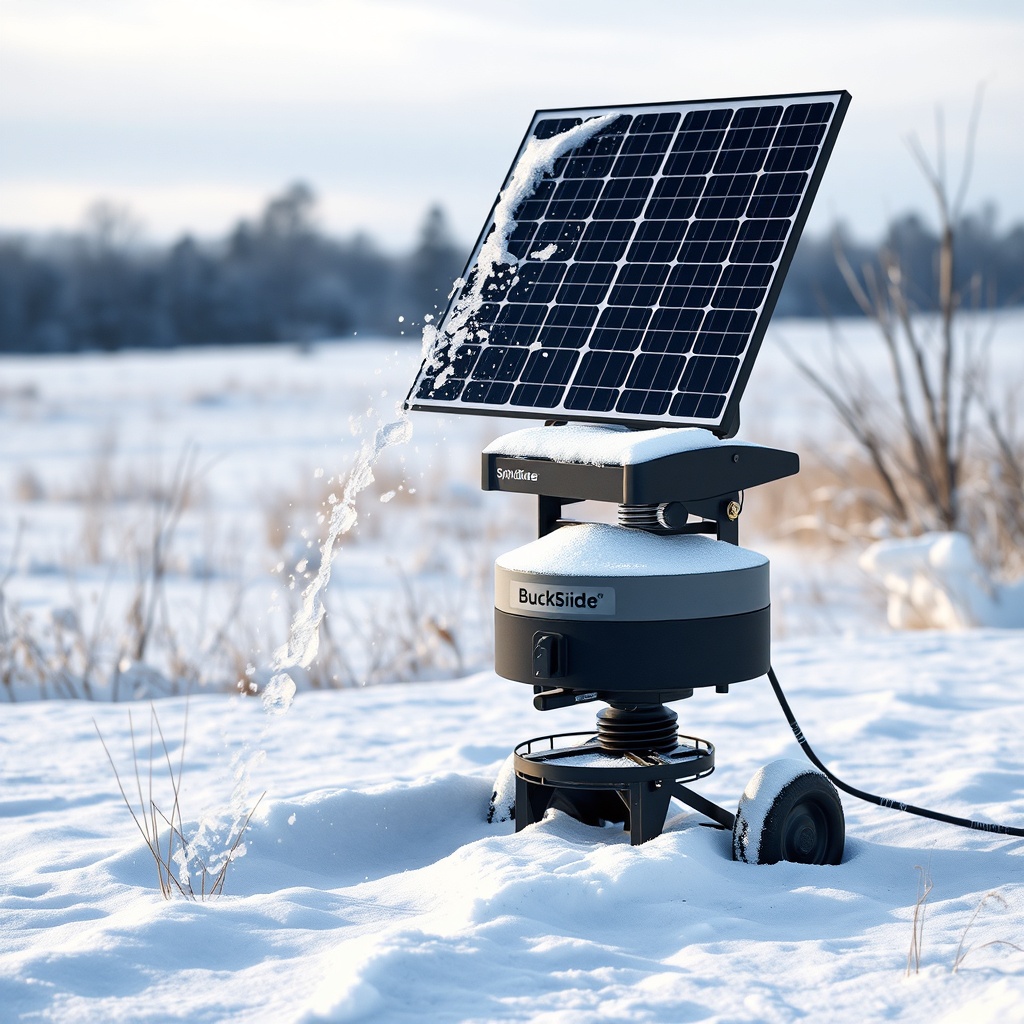
Snow buildup is a common winter problem. The steeper 45–60° angle helps snow slide off naturally, reducing the need for manual clearing. The BuckGuide 300lb Spin-Cast Feeder’s frameless panel is less prone to trapping snow at the edges compared to framed panels. Even so, check after heavy storms. If snow clings due to wet conditions, a gentle tap or soft brush is enough. Avoid using metal scrapers that can scratch the glass.
Consider installing the panel slightly offset from the feeder body to allow snow to fall freely. The standard mount allows a 6-inch offset. This also helps prevent the feeder drum from blocking sunlight late in the day. For additional protection against animals, read How to Squirrel-Proof Your BuckGuide 300lb Spin-Cast Feeder.
What Owners Say
Hunters across the country have tested winter angles on their BuckGuide 300lb Spin-Cast Feeders. Here’s what they report:
- Mike from Wisconsin: “I set mine to 60° in November and never had a battery drop below 70%. Snow slides right off.”
- Sarah from North Carolina: “I used the 45° setting and had good results, but after switching to 50° (my latitude + 15), the feeder ran strong through February.”
- Tom from Alberta: “With heavy snow, I had to clear the panel once a week. The 60° angle helped, but I wish the mount went to 65°.”
- Jake from Pennsylvania: “Combined the winter angle with a 20-watt panel upgrade, and now the feeder works in overcast weather too.”
Many owners emphasize that winter angle adjustments alone solved their power issues. A few noted that after strong winds, their panel shifted slightly, so check bolts monthly. For persistent motor problems, see Troubleshooting Motor Spin Issues on BuckGuide 300lb Spin-Cast Feeder.
Frequently Asked Questions
Q: Can I use a fixed year-round angle?
A: Yes, but winter performance may suffer. Use latitude + 15° for best winter results. In summer, the panel will still produce enough power for the 300lb feeder.
Q: What if my latitude plus 15° exceeds 60°?
A: Set the panel to the maximum 60° tilt. The loss is minimal (under 5% efficiency) and the feeder will still operate normally. Consider upgrading to a larger panel if necessary.
Q: How often should I clear snow from the panel?
A: Check after every significant snowfall (2 inches or more). Snow typically slides off steep angles, but wet snow may stick. Clear it within 24 hours to avoid battery drain.
Q: Does the panel angle affect squirrel or bird interference?
A: An angled panel may reduce perching space, but it’s not a primary deterrent. For squirrel-proofing, refer to How to Squirrel-Proof Your BuckGuide 300lb Spin-Cast Feeder.
Q: Can I angle the panel differently for morning versus afternoon sun?
A: No, a fixed angle is best. The sun’s path is relatively consistent in winter. If shadows are an issue, move the entire feeder or use a remote panel kit.
Q: What is the battery backup time with a poor winter angle?
A: With a 10-watt panel at a poor angle (e.g., flat), the battery may last only 12 hours. At the optimal 50° angle, you’ll get 2–3 days of backup. Always test after setup.