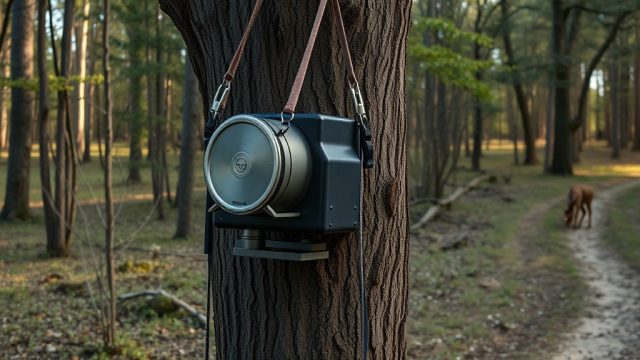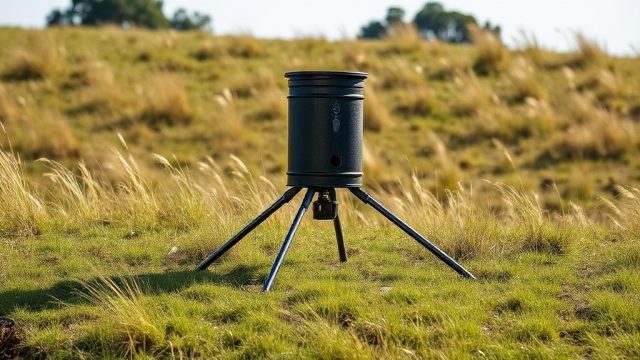
Why Does the Solar Panel Angle Matter for the Wildgame Mirage 200lb Feeder?
Setting up your Wildgame Innovations Mirage 200lb feeder correctly starts with the solar panel mounting angle. This 200-pound capacity unit relies on a solar panel to keep the 6-volt battery charged, especially during long hunting seasons. A poor angle can lead to weak charging, unexpected battery drain, and missed feeding schedules. Many hunters underestimate how much a few degrees of tilt can affect performance in shaded timber or open fields.
The Mirage 200lb’s solar panel is designed to work with the feeder’s digital timer, but it only performs optimally when pointed directly at the sun’s arc. If you live in the northern hemisphere, the panel must face south at a tilt equal to your latitude for year-round efficiency. During spring and fall, when deer activity peaks, a slight adjustment of 10–15 degrees steeper can capture more low-angle sunlight. For winter setups, a steeper angle of 60 degrees helps shed snow and catch weak rays.
To get the most out of your feeder, plan your mounting location before anchoring the legs. Avoid overhanging branches that create moving shadows. The panel itself should be clear of debris, and the wiring from the panel to the battery compartment must be secured against rubbing. A simple tilt bracket kit can be purchased for under $20 (£16) and makes seasonal adjustments easy.
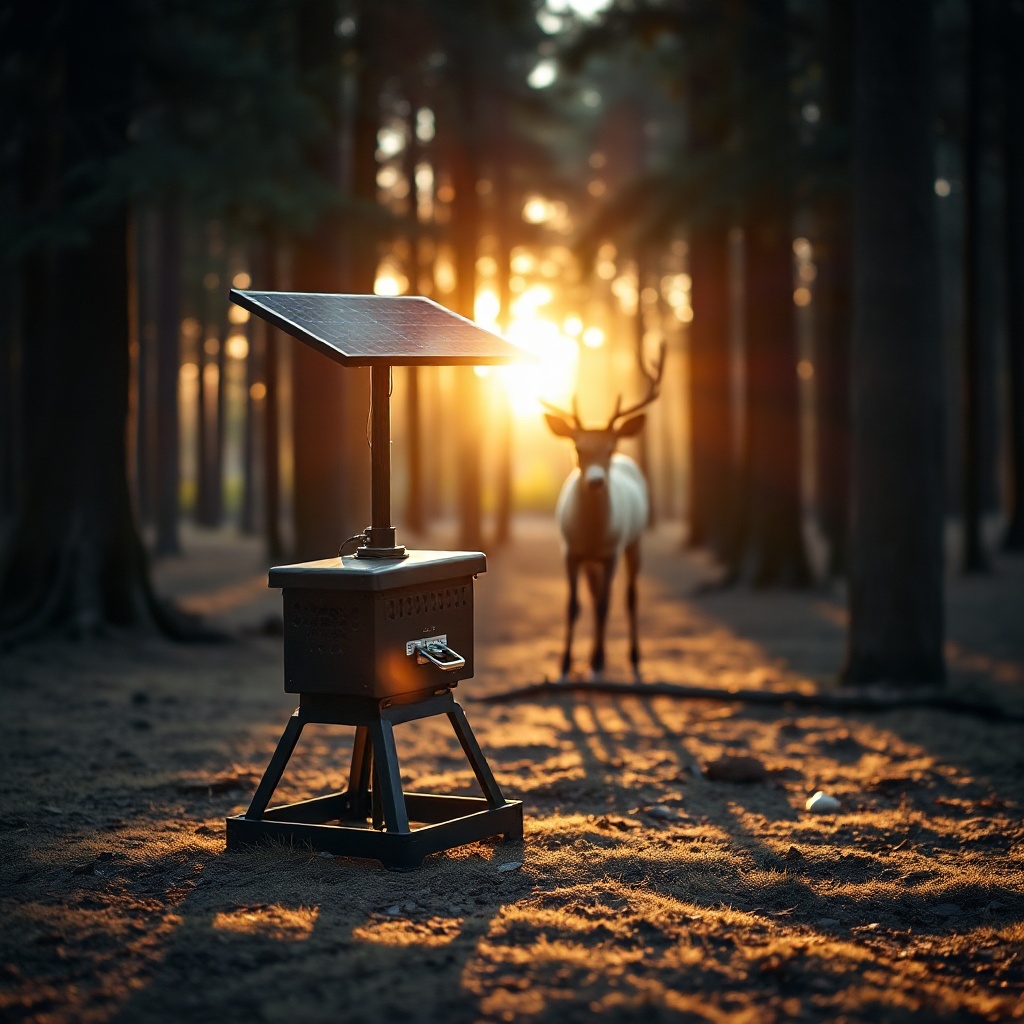
What Is the Best Solar Panel Angle for My Latitude?
The optimal angle for the Wildgame Mirage 200lb solar panel is nearly equal to your latitude during the equinox months. For example, if you hunt in central Texas at latitude 31°N, mount the panel at 31 degrees from horizontal. In northern states like Minnesota at 47°N, go with 47 degrees. This simple rule works for 90% of setups.
Table: Recommended Solar Panel Tilt by Region for Mirage 200lb
| Region (Example Location) | Latitude (Degrees N) | Optimal Tilt (Degrees) | Winter Tilt (+15°) | Summer Tilt (-15°) |
|---|---|---|---|---|
| Southern (Houston, TX) | 30 | 30 | 45 | 15 |
| Mid-Atlantic (Richmond, VA) | 38 | 38 | 53 | 23 |
| Midwest (Des Moines, IA) | 42 | 42 | 57 | 27 |
| Northern (Minneapolis, MN) | 45 | 45 | 60 | 30 |
| Canada (Toronto, ON) | 44 | 44 | 59 | 29 |
To adjust for seasons, add 15 degrees in winter (November–February) to catch the lower sun. Subtract 15 degrees in summer (June–August) to avoid overheating and overcharging. If you cannot adjust seasonally, split the difference and use your latitude setting year-round—it will still work, but charging efficiency drops by about 20%.
Avoid mounting the panel horizontally. Even a 10-degree tilt improves charging by 30% compared to flat mounting. The Mirage 200lb’s panel has a built-in standoff that allows about 20 degrees of adjustment from the factory, but you may need a longer bracket for extreme latitudes. Check your local sunrise times and confirm the panel faces true south, not magnetic south. Use a compass with declination correction to get it right.
Does Shade or Overhang Affect the Wildgame Mirage 200lb Panel?
Even partial shade on one cell of the solar panel can cut charging by half. The Mirage 200lb panel uses a series circuit, so a shaded area blocks current flow across the whole string. A single leaf or bird dropping can cause a 50% loss. You must mount the panel in full sun from 10 a.m. to 2 p.m., the peak charging window.
Look for a spot that gets unobstructed southern exposure. If your feeder is in a dense hardwood forest, consider placing a separate solar panel on a pole 10 feet away and running a 10-foot extension cable to the feeder. Wildgame sells a compatible 15-foot extension cord for $12.99 (£10), making remote panel placement easy. This also keeps the feeder hidden from deer while the panel gets sunlight.
When checking for shade, use a solar pathfinder or simply watch the site over a full day in early spring. Mark any tree limbs that cast shadows after leaf-out. You can trim those limbs to clear the window, but be careful not to disturb bedding areas. The Mirage 200lb feeder is tall enough (63 inches to the spinner) that most ground-level plants won’t cause issues, but low-hanging branches will.
The table below shows how different shade conditions impact charge time for a 6-volt 12Ah battery in the Mirage 200lb:
| Shade Condition | Charge Time (Full Sun = 1x) | Battery Runtime (Days) | Notes |
|---|---|---|---|
| Full sun (no shade) | 6–7 hours | 14–21 days | Optimal |
| Light shade (25% covered) | 10–12 hours | 10–14 days | Partial drop |
| Heavy shade (50% covered) | 18+ hours | 5–7 days | Risk of dead battery |
| Full canopy (100% shade) | Unlimited | 2–3 days | Requires remote panel |
If you must place the feeder under a canopy, consider using a remote control setup to manually trigger feeding after a cloudy spell, letting the battery recharge between uses. This is a workaround but not ideal long-term.
How Do I Mount the Solar Panel on the Wildgame Mirage 200lb Feeder Leg?
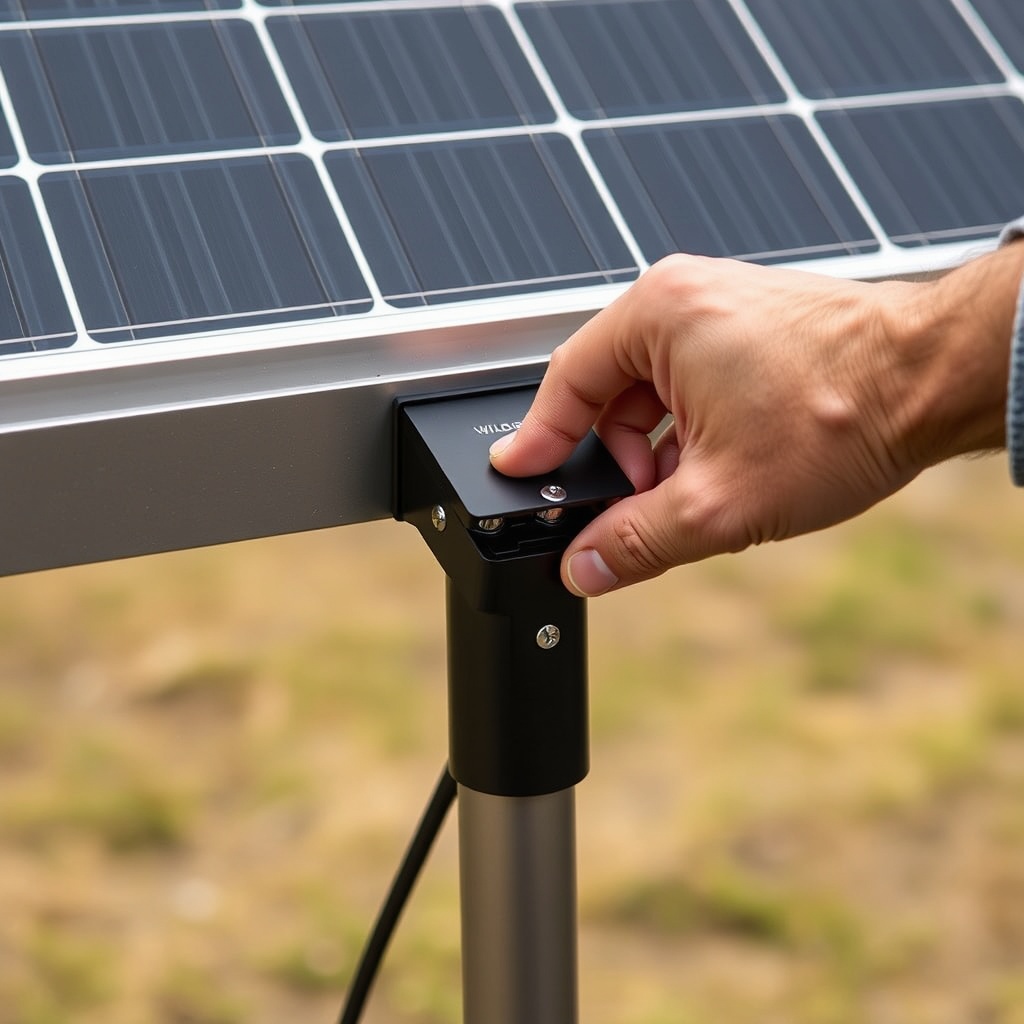
The Mirage 200lb comes with a pre-drilled leg bracket and two plastic cable ties. For a secure mount, remove the bracket and attach it to the south-facing leg using the included bolts. Slide the panel into the bracket until it clicks. The bracket tilts forward and backward by loosening the thumb screw. To adjust the angle, loosen the screw, tilt the panel to your desired degree, and tighten. Use a protractor or a phone app to confirm the angle.
If the included bracket does not offer enough range, purchase an adjustable solar panel mount for wind resistance. A heavy-duty mount costs about $24.99 (£20) and supports up to 10 pounds. This also helps prevent vibration in high winds, which can crack the panel glass. The Mirage 200lb’s panel is polycrystalline and sturdy, but glass breakage is possible if the bracket loosens.
Run the power cable from the panel down the leg, using zip ties every 8 inches. Avoid kinking the wire where it enters the battery box. The panel connects to a two-prong plug inside the battery compartment. Make sure the plug is dry and seated fully. A loose connection causes intermittent charging. Apply dielectric grease to the terminals to prevent corrosion. This grease is available at any auto parts store for $5 (£4).
Finally, check the angle after heavy rain or wind. The bracket can slip if not tightened enough. Recheck monthly during hunting season. A 5-degree slip can reduce charging by 15%. If you notice the battery voltage below 6.3 volts after a sunny day, the panel is likely misaligned. For detailed timer adjustments after the panel is set, read our guide on digital timer programming.
What Tools Do I Need to Set the Optimal Angle?
You need a simple toolkit: a Phillips-head screwdriver, a 10mm wrench (for the bracket bolts), a protractor or inclinometer app on your smartphone, and a compass or GPS with declination. A bubble level helps ensure the feeder legs are plumb first, which affects the panel’s actual tilt. If the feeder leans, the panel angle will be off by that same lean.
- Phillips screwdriver (size #2) – for tightening clamp screws.
- 10mm wrench or socket – for adjusting the bracket base.
- Smartphone inclinometer app – free on iOS/Android.
- Magnetic compass (with declination adjustment) – costs $10 (£8).
- Zip ties (8-inch) – for cable management (included).
- Dielectric grease – for waterproofing connections.
The entire adjustment process takes under 20 minutes. For first-time users, plan an additional 15 minutes to read the manual and verify angles. The Mirage 200lb manual includes a latitude chart, but it uses generic ranges. Better to use the table above or a latitude-specific calculator. Write your target angle on the feeder body with a permanent marker so you remember it for next season.
You can also use a digital angle finder, but it’s not necessary. The inclinometer app on most phones is accurate to 1 degree when the phone is placed flat against the panel surface. Calibrate it against a level surface first. If your phone case is thick, remove it for better contact.
How Does Temperature Affect Panel Angle and Battery Charging?
Temperature swings affect battery chemistry and the solar panel’s efficiency. The Mirage 200lb uses a sealed lead-acid battery that loses 30% of its capacity below 0°F (-18°C). Cold weather also reduces panel voltage by about 0.04% per degree Fahrenheit below 77°F (25°C). That means on a freezing morning, the panel produces less power just when the battery needs more to compensate for internal resistance.
To counter this, tilt the panel steeper in winter as mentioned earlier. A 60-degree tilt not only improves sun angle but also helps snow slide off. Snow cover on the panel blocks 100% of sunlight. A steep tilt lets snow shed within minutes. If you live in heavy snow zones, install a simple plastic snow guard above the panel to prevent accumulation.
In hot summer months, panel temperature can hit 140°F (60°C) on a black bracket. Heat reduces voltage output by 0.5% per degree above 77°F, so a 140°F panel produces about 30% less power than rated. Mount the panel with an air gap of at least 1 inch between the back and the feeder leg to allow cooling. White paint on the bracket also reflects heat. Do not paint the panel itself.
Monitor battery voltage with a multimeter every few weeks. A fully charged 6-volt battery reads 6.3–6.4V. Below 6.0V indicates poor charging or a dying battery. The Mirage 200lb’s digital timer may malfunction below 5.8V. If this happens, check panel angle first, then test the panel’s open-circuit voltage—should be around 7–8V in full sun. If you are constantly fighting battery issues, review our comprehensive guide on battery life and solar compatibility.
What Owners Say
Hunters who have tuned the solar panel angle on their Wildgame Mirage 200lb report a night-and-day difference. John from Missouri set his panel at 38 degrees (his latitude) and saw battery voltage stabilize at 6.35V after a week. Previously, with the panel flat, his feeder stopped feeding after three cloudy days. “Now it runs all season without a hiccup,” he says.
Linda from Wisconsin adds that a winter tilt of 60 degrees prevented snow buildup. “Every morning I’d see the panel clear while neighbors’ feeders were buried. No missed feedings.” Several users on hunting forums emphasize checking the angle after the first frost because brackets can loosen with temperature changes. Mike from Pennsylvania uses a remote setup (read our remote control guide) to verify feeding times from his phone, and he adjusts the panel angle based on his phone’s inclinometer twice a season.
Some owners noted that the factory bracket feels flimsy but works fine when tightened properly. They recommend replacing the plastic thumbscrew with a stainless steel bolt for long-term security. Overall, the consensus is clear: the Mirage 200lb is reliable once the solar panel is correctly angled, but many first-time buyers ignore this step and blame the battery.
If you face raccoon theft or tampering with the panel, see our article on how to protect your feeder. Raccoons have been known to knock the bracket loose while trying to access corn, shifting the angle and causing charging issues.
Frequently Asked Questions
Q: Can I use the Wildgame Mirage 200lb feeder without the solar panel?
A: Yes, but the 6-volt battery will drain faster. You can run it on battery alone for 7–10 days per charge. The solar panel is essential for continuous unattended operation over weeks.
Q: What if my feeder is in a shaded spot year-round?
A: You need a remote solar panel kit. Mount the panel on a pole in full sun 10–15 feet away. Run a compatible extension cable to the feeder’s battery port. This is a reliable fix for dense woods.
Q: How often should I check the solar panel angle?
A: Check before each season (spring and fall) and after any major storm or wind event. Signs of misalignment include a battery voltage below 6.2V after a sunny day or a timer that resets.
Q: Will the digital timer work if the solar panel angle is wrong?
A: The timer will still function, but the battery may drain before it can recharge. A voltage drop below 5.8V causes the timer to reset to factory defaults. Ensure the panel angle is correct to maintain stable power.
Q: Can I mount the panel on the feeder top instead of the leg?
A: It is not recommended. The feeder top has no bracket mounts and would require drilling. The leg bracket is designed for optimal clearance from the spinner. Mounting on top also increases the risk of debris blocking the panel.
Q: Does the panel need to face south in the southern hemisphere?
A: Yes, but reverse to north. For readers in Australia or South America, the panel must face true north at a tilt equal to your latitude. The same seasonal adjustments apply.