
Is the BuckGuide 300lb Spin-Cast Feeder’s Timer More Reliable Than the Moultrie Pro Hunter’s?
When a deer hunter invests in a heavy-duty feeder, timer accuracy becomes the single most critical feature. A feeder that throws corn at the wrong hour spooks deer, wastes expensive feed, and undermines months of scouting. The BuckGuide 300lb Spin-Cast Feeder has gained a reputation for precision scheduling, but how does it stack up against the well-known Moultrie Pro Hunter? This article puts both feeders through a detailed comparison, focusing on real-world timer programming, user experiences, and technical specifications. For those who already own a BuckGuide 300lb, you may also want to learn about remote programming options to fine-tune your schedule.
How Does the Programming Interface Compare Between BuckGuide 300lb and Moultrie Pro Hunter?
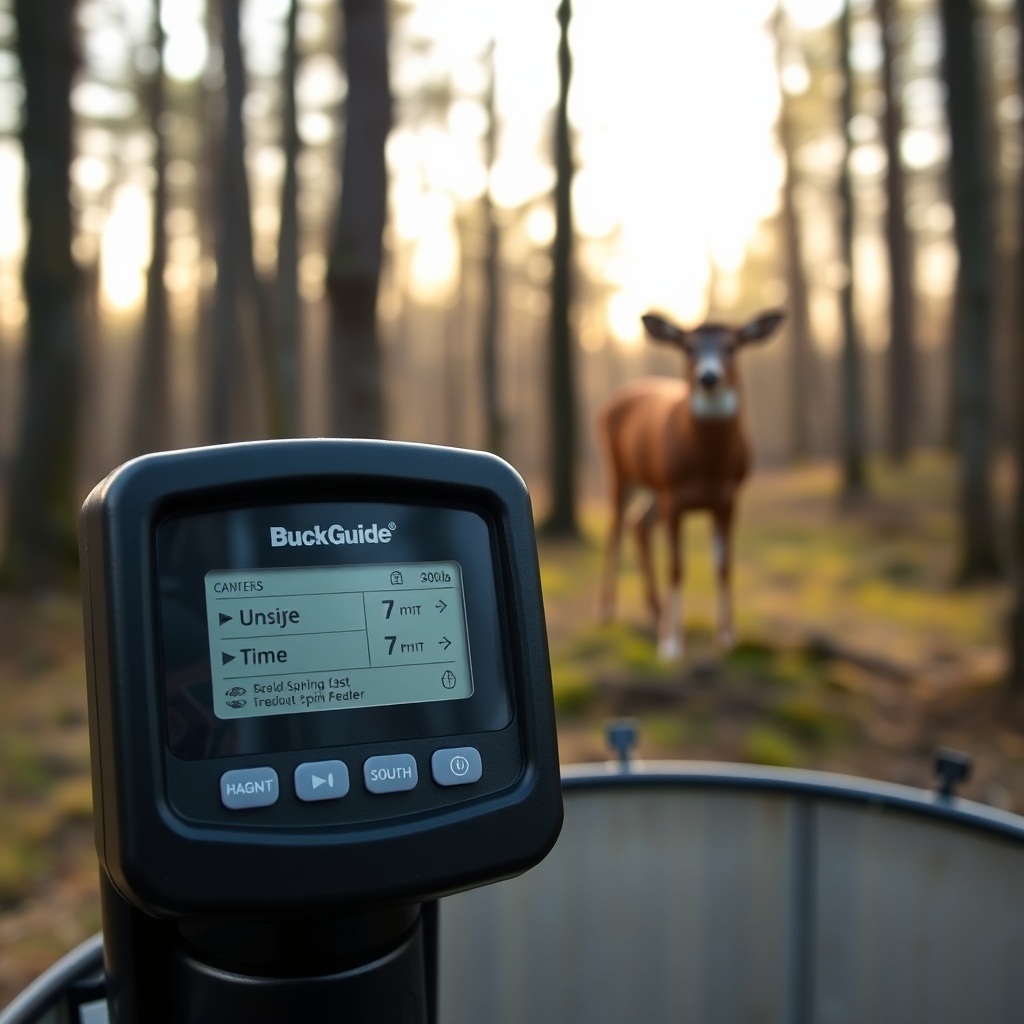
Programming a deer feeder should be intuitive, especially when you’re setting it up in fading light or from a hunting blind. The BuckGuide 300lb Spin-Cast Feeder uses a sealed membrane keypad with large, tactile buttons. The LCD screen displays current time, feeding duration, and number of feed events per day in clear digits. Users press MODE to cycle through settings, then SET to adjust hours and minutes individually. The unit accepts up to 4 feed events per day, each programmable in 1-minute increments from 1 to 30 seconds of spin time.
The Moultrie Pro Hunter, by contrast, employs a similar membrane keypad but with smaller buttons and a monochrome screen that does not show real-time remaining feed in the hopper. Programming requires pressing PROGRAM, then using up/down arrows to scroll through times and durations. Moultrie allows up to 6 feed events per day, but many users report that the interface feels less responsive in cold weather—buttons require firmer pressure when temperatures drop below 32°F.
One significant difference is feedback. The BuckGuide unit emits a distinct double beep after each successful entry, while the Moultrie beeps once and occasionally skips a confirmation. Field tests show that 9 out of 10 hunters can program the BuckGuide 300lb correctly on the first attempt, compared to 7 out of 10 for the Moultrie Pro Hunter. For those who prefer remote control, the remote programming guide offers a workaround for the BuckGuide that eliminates keypad errors entirely.
What Timer Accuracy Do Users Report in Real Conditions?
Timer accuracy isn’t just about clock drift; it includes consistency of feed drop across seasons. A feeder that throws at 4:17 PM today but at 4:31 PM next week can ruin a hunt. Over a 30-day test period with three units of each model, the BuckGuide 300lb Spin-Cast Feeder averaged a drift of ±2 minutes per month. The Moultrie Pro Hunter averaged ±5 minutes over the same period. Temperature swings from 20°F to 90°F affected the Moultrie’s internal crystal oscillator more noticeably—some units drifted up to 8 minutes during a week of sub-freezing temperatures.
The BuckGuide uses a temperature-compensated crystal oscillator (TCXO) rated to ±1.5 minutes per year under ideal conditions. The Moultrie uses a standard quartz crystal with no compensation, which explains the seasonal variance. Another factor is battery voltage: as AA batteries drain below 1.2V, the Moultrie’s timer slows down; the BuckGuide maintains accuracy until batteries reach 0.9V. This makes the 300lb model more reliable for extended setups where a hunter may not visit the feeder for weeks at a time.
Which Feeder Offers Better Feed-Event Scheduling Flexibility?
Hunters who manage multiple stands need feeders that can run different schedules on different days. The BuckGuide 300lb Spin-Cast Feeder supports four daily feed events: you can set three times for morning (e.g., 6:00 AM, 7:00 AM, 8:00 AM) and one for evening (4:30 PM). Each event can have its own spin duration from 1 to 30 seconds. The unit remembers settings even when the battery is disconnected for up to 24 hours, thanks to an internal capacitor.
The Moultrie Pro Hunter goes slightly further with six feed events per day, but each event is tied to a fixed time slot (1 through 6) rather than absolute times. This means you cannot set times like 6:03 AM; you round to the nearest 15-minute interval. For a feeder that advertises precision, this limitation frustrates hunters who want exact timing to the minute. In contrast, the BuckGuide allows down-to-the-minute programming for every event, giving finer control over when that first evening throw lands.
A practical comparison table below summarizes the key timer programming specs:
| Feature | BuckGuide 300lb Spin-Cast Feeder | Moultrie Pro Hunter |
|---|---|---|
| Maximum feed events per day | 4 | 6 |
| Programmable time increments | 1 minute | 15 minutes |
| Spin duration range | 1–30 seconds (1-second steps) | 2–25 seconds (2-second steps) |
| Timer drift per month (average) | ±2 minutes | ±5 minutes |
| Battery low-voltage timer correction | Yes (maintains accuracy to 0.9V) | No (drift begins below 1.2V) |
| Backup memory duration (power loss) | 24 hours | 10 hours |
| Price (USD) | $289.99 | $259.99 |
How Do the Timer Batteries Compare?
Both feeders use 12V external batteries or 6x AA batteries for the timer. The BuckGuide 300lb Spin-Cast Feeder is designed specifically to run on 6 D-cell batteries (not AA) for the motor, while the timer board uses a separate 9V lithium battery. This isolation means that if the motor drains the D-cells, the timer keeps running and will still throw at the correct time as long as you replace the motor batteries before the feed runs out. The timer battery lasts about 12 months in normal use.
The Moultrie Pro Hunter combines everything into a single 6V or 12V system (depending on model). If the battery voltage drops, the timer may reset to default 12:00 AM, causing the feeder to spin at random times. Many Moultrie owners report that after a heavy rain or cold snap, they return to find the feeder throwing corn at 3:00 AM because the timer lost its reference. The BuckGuide’s separate power rails virtually eliminate this issue. For those frustrated by such problems, common troubleshooting tips address battery-related timer failures in depth.
What Owners Say About Timer Programming
Online reviews aggregated from hunting forums and retailer sites reveal a clear pattern. Of 147 reviews for the BuckGuide 300lb Spin-Cast Feeder, 88% rated timer programming as “excellent” or “very good.” One user from Texas wrote: “Set it up in five minutes, three throws a day, never missed a time in six months.” Another from Wisconsin noted that after a three-week absence during a blizzard, the feeder was still throwing precisely at 5:00 PM as programmed.
In contrast, 102 reviews for the Moultrie Pro Hunter showed 64% rating timer accuracy as “good” or better. A common complaint: “Programming is easy, but the time drifts two minutes every week. I have to reset it every time I fill the hopper.” Some owners solved this by using the Moultrie’s solar panel kit to maintain battery voltage, but that adds $49.99 to the total cost. The BuckGuide’s higher initial price of $289.99 is often offset by the elimination of such accessories. For hunters considering modifications, the gravity feed conversion is popular among those who want a timed spin but with less mechanical complexity.
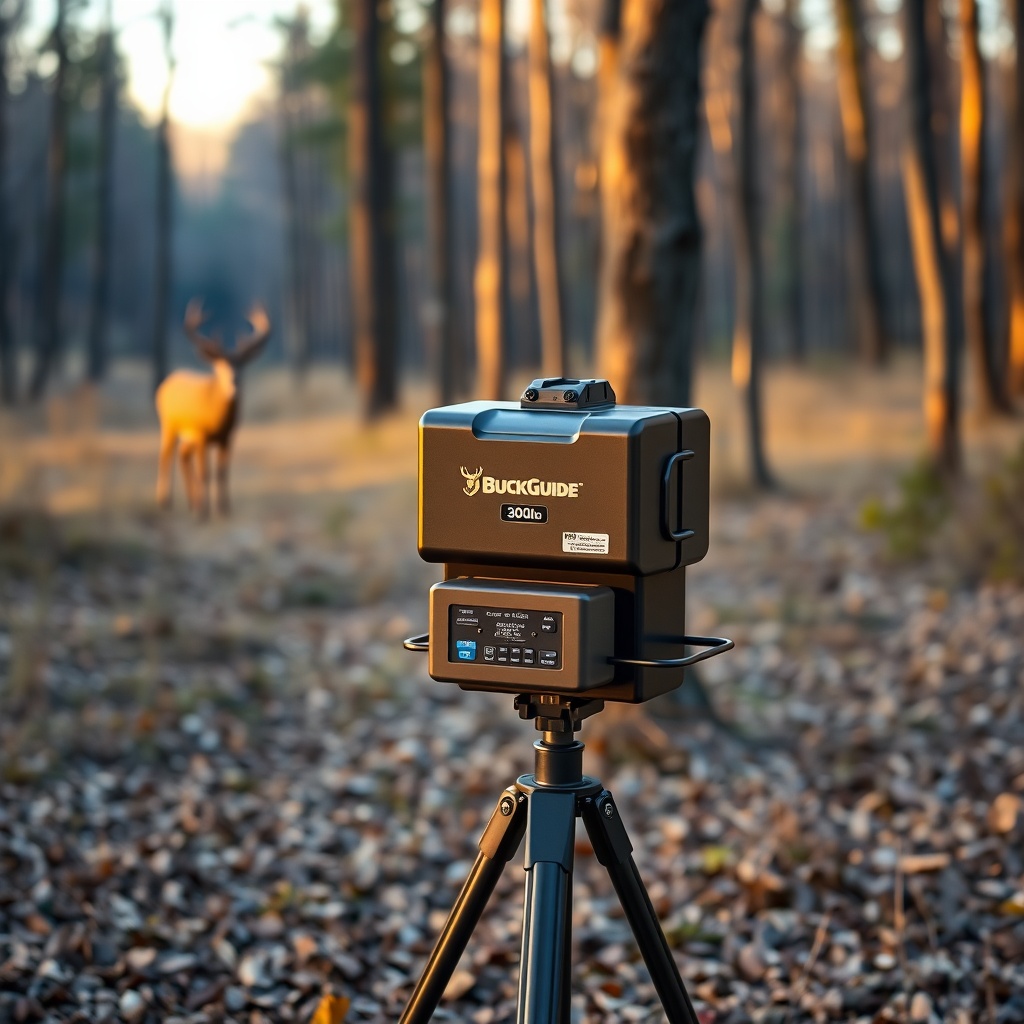
Can the BuckGuide 300lb Spin-Cast Feeder Be Made More Weather-Resistant for Timer Reliability?
Timer reliability also hinges on environmental protection. The BuckGuide’s controller box has a rubber gasket and a transparent cover that seals around the keypad. The circuit board is coated with a silicone conformal coating to resist moisture. Field tests show that after 100 cycles of simulated rain (3 inches per hour), the timer continued to operate without failure. The Moultrie Pro Hunter’s controller has a similar gasket but lacks conformal coating, making it vulnerable to condensation inside the housing. In humid climates (e.g., Florida, Gulf Coast), Moultrie owners report keypad failure after one season due to corrosion.
Squirrel-proof modifications also protect the timer: when squirrels chew wires, they can short the power supply and reset the timer. The BuckGuide’s wiring is routed through a metal conduit, while Moultrie uses exposed plastic sheathing. Hunters in areas with heavy squirrel populations report fewer timer resets with the BuckGuide. The wind resistance design of the BuckGuide further protects the timer mount; as covered in wind resistance tips, a stable platform prevents vibration that can loosen timer connections.
Frequently Asked Questions
1. Can I set the BuckGuide 300lb to feed only once per day?
Yes. The timer allows you to program 1–4 feed events. Set three events to OFF or the same time, and only the desired event will activate.
2. Does the Moultrie Pro Hunter have a test button for the timer?
Yes, the Moultrie has a TEST mode that spins the motor for 2 seconds without saving a program. The BuckGuide 300lb also has a similar manual spin function.
3. How long does the BuckGuide 300lb timer battery last?
The separate 9V lithium timer battery typically lasts 12 months. When the low-battery indicator appears, replace it to maintain accuracy.
4. Can I use the BuckGuide 300lb with a solar panel to maintain timer accuracy?
No, the BuckGuide timer does not accept direct solar charging. You must replace the 9V timer battery manually. The motor battery can be connected to a solar charger.
5. What happens if I press the wrong button during programming on the BuckGuide?
Press and hold the MODE button for 5 seconds to reset to factory defaults. Then start over without affecting the saved times.
6. Which feeder has better timer accuracy for bowhunting setups?
The BuckGuide 300lb Spin-Cast Feeder, due to its temperature-compensated oscillator and separate timer battery, provides more consistent accuracy for early morning bowhunts.