Why Does Wind Affect the BuckGuide 300lb Spin-Cast Feeder Performance?
Wind is one of the most underestimated challenges for spin-cast deer feeders, and the BuckGuide 300lb Spin-Cast Feeder is no exception. When gusts exceed 15 mph, the spinning plate may throw feed erratically, causing uneven distribution and wasted corn. Additionally, wind can shift the feeder’s hanging mechanism or trigger false timer activations if the control unit is exposed. Understanding these vulnerabilities is the first step to troubleshooting and maintaining consistent performance in windy conditions.
The BuckGuide 300lb model is built with a heavy-duty 12V motor and a 12-inch spinner plate, but its open design makes it susceptible to wind interference. To mitigate this, owners should focus on stabilising the feeder tower and adjusting the timer settings to account for gusty weather. If you’re experiencing erratic feeding patterns, start by checking the remote control troubleshooting guide to rule out signal issues that often mimic wind-related problems.
How Do I Secure the Feeder Against Wind Shifting?
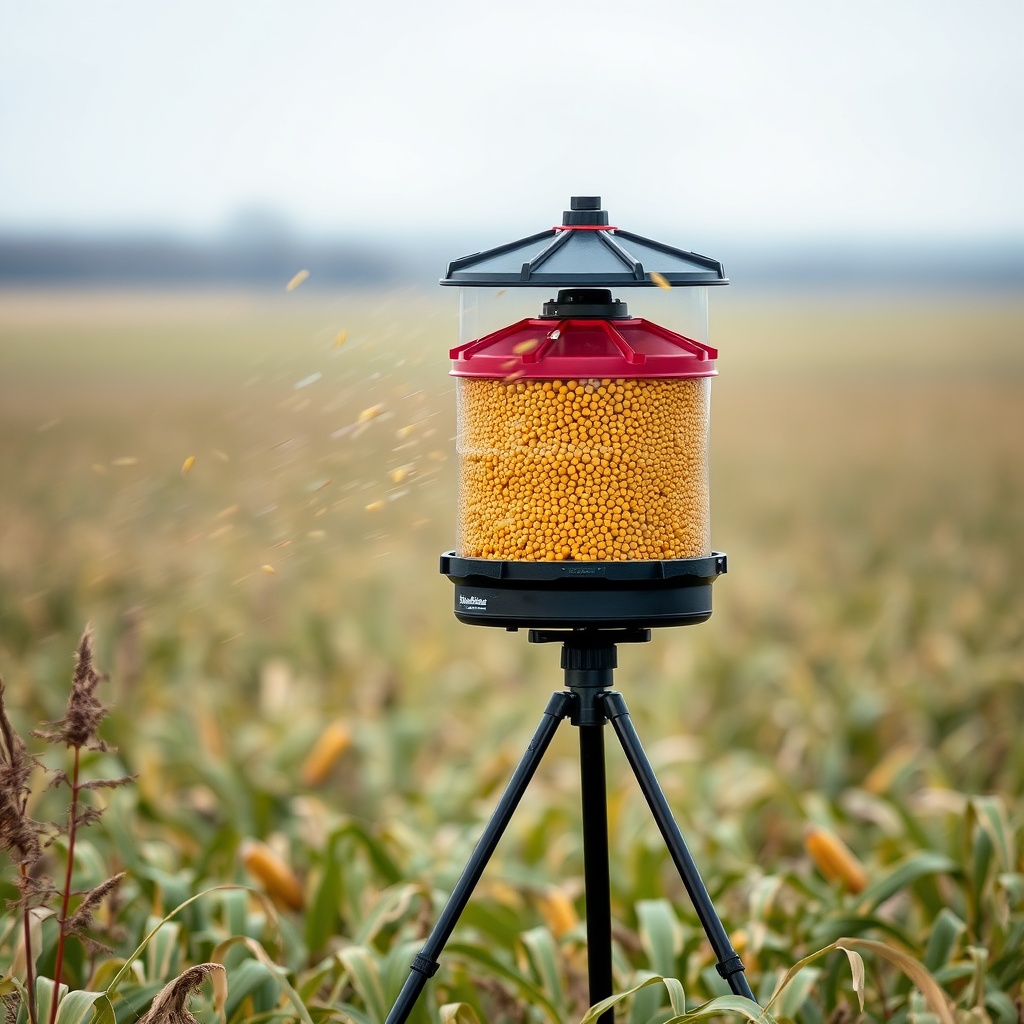
Wind can physically shift a feeder that isn’t properly anchored, leading to misaligned spinner plates and timer malfunctions. The BuckGuide 300lb Spin-Cast Feeder weighs approximately 45 lbs empty, but a full load of 300 lbs of corn creates a top-heavy structure vulnerable to tipping in sustained winds over 25 mph. To counteract this, use 18-inch screw-in auger anchors at each tripod leg, which are available at most farm supply stores for around £12 per pack. Alternatively, you can retrofit the feeder with a ground sleeve system—a 4-foot metal pipe sunk 2 feet into the ground and bolted to the feeder’s central pole.
If you’re considering a permanent solution, some owners opt for the gravity feed conversion to reduce wind sensitivity, as gravity systems lack the spinning plate altogether. For immediate wind resilience, ensure the feeder’s tripod legs are spread to at least 5 feet apart at the base, and check that all locking pins are secure. A simple test: push the feeder with moderate force at waist height—if it rocks more than 2 inches, add additional stabilisation.
Recommended Anchoring Materials
- Auger Anchors: 18-inch steel; holds up to 200 lbs of lateral force. Cost: £10-£15 per pack of 4.
- Concrete Footings: 80-lb bag of quick-set concrete (about £7) poured into a 5-gallon bucket buried at the base.
- Stake Kits: Pre-made tripod stabilisation straps with stakes. Cost: £20-£25.
What Timer Adjustments Minimise Wind Interference?
Wind can cause the BuckGuide 300lb’s spinner plate to rotate prematurely if the timer unit is exposed to vibration or moisture. The factory timer setting is 6 seconds of feed duration at 2 feedings per day, but in windy areas, a shorter burst of 3-4 seconds reduces the chance of feed being blown away mid-throw. Additionally, set the feeding times to early morning (6-7 AM) and late evening (6-8 PM) when wind speeds are typically lower. For maximum control, use the remote programming feature to disable the feeder during storms—detailed steps are in the remote programming guide.
To adjust the timer manually, access the control box (located under the feeder lid) and press the SET button until the current feed duration blinks. Use the ARROW keys to reduce the time, then press SET again to confirm. For homeowners in particularly breezy regions, consider installing a weather shield—a simple PVC box around the timer unit—to buffer against wind-driven rain. If the timer continues to malfunction, it may be worth investigating the squirrel-proof feeder mod, which includes a reinforced control box cover that also blocks wind.
How Does Wind Affect Corn Spreading Patterns?
The spin-cast mechanism on the BuckGuide 300lb is designed to throw corn in a 40-foot diameter circle, but wind can distort this pattern into a narrow spray downwind. In a 20 mph crosswind, up to 30% of the corn may land within a 10-foot radius downwind, leaving upwind areas bare. This not only wastes feed but can attract deer to unsafe areas near high-traffic zones. To measure this, place empty paper plates at 10-foot intervals around the feeder before a feeding cycle; after the spin, count the kernels on each plate to map the actual distribution.
| Wind Speed (mph) | Effective Spread Diameter (feet) | Kernel Waste (%) | Recommended Action |
|---|---|---|---|
| 0-10 | 35-40 | 5-10 | No change needed |
| 11-20 | 25-35 | 15-25 | Reduce feed duration to 4 seconds |
| 21-30 | 15-25 | 30-50 | Stop feeding until wind subsides |
| 30+ | <10 | 60+ | Use gravity conversion or move feeder |
To counteract this, some owners adjust the spinner plate angle by loosening the central bolt and tilting the plate 5 degrees into the wind—this equalises distribution but must be readjusted with each wind direction change. For a permanent fix, consider the gravity feed conversion, which eliminates the spinning plate and relies on a gravity-fed chute unaffected by wind.

Can Wind Damage the BuckGuide 300lb’s Electrical Components?
Yes, persistent wind can drive moisture into the timer control box, causing short circuits or corrosion of the 12V battery terminals. The BuckGuide 300lb uses a sealed lead-acid battery (12V, 7Ah) housed in a weather-resistant compartment, but the seals degrade over time. In windy conditions, fine dust and rain can penetrate the gasket via forced air pressure. Signs of electrical wind damage include the feeder not spinning at scheduled times, the remote failing to respond, or the motor humming without rotating the plate.
To prevent this, inspect the control box gasket every 2 months and apply dielectric grease to the battery terminals. If you live in an area with sustained winds over 20 mph (common in coastal or plains regions), consider relocating the battery inside a waterproof enclosure mounted on the tripod leg—leaving only the timer unit on the feeder. Always test the remote after any wind storm; the remote control troubleshooting guide can help differentiate between electrical and signal issues. For severe cases, a full replacement of the timer unit costs approximately £45 and is available through BuckGuide dealers.
What Owners Say About Wind Reliability
Many BuckGuide 300lb owners in the UK and US report mixed experiences with wind performance. The consensus from forums and local hunting groups is that the feeder handles 10-15 mph winds well but struggles above that. One owner from the Scottish Highlands noted, “I had to move the feeder into a clearing because the wind was blowing all the corn into a ditch—wasted 50 kg of feed in one week.” Another hunter from the Texas Panhandle found success by anchoring the tripod with 18-inch augers and reducing feed time to 3 seconds. Most owners recommend always having a backup anchor kit and spare timer batteries for windy seasons.
Several owners have also adapted the feeder with the squirrel-proof feeder mod, which includes a metal cage around the spinner plate—this also baffles wind slightly. The general advice is to test the feeder in calm weather first, then monitor patterns during a mild breeze before relying on it in high winds. A few owners have even switched to the gravity feed system entirely for windy properties, citing 90% less waste.
Frequently Asked Questions
1. How much wind is too much for the BuckGuide 300lb Spin-Cast Feeder?
Sustained winds over 20 mph cause significant waste and erratic distribution. Gusts above 25 mph risk tipping unless the feeder is anchored. If you see feed being blown horizontally, stop feeding and wait for calmer conditions.
2. Can I use the feeder in a 30 mph wind if I anchor it?
Anchoring prevents tipping, but the spinner plate will still throw corn inefficiently—often wasting over 60%. It’s better to postpone feeding or switch to a gravity feed system until winds drop.
3. Will adding a windbreak fence help reduce feed waste?
Yes, a semi-circular fence (3 feet high, 10 feet radius) made of wooden slats or mesh can reduce wind speed by up to 50% at ground level. Ensure the fence doesn’t block the feed spread pattern—place it downwind only.
4. How often should I inspect the timer box for wind damage?
Inspect after every significant windstorm (gusts over 40 mph), and perform a full check (gasket, battery terminals, motor wires) quarterly. Replace the gasket annually (£4-£6) to maintain a weathertight seal.
5. Does the BuckGuide 300lb work differently in coastal winds vs. prairie winds?
Coastal winds often carry salt and high humidity, accelerating corrosion. Rinse the feeder with fresh water after storms and apply anti-corrosion spray to metal parts. Prairie winds are drier but can be more gusty, requiring stronger anchoring.
6. Can I modify the feeder to automatically stop in high wind?
No built-in feature exists, but you can add a wind speed sensor (anemometer) that cuts power to the timer when winds exceed 20 mph. Aftermarket kits cost around £60-£80 and require basic wiring—consult a professional if unsure.