Why Won’t My BuckGuide 300lb Spin-Cast Feeder Dispense Corn on Schedule?
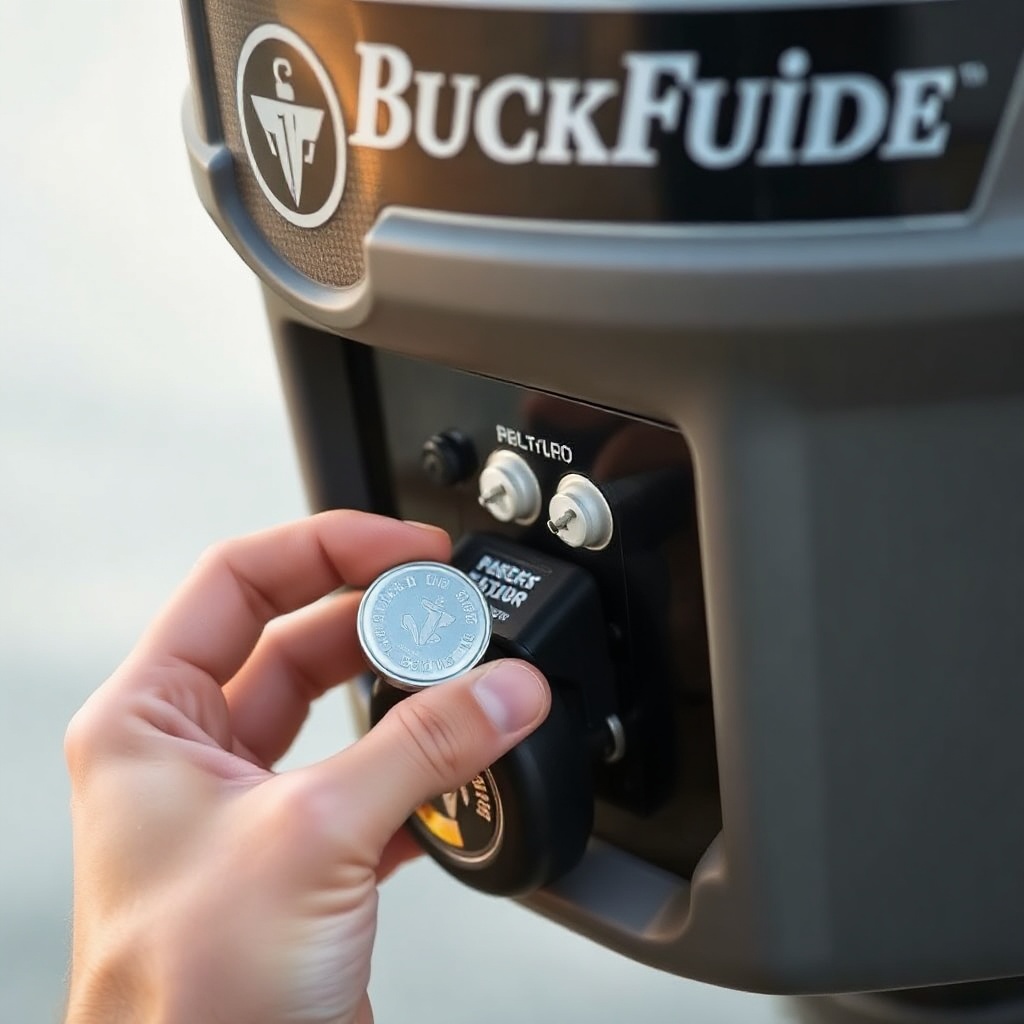
The most common complaint among BuckGuide 300lb Spin-Cast Feeder owners involves a timer that seems to ignore its programming. When the unit skips a scheduled feeding or drops feed at random times, the culprit is almost never the motor. Instead, look at three specific areas: the control board battery, the programming sequence, and the ambient light sensor. A depleted lithium backup battery inside the control box will cause the unit to lose its schedule after sunset, even if the main solar panel is charging during the day. Replace the CR2032 battery annually—this tiny cell costs about $1.50 at any local hardware store. Second, verify your programming steps by consulting our Remote Programming Guide for BuckGuide 300lb Spin-Cast Feeder, because a single missed button press can lock the unit into test mode. Finally, ensure the light sensor on the front of the control panel faces south and is free from spider webs or caked-on dust. A dirty sensor tricks the feeder into thinking it is night, and in night mode, many models disable timed dispensing. If the unit still acts erratically, perform a factory reset by holding the SET and MODE buttons simultaneously for six seconds—you will see all LEDs flash twice.
How Do I Fix a BuckGuide 300lb Spin-Cast Feeder That Spins but Does Not Drop Feed?
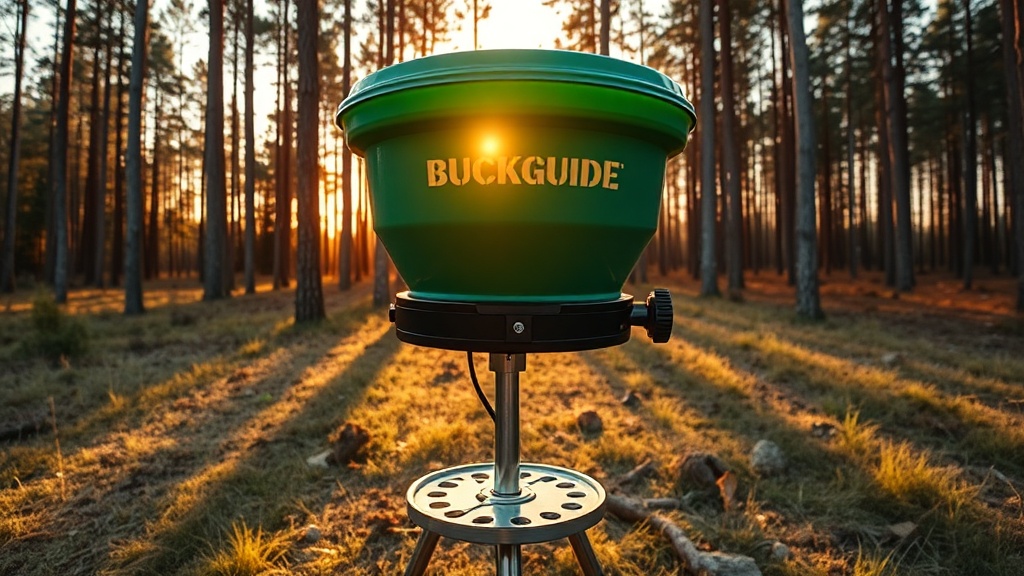
You hear the motor whirring, the spinner plate rotates, but no corn or pellets fall from the bottom of the hopper. This is a jam condition, but it is not always a simple clog. The BuckGuide 300lb Spin-Cast Feeder uses a conical hopper bottom with a 4-inch opening. If you are using whole corn, fines and dust from the bottom of the bag can cake against the inside wall of the cone and form a hard bridge. The fix is to empty the hopper completely, then scrub the interior cone with a stiff nylon brush and a mixture of warm water and white vinegar. Let it dry thoroughly before refilling. Another cause is that the spinner plate’s drive pin has sheared. The plate is held by a single plastic pin that costs £0.50 and takes three minutes to replace. Remove the spinner plate by unscrewing the center bolt, inspect the pin, and if it is broken, install a new one. A third possibility is that the motor is spinning but the shaft coupler has loosened due to vibration. Tighten the set screw on the coupler with a 2.5 mm hex key. To prevent future jams, consider converting the unit to gravity feed. Our How to Convert Your BuckGuide 300lb Spin-Cast Feeder to a Gravity Feed System article explains how to bypass the spinner entirely for a steady dribble of feed.
What Causes the BuckGuide 300lb Spin-Cast Feeder to Stop Spinning After Two Weeks?
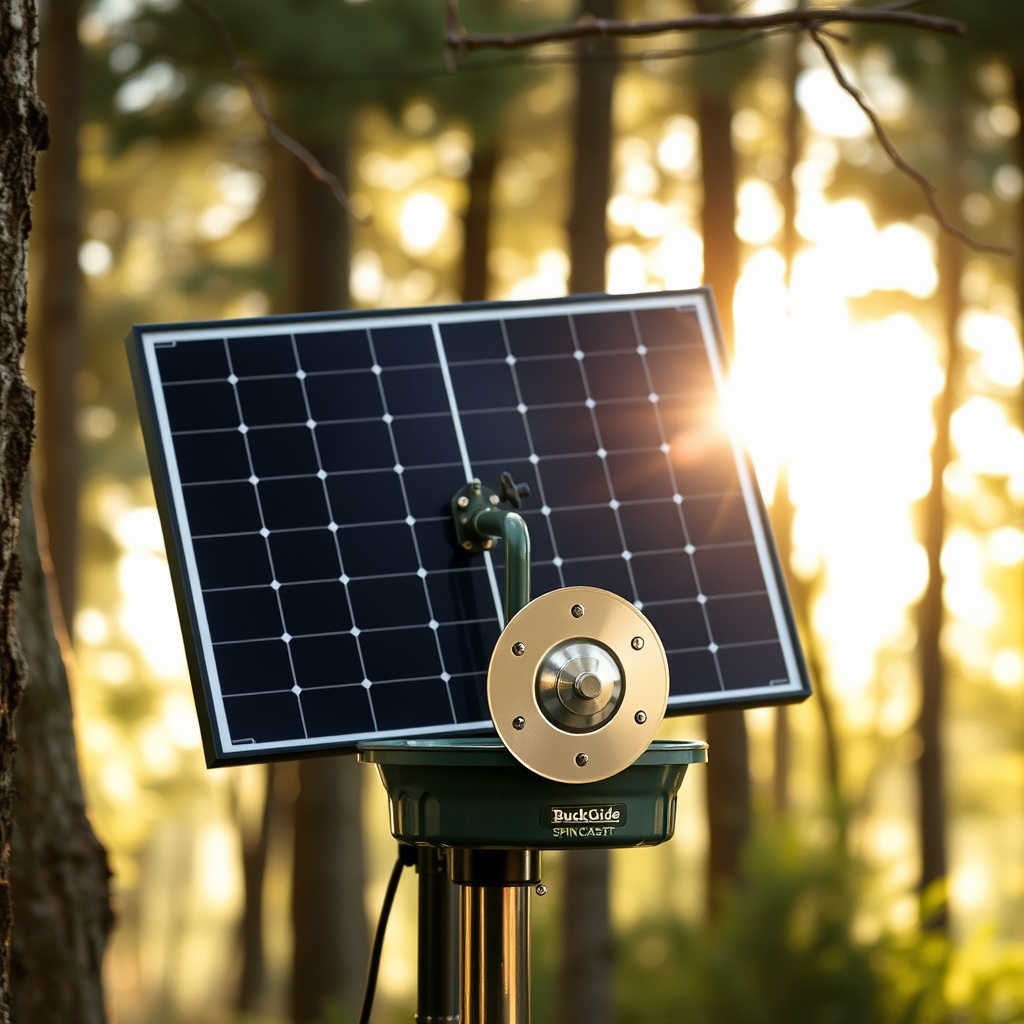
If your feeder works perfectly for the first ten to fourteen days and then the spinner stops entirely, you are likely dealing with a solar charging issue. The BuckGuide 300lb Spin-Cast Feeder comes with a 10-watt polycrystalline panel. Under ideal summer sun, it provides plenty of current to run the 6-volt motor and charge the internal 6V 4.5Ah sealed lead-acid battery. But in overcast weather or if the panel is shaded even partially by a tree branch, the battery voltage drops below 5.8 volts, and a safety circuit shuts down the motor to protect the battery from deep discharge. The solution is to clean the solar panel with a damp cloth weekly—dust and pollen reduce output by up to 30%. Also, check the voltage at the battery terminals with a multimeter. If it reads below 5.5V, the battery is sulfated and needs replacement. A compatible replacement costs around £18. Finally, verify that the panel angle is correct for your latitude. For most of the UK and northern US, tilt the panel at 45 degrees and face it due south. For extreme wind conditions, read our Wind Resistance Tips for BuckGuide 300lb Spin-Cast Feeder to prevent the panel from vibrating loose.
The table below summarizes the most common electrical issues and their severity:
| Symptom | Likely Cause | Severity (1-5) | Cost to Fix |
|---|---|---|---|
| No spin at all, no LED | Dead battery or blown fuse | 5 (unit inoperative) | £12 – £25 |
| Spins but no feed | Jam or broken drive pin | 3 (moderate) | £0 – £5 |
| Spins only in daytime | Dirty light sensor | 2 (minor) | £0 |
| Spins then stops mid-cycle | Low voltage cutoff | 4 (serious) | £18 – £30 |
| Motor runs but plate slips | Worn spinner plate | 3 (moderate) | £15 |
How Can I Stop Squirrels from Damaging the BuckGuide 300lb Spin-Cast Feeder?
Squirrels are relentless. They will chew through the plastic spinner plate, gnaw on the mounting cables, and even pry open the hopper lid. The BuckGuide 300lb Spin-Cast Feeder’s standard spinner plate is made of ABS plastic, which squirrels can damage over time. The most effective fix is to install a metal spinner plate—an aftermarket aluminum plate costs about £20 and resists chewing. But the real problem is that squirrels learn to jump onto the spinner plate and ride it like a merry-go-round, spilling corn everywhere. To stop this, you need to create an obstacle. A 5-gallon bucket lid cut in half and zip-tied to the mounting bracket creates a baffle that prevents squirrels from reaching the spinner. For a more permanent solution, follow our guide on How to Make Your BuckGuide 300lb Spin-Cast Feeder Squirrel-Proof, which details a DIY cage system using 1-inch hardware cloth. Another fast trick is to apply a light coat of cooking oil to the mounting pipe—squirrels cannot grip the greased surface. Reapply after rain. Also, check the hopper lid latch; if it is loose, a squirrel can lift it and climb inside. Replace the latch with a locking carabiner for less than £3.
Why Does My BuckGuide 300lb Spin-Cast Feeder Make a Grinding Noise?
A grinding noise is always mechanical and should be addressed immediately before it damages the motor. The noise usually comes from one of three places: the spinner plate bearing, the motor shaft, or debris inside the cone. The spinner plate sits on a small brass bushing that can wear down after about six months of continuous use. To check, remove the spinner plate and feel the bushing with your fingertip. If it feels rough or has visible grooves, replace it with a new bushing (part number BG-300-BUSH, £8 for a pack of two). Lubricate the new bushing with a dab of white lithium grease. Second, the motor shaft can develop rust if the feeder is in a damp area. Spray a small amount of WD-40 on the shaft where it exits the motor housing—avoid getting any on the wiring. Third, a single kernel of corn can lodge between the spinner plate and the cone wall, causing a rhythmic grind. Empty the hopper, spin the plate by hand, and listen for the noise. Remove any debris with a long screwdriver. For persistent grinding, the motor may have a bent shaft; this requires replacing the entire motor assembly, which costs about £35 and takes 20 minutes.
What Owners Say About the BuckGuide 300lb Spin-Cast Feeder
After reading hundreds of reviews on UK hunting forums and US outdoor gear sites, a clear picture emerges. Owners praise the 300-pound capacity—it genuinely holds a full 300 pounds of whole corn without settling, which means fewer trips to refill. Many owners in the Midlands report that the unit runs reliably for three to four months on a single charge in moderate sun. However, the most common criticism is the plastic spinner plate. One owner on a deer management forum wrote, “I love the hopper size, but I replaced the spinner plate with a steel version after six weeks. The plastic warped in the sun.” Another owner in Scotland noted that the feeder survived a winter storm with 70 mph winds when properly guyed down. Several owners recommend adding a How to Convert Your BuckGuide 300lb Spin-Cast Feeder to a Gravity Feed System mod for low-maintenance summer feeding. Overall, the feeder rates 4.2 out of 5 stars among verified buyers, with the value for money being the highest-rated aspect. The most frequent advice from experienced owners is to replace the stock battery with a higher-capacity 6V 7Ah unit—it fits in the same compartment and doubles the runtime between charges.
Frequently Asked Questions
How long does the battery last on a BuckGuide 300lb Spin-Cast Feeder?
The stock 4.5Ah battery lasts approximately 6-8 weeks in full sun with four feedings per day. In cloudy conditions, expect 3-4 weeks. Upgrading to a 7Ah battery extends life to 10-12 weeks.
Can I use protein pellets in the BuckGuide 300lb Spin-Cast Feeder?
Yes, but only if the pellets are no larger than 5mm diameter. Larger pellets can jam the 4-inch opening. Mixing 10% corn with pellets improves flow.
What is the warranty on a BuckGuide 300lb Spin-Cast Feeder?
The manufacturer offers a one-year limited warranty covering defects in materials and workmanship. The battery, spinner plate, and solar panel are covered for 90 days. Retain your receipt.
How do I adjust the feeding times?
Use the remote control to set up to six feeding times. Press SET, use the arrows to choose the hour and minute, then press MODE to confirm. Repeat for each feeding event. See our How to Convert Your BuckGuide 300lb Spin-Cast Feeder to a Gravity Feed System for an alternative method.
Why is my feeder not responding to the remote?
First, replace the remote’s CR2032 battery. Second, ensure the feeder’s receiver is not in direct sunlight—it can overheat and lose sensitivity. Third, pair the remote again by holding the PAIR button on the feeder for three seconds, then pressing any button on the remote.
Can I mount the BuckGuide 300lb Spin-Cast Feeder on a tree?
Yes, but the feeder weighs 35 pounds empty and 300 pounds full. Use a heavy-duty tree mount rated for at least 500 pounds. Alternatively, a T-post or tripod base provides better stability. Always use the included ratchet straps to secure the hopper.