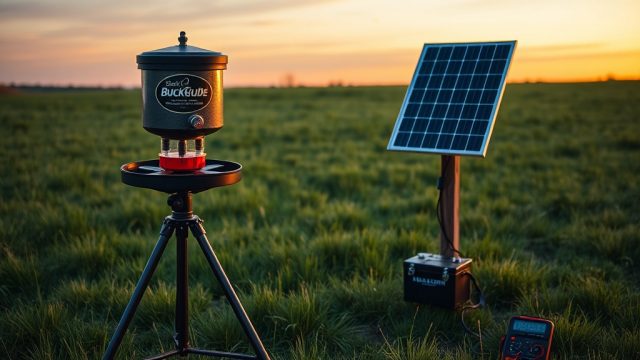
How to Extend Battery Life on Your Moultrie 30-Gallon Pro Hunter Feeder
If you own a Moultrie 30-Gallon Pro Hunter deer feeder, you already know it’s a workhorse for consistent feeding schedules. However, battery life can make or break your season when the feeder sits out in the elements for months. In this guide, I’ll walk you through practical steps to maximize battery performance, reduce recharge frequency, and keep your feeder running reliably from pre-rut to late winter.
Why Does My Moultrie 30-Gallon Pro Hunter Feeder Drain Batteries So Fast?
Battery drain often stems from three main culprits: a weak or undersized solar panel setup, environmental factors like cold temperatures or heavy shade, and a timer unit that’s running more than necessary. The Moultrie 30-Gallon Pro Hunter’s standard 6-volt battery is designed for moderate use, but when you’re running multiple feed events per day or adding a How to Set the Timer on Moultrie 30-Gallon Pro Hunter correctly can reduce unnecessary power draw. A common mistake is leaving the feeder in “test mode” or scheduling too many spins per feeding cycle. Each spin of the motor pulls about 1.5 to 2 amps for 2–3 seconds, and over a week that adds up quickly in cold weather when battery capacity drops by 30–50%.
Another overlooked factor is the spring-loaded spinner plate. If the plate is stuck or has debris buildup, the motor has to work harder, drawing more current. Clean the spinner plate and check the drop tube for clogs before blaming the battery itself. If your battery voltage drops below 5.5 volts regularly, consider replacing it with a higher-capacity 6-volt SLA or AGM battery. The stock battery is typically 12Ah, but upgrading to an 18Ah unit can double your runtime without any wiring modifications.
What Size Solar Panel Works Best for This Feeder?
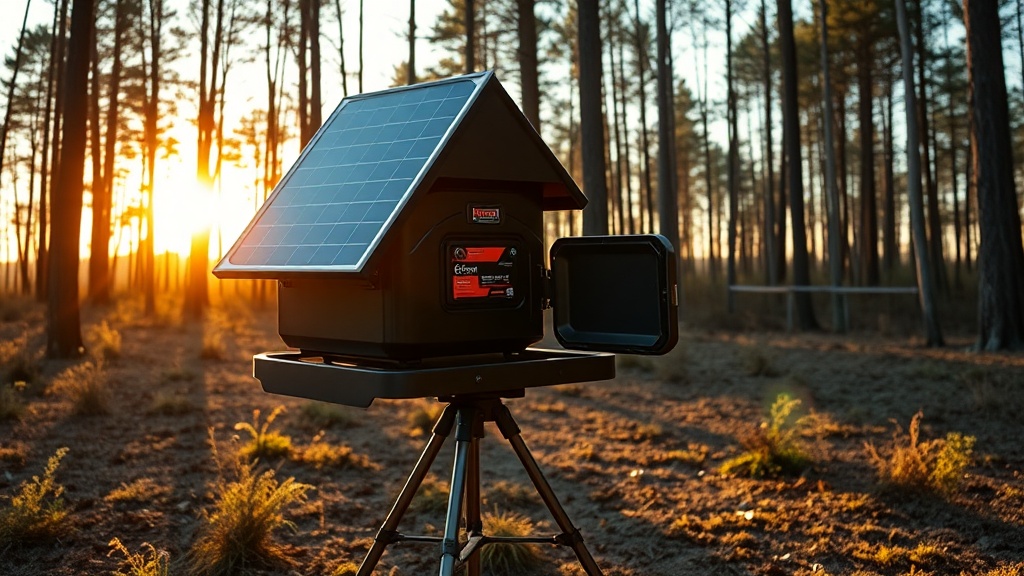
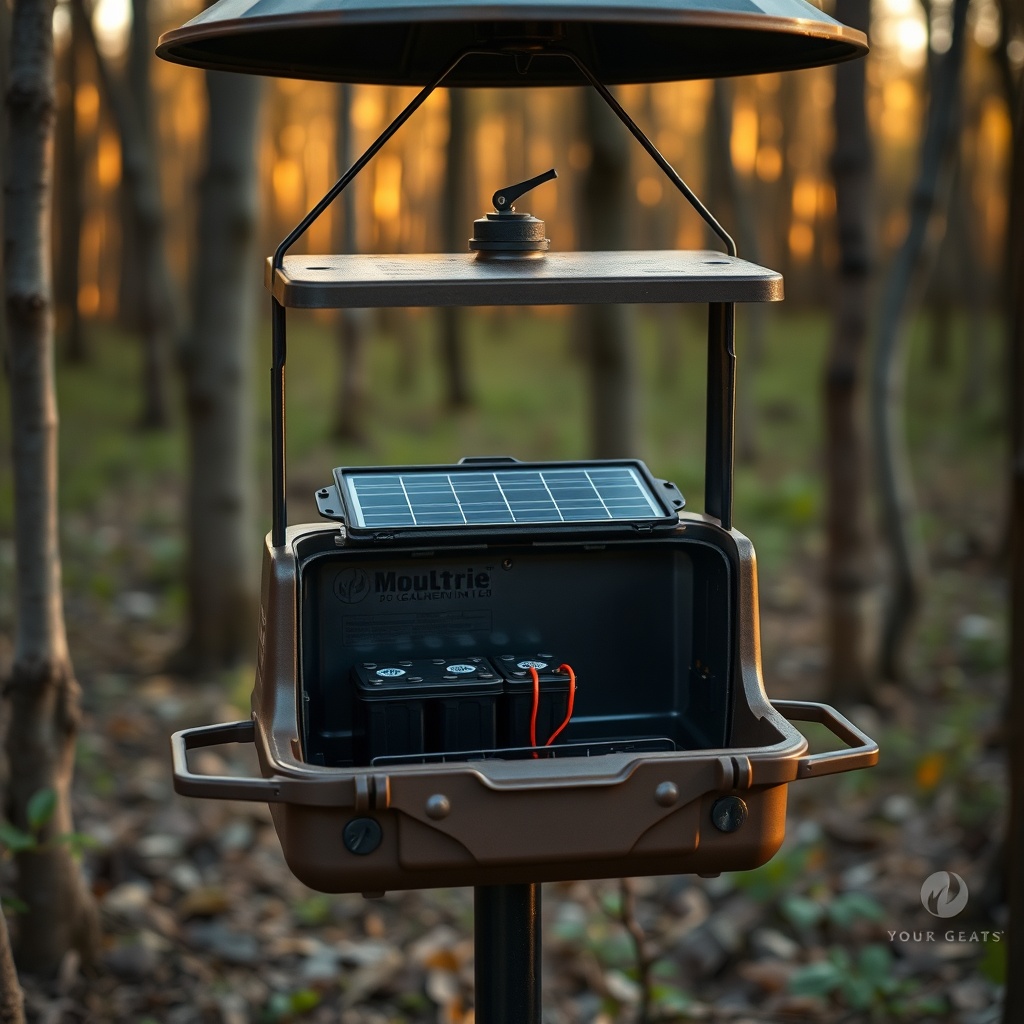
The factory solar panel included with many Moultrie 30-Gallon Pro Hunter kits is a 5-watt panel. That’s sufficient for typical use in southern states with good sun exposure, but in northern regions or during overcast weeks, it may not keep up. For guaranteed top-off, upgrade to a 10-watt or even 15-watt panel. The feeder uses a standard 2-pin connector, so compatibility is straightforward. Refer to the Solar Panel Compatibility with Moultrie 30-Gallon Pro Hunter Feeder guide for specific models that fit without rewiring.
Position the panel facing south at a 45-degree angle to capture maximum winter sun. Even a 20% increase in sun exposure can reduce battery cycling by 40%. If your feeder is under heavy tree canopy, consider a remote mounted panel—you can run a 20-foot extension cable without significant voltage drop. Avoid using panels rated above 20 watts with the stock timer; the regulator inside the timer can overheat if over-paneled. Stick to 15 watts max unless you have an aftermarket charge controller.
How Should I Maintain the Battery and Connections for Longer Life?
Corrosion at the terminals is the number one preventable cause of battery failure. Disconnect the battery every 30 days during active feeding and clean the terminals with a wire brush or a baking soda paste. Apply a light coat of dielectric grease to the posts and connectors to repel moisture. Check the tightness of all screws on the terminal block—they can vibrate loose over time, especially if the feeder is on a Mounting the Moultrie 30-Gallon Pro Hunter on a Tripod that sways in wind.
Store the feeder battery indoors during the off-season. Lead-acid batteries self-discharge at about 3–5% per month, and storing them in freezing temps can reduce total capacity by 15% annually. If you use a sealed AGM battery (recommended), you can leave it in the feeder year-round as long as the solar panel is active, but monthly voltage checks are wise. A fully charged 6-volt battery reads 6.3–6.4 volts; anything below 6.0 volts under light load means it’s time to charge or replace.
Can Timer Settings Drastically Affect Battery Runtime?
Absolutely. The timer on the Moultrie 30-Gallon Pro Hunter allows up to 6 feed events per day. If you set it to 4 or 5 events per day instead of the maximum 6, you save about 20% in motor cycles. More importantly, the duration of each spin matters—most hunters use 6–10 seconds per event. Reducing spin time by even 2 seconds per event can extend battery life by 8–12% over a month. I recommend testing your preferred feed amount with a few short spins first before committing to longer times.
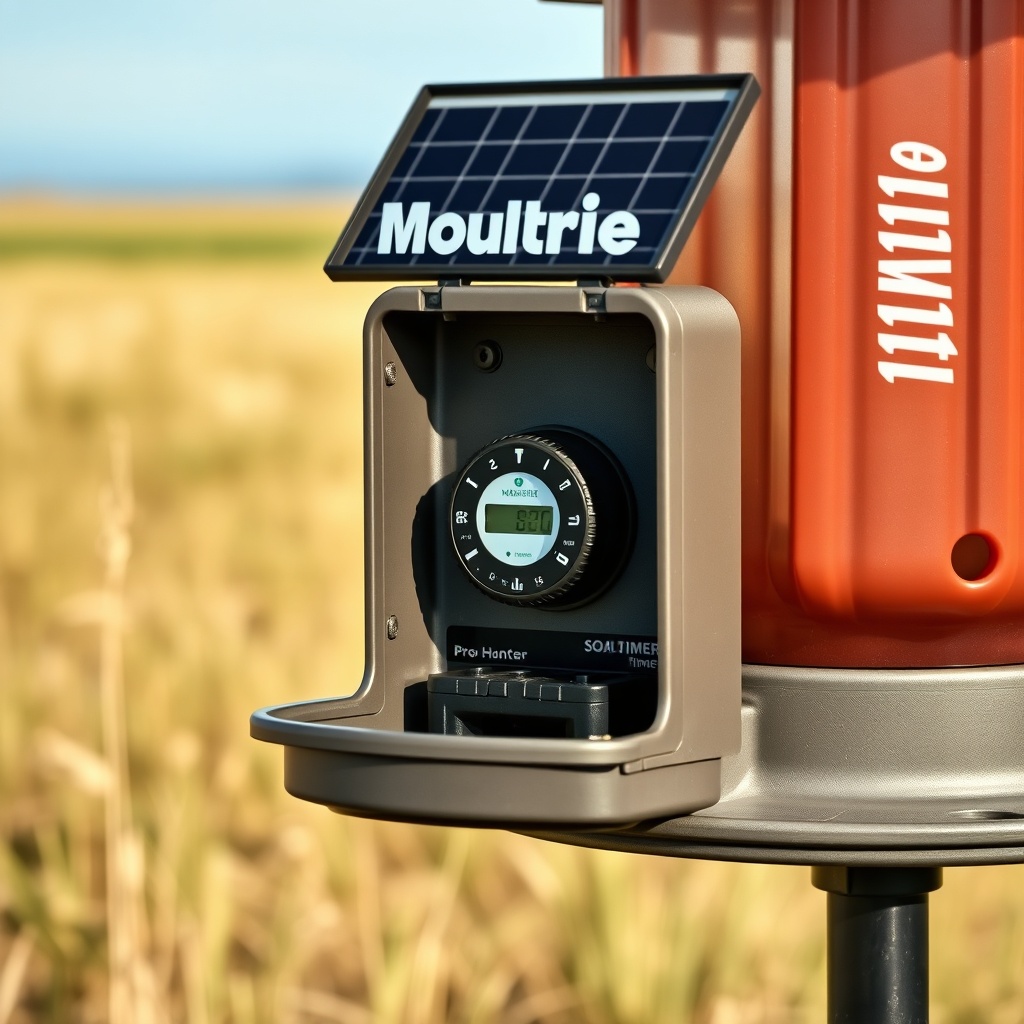
The timer itself consumes a small standby current—about 0.5 mA. That’s negligible, but if you have the backlight or an earlier model with a always-on display, it can draw 2–3 mA. Switch to the LCD model or disable any backlight if possible. Pairing the timer with a reliable Moultrie 30-Gallon Pro Hunter Gravity Feed Review setup can also reduce motor strain during certain feeding sessions.
| Configuration | Daily Feed Events | Spin Duration (sec) | Panel Wattage | Estimated Runtime (days) |
|---|---|---|---|---|
| Stock 12Ah battery + 5W panel | 4 | 6 | 5W | 14–21 |
| Stock 12Ah battery + 10W panel | 4 | 6 | 10W | 30–45 |
| Upgraded 18Ah battery + 10W panel | 6 | 8 | 10W | 45–60 |
| Upgraded 18Ah battery + 15W panel | 6 | 10 | 15W | 60–90 |
As the table shows, the biggest single improvement is moving from 5W to 10W solar—nearly doubling runtime in most cases. Even if you keep the stock battery, a larger panel will pay for itself in fewer trips to check batteries.
What Are Common Owner Complaints and Fixes for Battery Issues?
Many owners report that the stock battery lasts only 10–14 days in cloudy weather. This is consistent with the factory 5W panel’s limits. The most common fix is the 10W panel upgrade, but some prefer a dual-panel setup. Another frequent issue: the battery connection inside the timer box loosens due to vibration. A simple zip tie securing the connector can prevent this. A few users on forums note that the feeder’s motor occasionally runs non-stop after a timer failure, draining a battery in hours. This is rare but avoidable by replacing the timer unit every 2–3 years.
One owner summed it up: “I replaced the battery with an 18Ah AGM and swapped the panel to a 10W. I’ve gone from changing batteries every 2 weeks to every 8 weeks. Well worth the $35 upgrade.” Another said: “Keep the spinner plate clean. I had corn dust and moisture jamming it, and my battery would die in 5 days. After cleaning and greasing the spindle, it runs 4 weeks.”
Frequently Asked Questions
Q: How often should I check the battery voltage on my feeder?
A: At least once a month during active feeding. If the voltage drops below 5.8 volts under a light load, recharge or replace. Use a digital voltmeter for accuracy.
Q: Can I use a 12-volt battery with this feeder?
A: No, the Moultrie 30-Gallon Pro Hunter is designed for 6-volt systems. A 12-volt battery will damage the timer and motor. Stick with a 6-volt SLA or AGM.
Q: Why does my feeder run out of battery even with solar?
A: Most likely the solar panel is shaded or dirty. Clean the panel monthly and trim any overhead branches. Also check that the panel is facing south at about 45 degrees.
Q: Will a larger solar panel overcharge the battery?
A: The stock timer has a built-in charge controller that works with panels up to 15W. Above that, risk of overcharging increases. For higher wattage panels, install an external charge controller.
Q: How long does the motor typically last?
A: Moultrie’s motor is rated for 300,000 cycles at 8 seconds each. That’s about 3–5 years of normal use. If it starts stuttering, replace it before it drains the battery from extra effort.
Q: Is the varmint guard worth it for battery life?
A: It helps prevent animal damage to wires and the solar panel, which indirectly extends battery life. Read the Moultrie 30-Gallon Pro Hunter Varmint Guard Effectiveness review for details on models that work best.
For a wider perspective on choosing the right feeder for your needs, check our Best Deer Feeders Buying Guide for 2024.